Occasions
Three Kings’ Day in Portugal: janeiras, bolo-rei and optional flowers
Portugal · Nationwide
In Portugal, Dia de Reis, 6 January, is not a public holiday: in 2027 it falls on a Wednesday and is a working day. On the night of the 5th to the 6th, groups go from house to house singing the janeiras, and bolo-rei, eaten since late December, reaches its last day. Flowers are not part of the tradition. If you want to bring something besides the cake, we suggest an amaryllis in bud for indoors or a hellebore for the balcony. As it is a working day, you can collect or receive the flowers that same day.
Upcoming calendar dates
Portugal
Agenda Floral, with you
Add it to your calendar
Subscribe to receive our updates, or download the .ics file to import a copy. The copy will not receive later changes.
Use in Google Calendar or another calendar
Open Google Calendar on a computer. Beside “Other calendars”, click “+” and choose “From URL”. Paste the address below to add the subscription. You can then view that calendar on devices using your account.
Guide to adding Agenda Floral to Apple and Google Calendar
Your calendar app decides when to refresh a subscription. Importing the file again may duplicate events. Agenda Floral adds no alarms; you can check alerts in your calendar settings.
Wednesday 6 January 2027: a working day
Portugal’s Labour Code, the Código do Trabalho, does not include 6 January among the mandatory public holidays; the last holiday of the season is 1 January. In 2027, Dia de Reis falls on a Wednesday and is an ordinary working day.
That makes the gift easier: you can collect the flowers on the day or ask for delivery during normal hours. If they are going to a home, agree a time slot when someone will be in. If you are taking them to an office, remember they will have to travel home afterwards: a small pot with its outer pot copes with the journey better than a bouquet in a vase.
Janeiras on Noite de Reis
On Noite de Reis, the night of 5 to 6 January, groups go from house to house singing the janeiras to share the joy of the season. Whoever receives them usually invites them in and offers sweets, savouries, cured sausages and wine. One of the best-known janeiras is “Natal dos Simples” by Zeca Afonso.
Some municipalities also organise open gatherings. In Évora, for example, the city council brought together 18 choral and instrumental groups on 5 January 2026 to sing through the historic centre and the neighbourhoods, ending with a get-together at Páteo do Salema. Each town publishes its own programme, and dates change from year to year.
If singers come to your door and you want to return the gesture, the tradition is food and drink, not flowers.
Bolo-rei: the cake that closes Christmas
Bolo-rei, the kings’ cake, reached Portugal in the 19th century through French influence, and its symbolism is linked to Epiphany. It is eaten from late December until Dia de Reis. It traditionally hid a fava bean and a small trinket, the brinde: whoever found the bean had to pay for the following year’s bolo-rei.
If you are already bringing a bolo-rei to someone’s home, flowers can go with it without taking up table space. Choose a potted plant or a bouquet with its own container, so nobody has to hunt for a vase while the coffee is being served.
An amaryllis in bud for indoors
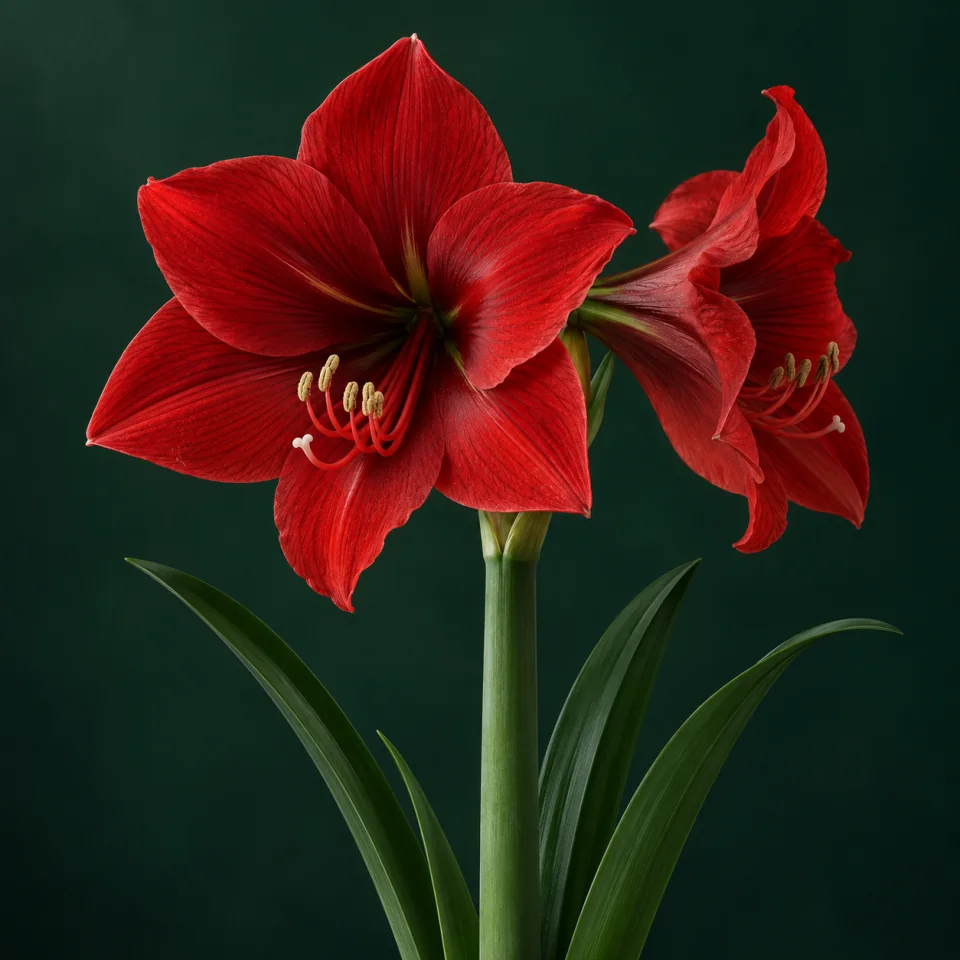
Amaryllis, Hippeastrum, is our suggestion for the 6th: a pot with its buds already formed that will open at home over the following days and bring colour to January. Ask for a stake if the stalk is tall and an outer pot that lets you tip out excess water.
Give it plenty of bright, filtered light, away from the radiator, and turn the pot now and then so the stalk grows straight. Water without leaving any in the saucer. It is toxic to dogs and cats if they chew it: if there are pets, place it out of reach or choose another plant with the help of the flowers and pets guide.
An unsprouted bulb is a different kind of gift: it takes weeks to flower after planting, so don’t expect blooms that same week.
For the balcony: a hellebore, and what to do with Christmas plants
If the person has a terrace or balcony, a potted hellebore, either the Christmas rose, Helleborus niger, or a Helleborus × hybridus, flowers in winter in a spot with light shade, regular moisture and very good drainage. It is an outdoor plant: don’t keep it in a heated living room. The whole plant is toxic if eaten, so place it away from children and pets.
Kings’ Day brings the festive season to a close. The guide to Christmas in Portugal explains how to keep the poinsettia going and why azevinho, holly, must be cultivated. If you are looking for other red-berried plants for outdoors, the skimmia and checkerberry guides explain how to care for them in pots.
An order and a card for the 6th
You could ask: “A red amaryllis in a pot with two or three buds, a stake and an outer pot I can empty, to take to a home with a cat on Wednesday the 6th in the afternoon. If amaryllis isn’t a good idea with the cat, suggest another plant.” If there are no pets, drop that last sentence and add the collection time.
A short card is enough: “So January has flowers too. Happy Dia de Reis.” The card guide has more ideas.
Which flowers to choose
Compare flowers to choose the format, colours and care that suit the occasion.
Amaryllis
Main flower in our selectionFlowers are not part of Dia de Reis. If you want to bring something besides the bolo-rei, we suggest a potted amaryllis in bud with a stake: it will open at home in January, without an exact date.
Hellebore
For someone with a balcony or terrace, we suggest a potted hellebore or Christmas rose: an outdoor plant that flowers in winter in light shade with good drainage.
Guides to help with your decision

Which flowers to give for Three Kings’ Day in Spain
6 January 2027 is a Wednesday and a public holiday across Spain. Which flowers to give for Three Kings’ Day, when to buy them around the 5 January parade and plants that last.
Christmas in Portugal · Natal and Consoada flowers
25 December and dinner on the 24th in Portugal: choose a poinsettia for the home or a table arrangement, with delivery suited to your plans.

Immaculate Conception in Portugal: flowers for the patroness or for a visit
8 December 2026 falls on a Tuesday and is a public holiday in Portugal, a week after 1 December. Flowers to take to church or to give at someone’s home, bought before the holiday.
Epiphany in Italy: the Befana and a plant for after the holidays
6 January 2027 falls on a Wednesday and is a public holiday in Italy. The Befana fills stockings on the night of the 5th; if you want to add flowers, choose a plant that carries on once the festive season is over.

What to write in a card with flowers
Ideas for writing a flower card in your own words. Examples for birthdays, thanks, anniversaries and sensitive moments.
Which flowers to bring to a dinner host
Bouquet with a vase or a table arrangement for dinner. Includes Italy’s Capodanno cenone: choosing flowers and planning delivery for 31 December.
Which flowers to give to someone with cats or dogs
Flowers for a home with cats or dogs: options to consider, checking the whole bouquet and precautions with lilies, holly and mistletoe at Christmas.
How to care for skimmia in a pot
Shade, watering, potting mix and pruning for Skimmia japonica. Tell reddish flower buds from berries and keep roots moist without waterlogging.
How to care for Christmas rose in a pot
Cool shade, water and drainage for Helleborus niger. Keep healthy leaves and protect the rootball without moving it beside a heater.
How to care for checkerberry in a pot
Bright shade, acidic compost, soft water and winter protection for Gaultheria procumbens in a pot. How to choose it, use it in winter displays and keep it afterwards.
Frequently asked questions
Is Dia de Reis a public holiday in Portugal?
No. 6 January is not among the mandatory public holidays in the Código do Trabalho. In 2027 it falls on a Wednesday and is a working day.
What are the janeiras?
Songs that groups sing from house to house on Noite de Reis, the night of 5 to 6 January. Whoever receives them offers something to eat and drink.
Do people give flowers on Dia de Reis?
It isn’t a custom. If you want to bring something besides the bolo-rei, an amaryllis in bud or a hellebore will keep flowering in January.
What does the fava in the bolo-rei mean?
Traditionally, whoever found the fava bean had to pay for the following year’s bolo-rei. The brinde was a small trinket hidden in the cake.
Sources and what they support
- Código do Trabalho · Artigo 234.º Feriados obrigatórios (PGDL)
Art. 234, as worded by Law 8/2016: lists the mandatory public holidays; 6 January is not among them (1 January is). Art. 235 adds Shrove Tuesday and the municipal holiday as optional. Does not regulate shop hours.
- Biblioteca Municipal de Coimbra · Dia de Reis – 6 de janeiro (2025)
Municipal information sheet: on Noite de Reis, 5–6 January, groups sing the janeiras while visiting homes, where they are invited in and offered sweets, savouries, cured sausages and wine; quotes Zeca Afonso’s “Natal dos Simples”. Popular text based on secondary sources; sets no programmes.
- Câmara Municipal de Évora · Évora canta as Janeiras com 18 grupos corais e instrumentais
The Cantos de Janeiras, a “tradition that marks Dia de Reis”, took place on Monday 5 January 2026 from 6 p.m. with 18 groups in the historic centre and neighbourhoods, ending with a gathering at Páteo do Salema. Évora only and the 2026 edition; does not set 2027.
- DNOTICIAS.PT · A tradição do Bolo Rei na cultura madeirense (4/1/2026)
Press article: bolo-rei reached Portugal in the 19th century through French influence; its symbolism is linked to Epiphany on 6 January; it is eaten from late December until Dia de Reis; it traditionally held a fava bean and a brinde, and whoever found the bean paid for the next one. Regional press, not an official source; Madeiran focus.
- RHS · Hippeastrum
Indoor Hippeastrum: bright filtered light, no water left in the saucer, turn the pot so the stalk doesn’t lean and stake large-flowered cultivars; a bulb flowers about 6–8 weeks after planting. British calendar; no guarantee of flowers for a date.
- Pet Poison Helpline · Amaryllis
Includes Hippeastrum in its toxicity warning for dogs and cats and recommends veterinary attention after possible ingestion. Gives no safe dose.
- RHS · Hellebores
Distinguishes Helleborus niger from H. × hybridus; light shade, moisture without extremes, good drainage and container watering. British climate; months and hardiness are not carried over to another country.
How we put these guides together
We review dates, care and recommendations to help you plan each gift.
Spotted something we should review? Contact Agenda Floral.