Guides
How to care for checkerberry in a pot
Care difficulty6 out of 10
Pay attention to watering and growing conditions.
Editorial guide, with suitable light and climate. 0: very easy; 10: very delicate. More stars mean more care.
Checkerberry is an outdoor plant: a low evergreen mat that wants bright shade, acidic compost and a rootball that stays moist without waterlogging. In a pot its roots feel cold and drought sooner than in the ground, so protect the container in winter and water with soft water when you can. Its red berries are decorative, not food. When the display season ends, move it to a slightly larger pot of compost for acid-loving plants or plant it in a cool spot with acidic soil.
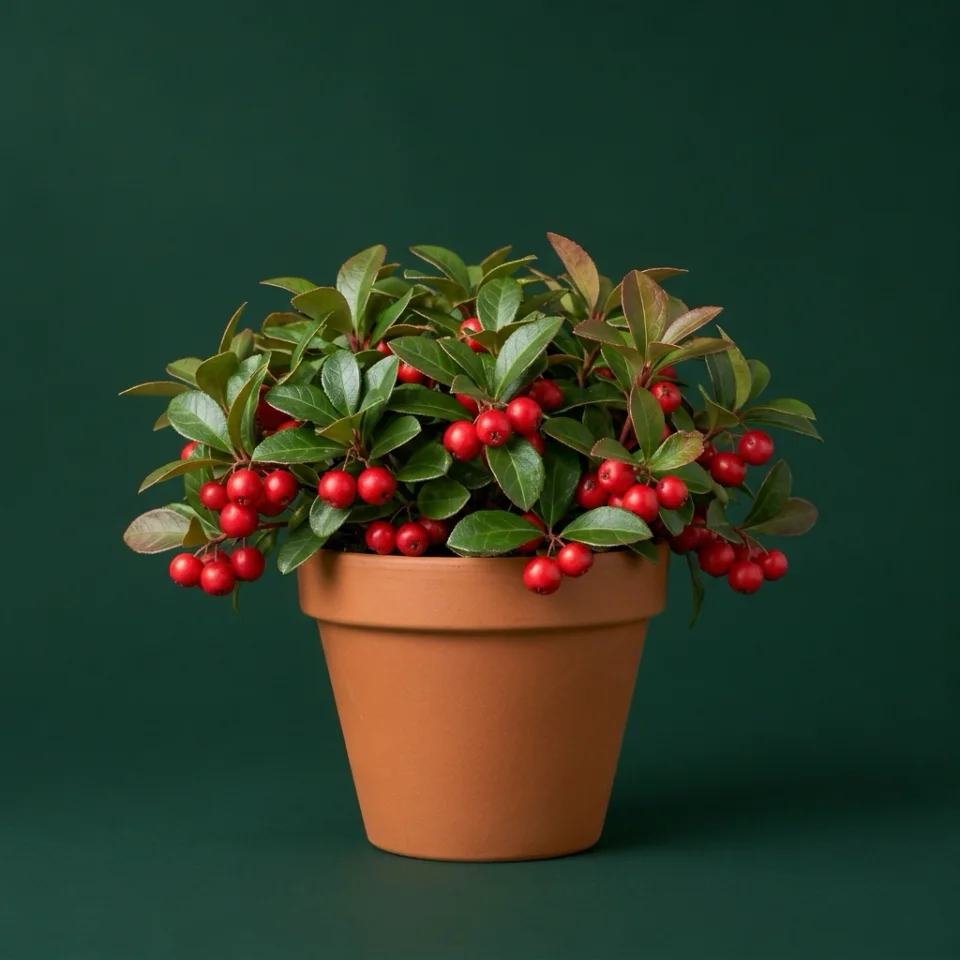
Botanical reference: Gaultheria procumbens
A low mat of glossy leaves and red berries
Gaultheria procumbens, also called teaberry or American wintergreen, forms an evergreen mat about 15 cm tall that slowly spreads by creeping stems. Its oval leaves are leathery and glossy; crushed, they smell of wintergreen, and in cold weather they turn red or purple. In summer it bears small white or pinkish bell-shaped flowers, followed by scarlet berries about a centimetre across that can last all winter. Large-fruited selections such as 'Big Berry' exist. Gaultheria mucronata, a different species, is sometimes sold alongside it: keep the label.
Choosing a good plant in autumn and winter
In autumn and winter you will find it in small pots and seasonal arrangements. Choose a plant with firm leaves, no dry patches or grey mould, and plump, shiny berries. A bronze or reddish tint is normal in the cold; brittle brown leaves are not. Lift the pot: the rootball should feel moist, neither light and dry nor dripping. Check for drainage holes even if it comes in a cover pot or a lined basket. If you give it as a gift, add a note: it lives outdoors and the berries are not for eating.
Bright shade and cool summers
In the wild it grows under trees in cool, acidic soils. In a pot, give it bright shade or gentle morning sun with shade through the middle of the day. Some light helps flowers and berries, but strong afternoon sun, a hot wall or glare from pale paving dries the rootball very quickly. It does best where summers are cool; if yours are hot, aspect matters more than feeding. It belongs on a terrace, balcony or in the garden, not in the living room.
Ericaceous compost and a pot that drains
Use ericaceous compost, the kind sold for azaleas, camellias or heathers. It needs an acidic, organically rich medium that holds moisture and lets the excess run away. It tolerates lime poorly, so do not top up with soil from a chalky or limestone garden. The pot needs clear holes. Do not move it straight into a huge container: that much wet mix around a small rootball takes a long time to dry. A slightly larger pot is enough, with room for the stems to spread.
Regular watering with soft water
Checkerberry does not want to dry out, but it does not want to sit wet either. Feel the compost below the surface and judge the pot’s weight before watering. When it starts to dry, water slowly until it runs from the base, then empty the saucer. Small pots, wind and heat shorten the intervals a lot. Rainwater is the best choice: minerals in hard water can raise the compost’s pH and make it harder for the plant to use nutrients. Boiling does not remove enough lime, and softened water is only for occasional use.
Winter displays without clashing needs
Pair it with plants that want the same things: acidic compost, steady moisture and bright shade. It suits other acid lovers such as azaleas, rhododendrons and blueberries, and in winter pots it often sits with skimmias and heathers; check each label, because they do not all tolerate lime equally. In a tight arrangement, decorative moss hides dry compost, so push a finger down to each rootball. If the container has no drainage, treat it as a temporary display and separate the plants when the season ends.
Winter in a pot is not winter in the garden
In the ground it withstands a lot of cold, but in a pot the roots are exposed through the sides and can freeze; evergreens in containers are at greater risk. Group pots against a sheltered wall, raise them on pot feet or bricks and remove saucers. In severe cold, wrap the pot in bubble wrap or straw, or plunge it in the ground up to the rim. The other danger is waterlogging: do not water when frost is forecast, and in very wet spells move it under cover until it drains. It needs no feeding in winter.
Indoors, only as a visitor
You can bring it to the table for a meal or a few festive days, but do not treat it as a houseplant. Central heating and dry air are nothing like its cool home. If you bring it in, choose the coolest bright spot, away from radiators and fireplaces, check the watering and return it outdoors soon. No number of days fits every home. If it is freezing outside, wait for a mild day to take it out and leave it in a sheltered corner first.
After winter: a new pot or an acidic garden spot
When the season is over, ease it out of the arrangement and decide where it will live. If your soil is chalky or limy, keep it in a slightly larger pot of ericaceous compost. If you have a cool corner with acidic soil and bright shade, it can live in the ground: leave about 25 to 35 cm between plants if you want them to cover the soil. Pick a day without frost or waterlogging, keep the rootball at the same depth and water well. It grows slowly. If it has been in the same compost for a while, use an ericaceous feed during growth, as the label directs.
Flowers, new berries and warning signs
New berries follow the summer flowers, so the nursery’s crop is not always repeated. Steady moisture and some light help most. Problems are usually few: watch for aphids and thrips on shoots, mildew and leaf spot. Dry brown leaves point to a dry rootball, wind or frozen roots in the pot. If new leaves come in pale or yellowish, check your water and the acidity of the compost. Identify the cause before treating, and do not spray as a precaution.
Berries for decoration, not for eating
Treat the berries as ornamental: do not eat them or use them to decorate food, and wear gloves when handling the plant. Leaves and fruit contain methyl salicylate compounds, the main component of wintergreen oil. That concentrated oil is dangerous if swallowed, and small amounts can poison a child. The plant is not the oil, but its old uses in teas or remedies are not a recommendation. Keep it out of reach of children and pets. If someone eats part of it, call a poison centre or your vet with the label to hand.
Guides to help with your decision

Which flowers to give for Three Kings’ Day in Spain
6 January 2027 is a Wednesday and a public holiday across Spain. Which flowers to give for Three Kings’ Day, when to buy them around the 5 January parade and plants that last.

First Sunday of Advent in Germany: date and a gift for your visit
In 2026 it is 29 November; in 2027, 28 November. Check the annual rule and when to deliver a wreath or a plant for a visit.
St Nicholas Day in Germany: flower gifts and when to give them
St Nicholas Day falls on Sunday 6 December 2026. When to buy or send flowers and which small gesture suits an adult.
Christmas in the UK: flowers for Christmas dinner
Christmas stays on 25 December even when the substitute bank holiday moves. Choose flowers for Christmas dinner and arrange an earlier delivery.
Christmas in Portugal · Natal and Consoada flowers
25 December and dinner on the 24th in Portugal: choose a poinsettia for the home or a table arrangement, with delivery suited to your plans.
Three Kings’ Day in Portugal: janeiras, bolo-rei and optional flowers
6 January 2027 falls on a Wednesday and is a working day in Portugal. Janeiras on the night of the 5th, bolo-rei until Kings’ Day and, if you want to bring something more, a plant that keeps going in January.
How to care for a garden azalea in a pot
Shade, acidic mix, shallow roots, water and pruning for Japanese outdoor azaleas, distinguished from florist gift plants.
How to care for winter heath in a pot
Water, light, potting medium and pruning for Erica carnea. Keep the rootball from drying out and avoid cutting into bare old wood.
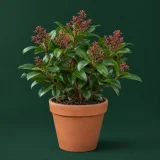
How to care for skimmia in a pot
Shade, watering, potting mix and pruning for Skimmia japonica. Tell reddish flower buds from berries and keep roots moist without waterlogging.

How to care for heavenly bamboo in a pot
Sun for colour, a free-draining pot, watering, winter care and pruning from the base for Nandina domestica. What to know about its toxic berries and invasiveness.
Frequently asked questions
Can you eat the berries?
Do not treat them as food. The plant is sold as an ornamental and its fruit is decorative. Leaves and berries contain methyl salicylate compounds, and traditional uses of the wild species do not turn a nursery pot into food. Keep it out of reach of children and pets.
Is it normal for the leaves to turn reddish?
Yes. In cold weather the leaves often take on red or purple tones, and new shoots can emerge with a wine-coloured tinge. Be concerned if they are also dry, brittle or marked with spreading spots.
Can I keep it indoors all winter?
That is not a good choice. It is an outdoor plant that prefers cool conditions. Indoors, keep it only briefly and in the coolest bright spot. For the rest of the winter, protect it outside, grouped with other pots and with the container insulated in hard frost.
Is tap water all right?
If it is soft, yes. If it is hard, use it only when you have nothing else: rainwater is better for acid-loving plants. Boiling does not remove enough lime, and softened water is only for occasional use.
Will it produce berries again next winter?
It can, but it is not guaranteed. Berries form after the summer flowers. Give it gentle light, steady moisture and acidic compost, and expect the crop may be smaller than on a plant prepared by a nursery.
Can I propagate it?
Yes. Its creeping stems root along their length, and those sections can be separated and planted in ericaceous compost. It also grows from seed or semi-hardwood cuttings, though both routes are slower.
Sources and what they support
- RHS · Gaultheria procumbens
Opened species profile: a dwarf evergreen shrub about 15 cm tall that spreads, with leathery aromatic leaves that redden in winter, bell-shaped flowers and 10 mm scarlet berries. It gives shade or partial shade, moist but well-drained soil, acid or neutral pH, patio and container use, propagation by seed or semi-hardwood cuttings, and fruit that is ornamental and not to be eaten, with gloves for handling. Its H5 hardiness rating refers to UK conditions, not to potted roots in every country.
- RHS · Gaultheria procumbens Big Berry ('Gaubi')
Opened profile of the trade selection 'Big Berry' ('Gaubi'): moist acid or neutral soils in shade or partial shade and, for containers, an ericaceous compost for acid lovers. It repeats that fruit is ornamental and not to be eaten. It describes one cultivar; it does not guarantee berry size or quantity on other plants.
- Missouri Botanical Garden · Gaultheria procumbens
Opened profile: organically rich, evenly moist, acidic, well-drained soil in part to full shade; best in climates with cool summers; 10–14 inch spacing as a groundcover. Glossy leaves turning purple in autumn, summer flowers, berries persisting through winter and pairing with other acid lovers. Few problems: aphids, thrips, mildew and leaf spot. Its months and zones are North American; it mentions historical food and medicinal uses that this guide does not recommend.
- NC State Extension · Gaultheria procumbens
Opened species profile: an understory plant of acidic soils, best in moist well-drained soil, slow-growing, with wine-tinged new growth and leaves that smell of wintergreen when crushed. It lists aphids, thrips, mildew and leaf spot, and notes that leaf tea is no longer recommended. Its edible-fruit tag and heat and drought tolerance describe plants in North Carolina ground, not ornamental nursery pots.
- Lady Bird Johnson Wildflower Center · Gaultheria procumbens
Opened species profile: glossy leaves that redden in cold weather, bell-shaped flowers and aromatic red fruit. It gives acidic soil with low lime tolerance, part shade or shade, best flowering in sunny openings with light midday shade, and creeping stems that root and can be separated and transplanted. It describes wild habitat and propagation; it gives no watering rules for pots.
- RHS · Water: collecting, storing and using
Opened general guide: rainwater is the best option for most plants, acid lovers included, because minerals in hard mains water can raise soil pH and affect nutrient availability. Softened water suits short-term use but not long-term, and boiling does not remove enough calcium for soft-water plants. It is not specific to Gaultheria procumbens and does not measure any particular tap.
- RHS · Container maintenance
Opened container guide: potted plants rely on the water they are given; in winter the main danger is compost freezing or becoming sodden. It advises grouping pots by a house wall, fleece or temporary cover, removing saucers, avoiding watering when frost is forecast and no winter feeding. It is a general UK guide with no species-specific rules.
- RHS · Preventing winter damage
Opened winter guide: evergreen and potted plants are at particular risk. It advises keeping containers in dry, sheltered places, grouping them, wrapping them in bubble polythene or straw so roots do not freeze, or plunging them to the rim. It gives no temperatures for this species and does not replace local conditions.
- RHS · Containers: winter selection
Opened winter container guide: raise containers on pot feet or bricks for drainage and to help prevent frost cracking, choose frost-proof terracotta and bubble-wrap pots in severe weather; no winter feeding. Among shrubs for these displays it names skimmia and Gaultheria mucronata, not G. procumbens, so it does not certify this species.
- Poison Control (National Capital Poison Center) · Kitchen surprises and cautions
Opened article from a US poison centre: oil of wintergreen is another name for methyl salicylate, a relative of aspirin; small amounts can poison children, who can become dangerously ill very quickly, and the bottle must be kept out of reach. It covers the concentrated oil, not the potted plant or its berries, and its phone number serves the United States only.
- Michel y Olszewska (2024), International Journal of Molecular Sciences · Gaultheria procumbens
Opened scientific review: leaves, stems and fruit contain methyl salicylate glycosides, and essential oil distilled from leaves and fruit is almost entirely methyl salicylate. It summarises phytochemistry, pharmacology and traditional use; it does not assess the safety of eating berries from an ornamental plant or set any dose.
How we put these guides together
We review dates, care and recommendations to help you plan each gift.
Spotted something we should review? Contact Agenda Floral.