Flowers
When to give amaryllis flowers
For an anniversary or Christmas amaryllis gift, I would choose stems with a vase if you want flowers ready to display. A flowering pot can also suit someone who wants to care for it. Save the bulb for someone who enjoys watching it grow without expecting flowers on an exact day. This guide covers Hippeastrum. Check the space and whether there are pets before deciding.
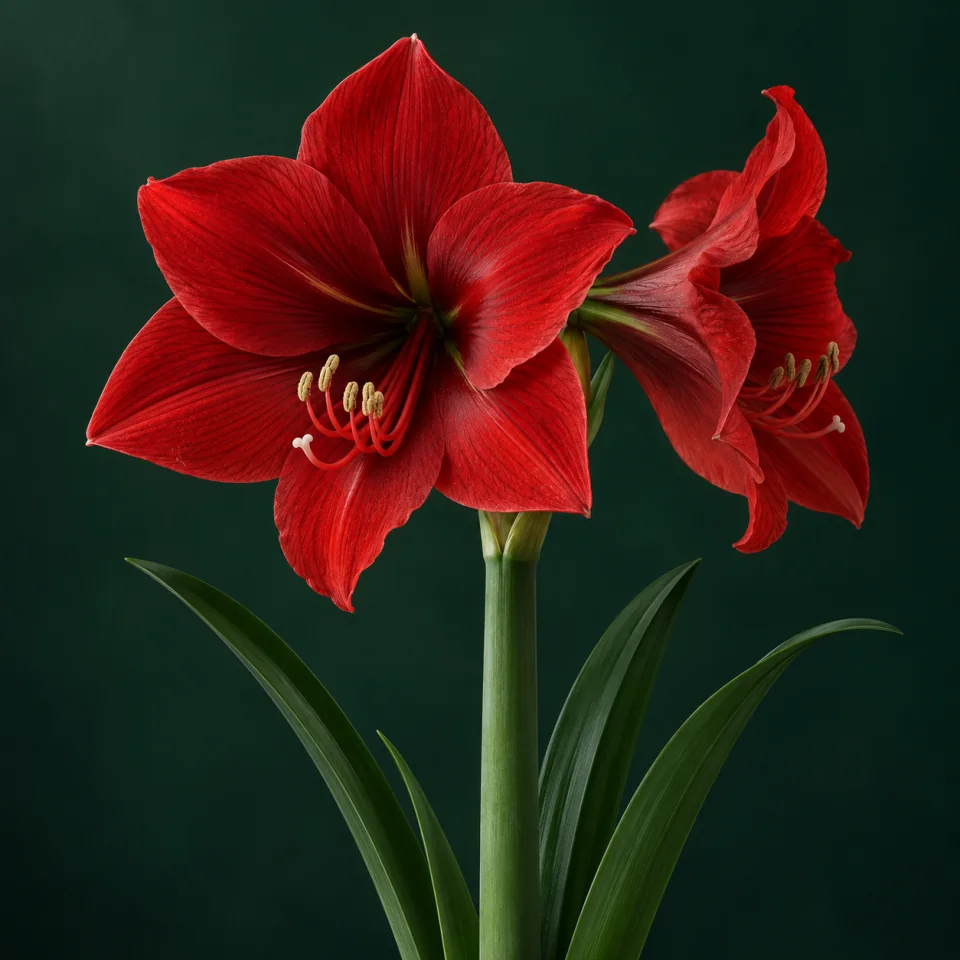
Botanical reference: Hippeastrum
Choosing cut stems, a pot or a bulb
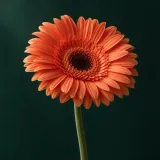
The large flowers of Hippeastrum can suit an anniversary or Christmas gift if you know the recipient likes them. Our image shows a red option. Other colours and forms exist, so use it to request a similar look without assuming a particular variety.
For flowers to enjoy from delivery, ask for cut stems with a vase or a plant already in bloom. A bulb offers something different: watching it grow. Give one if the recipient wants to care for it and does not need open flowers on an exact date.
An order that fits the space
For an anniversary, you could ask: “I would like red amaryllis for a narrow side table. It needs to arrive ready to display with open flowers. Please send a photo of the actual plant or arrangement you will deliver and its dimensions. If nothing suitable is available, I would prefer to choose another flower.”
Check the overall height and width with the flowers open. Ask whether a stable container is included and how it will be protected in transit. If choosing a pot, also agree whether it needs support and request care instructions. Size matters more than adding stems to make the gift look bigger.
Preparing the vase and transport
Hippeastrum has hollow stems. Ask whoever prepares the arrangement to confirm how they will be supported in the container. When taking it home, avoid compressing the flowers and agree protection that keeps the arrangement stable. Do not improvise reinforcements that could damage the stem.
Use a clean vase and keep leaves out of the water. Check the level daily and change the water if it becomes cloudy. Follow the label of any included flower food. These are general cut flower guidelines to use alongside the arrangement’s instructions. They do not guarantee a particular vase life.
On arrival, place the vase in a bright, cool spot away from radiators and draughts. If the intended table receives direct heat, use another stable surface with room for the open flowers. For a visit, you could add a note: “Check the water every day and choose a spot away from the heating.” This advice is for cut stems, not for watering a potted or waxed bulb.
Caring for the pot before and after flowering
For an ordinary potted bulb choose a bright position and water sparingly until leaves appear. Allow excess water to drain and avoid water sitting in the saucer. Confirm your product’s instructions because presentations are not all prepared in the same way.
Keep the green leaves after flowering finishes. Ask for local guidance on caring for the bulb and preparing its next cycle. Avoid copying a British dormancy calendar for a home in Argentina or setting the same routine for every climate.
With a conventional potted bulb, once a flower stalk has finished blooming you can cut that stalk down to the base without removing the green leaves. Having no flowers left does not mean you should immediately store the bulb dry: the leaves are still growing and need care. Give different instructions from those for the vase, for example: “When the flowers finish, keep the leaves and follow the pot’s growing instructions.” Prepare any later rest period according to its cycle and local conditions.
Waxed amaryllis: no watering, different expectations
A wax-coated amaryllis bulb can flower without soil or watering because it uses its stored reserves. Place it in bright, indirect light and turn it every few days to help the stalk grow straighter. Do not stand it in water as you would a cut stem.
When buying a waxed bulb, avoid ones that have started flowering or have spent flower stalks. When choosing one, look at how it stands. It needs a stable base that will still support it as the stalks rise and the flowers open. For a narrow shelf, I would choose another format if the support sits on the edge or the whole plant leans.
The waxed format is intended for a decorative flowering display, rather than keeping year after year. You can try to rescue it afterwards: carefully remove the wax without breaking the roots and inspect the base of the bulb, where they grow. If it is firm and free of rot, plant it in a pot with drainage, leaving the upper part above the potting mix. It may not recover, or it may produce leaves without flowering again the following year.
A waxed bulb can suit a Christmas gift to enjoy without watering. If you want to give a plant for someone to keep growing, I would choose potted amaryllis or an unwaxed bulb. For someone who enjoys repotting, for example, a pot with care instructions offers more than a decorative coating.
Checking for pets at home
Hippeastrum can be toxic if a pet eats it. The bulb is part of the risk too, so giving it without flowers does not remove that precaution. If an animal can reach or chew it, I would choose another gift. Contact a vet immediately after possible ingestion.
Keep the bulb, plant and cut stems out of small children’s reach. They are not ingredients or edible decorations. Ask about these conditions before sending the gift so the recipient does not have to find a safe spot at the last minute.
When we suggest this flower
Compare flowers to choose the format, colours and care that suit the occasion.
Christmas
Spain · Nationwide
A large-flowered Christmas idea. Check whether you are buying a cut stem, a flowering plant or a bulb that still needs growing.
St Nicholas Day · Nikolaustag
Germany · Nationwide
Main flower in our selectionFor an adult we suggest cut amaryllis with a tall, stable vase. For flowers visible at handover, choose stems or a specimen already in bloom; a bulb for growing follows a different rhythm.
New Year’s Eve · Silvester
Germany · Nationwide
If you prefer a bouquet, we suggest amaryllis with a stable vase for a side table. Choose its dimensions for the space it will need with the flowers open.
Christmas Day
United States · Nationwide
We suggest amaryllis for an arrangement with large flowers. Specify cut stems or a potted plant when ordering.
Christmas · Noël
France · Nationwide
Main flower in our selectionCut amaryllis in a low arrangement with a container for the table, or in a bouquet with a vase to give. If you prefer a plant, choose a pot already in bloom to enjoy on arrival, or a bulb to watch grow afterwards.
Three Kings’ Day · Dia de Reis
Portugal · Nationwide
Main flower in our selectionFlowers are not part of Dia de Reis. If you want to bring something besides the bolo-rei, we suggest a potted amaryllis in bud with a stake: it will open at home in January, without an exact date.
Christmas in Italy
Italy · Nationwide
If you prefer cut flowers, ask for amaryllis with a few open flowers and a stable vase. Agree the height and delivery date; a bulb to grow follows a different timetable.
Immaculate Conception in Italy · 8 December
Italy · Nationwide
Main flower in our selectionFor a visit on the day the tree goes up, we suggest a potted amaryllis with its buds already formed, a stake and an outer pot. It will open at home over the following days, without an exact date.
Sinterklaas in the Netherlands
Netherlands · Nationwide
For a table covered in wrapping paper, we suggest cut amaryllis in a low, heavy vase. It arrives ready to place, so nobody has to hunt for a vase in the middle of the evening.
Christmas in the Netherlands
Netherlands · Nationwide
If you prefer flowers ready to place, cut amaryllis in a heavy vase fits on a sideboard without taking up room on the dinner table.
St Nicholas Day in Poland
Poland · Nationwide
If you prefer cut flowers, a few amaryllis stems with some open blooms and a stable vase. A freshly planted bulb takes weeks to flower and will not be in bloom on the 6th.
Christmas Eve in Poland
Poland · Nationwide
A few amaryllis stems with some open blooms and a stable vase. For the 24th choose stems or a plant already in flower: a freshly planted bulb takes weeks to bloom.
St Nicholas Day in Belgium
Belgium · Nationwide
If you prefer cut flowers, a few amaryllis stems in a wide, stable vase fill a breakfast table. Choose buds already showing colour so there are open flowers on the 6th.
Christmas in Belgium
Belgium · Nationwide
Main flower in our selectionChristmas Day, 25 December, is a legal public holiday in Belgium. For the meal we suggest cut amaryllis: a few stems with some flowers open, in a heavy vase that holds them steady. Collect it on the 24th and do not count on your florist opening on the 25th.
Which flowers to give in autumn and winter
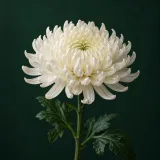
For autumn or winter flowers I would first ask whether the recipient prefers a bouquet or a plant. You could ask about chrysanthemums or carnations for a bouquet. Poinsettias, cyclamen or primulas are potted options if a suitable place is available. Check stock and each plant’s needs because they do not all tolerate the same cold. For an Advent visit in Germany, choose a bouquet in a vase if the table is already decorated, a low centrepiece for a planned space on it, or a wreath with four candles to mark the Sundays of Advent.
Guides to help with your decision
Kūčios in Lithuania: the date and what to bring if invited
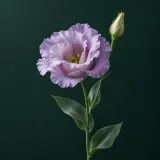
Kūčios is celebrated on 24 December in Lithuania. Lisianthus or gerberas with a vase as a gift, with ideas for arranging collection and the journey.

Which flowers to give for an anniversary
Which flowers to give for an anniversary and how to order around a memory. Compare roses, ranunculus, callas and proteas and agree on substitutions.
How to care for a bouquet when it arrives
Bouquet care on arrival: water, stem cutting, flower food and mixed flowers. What to check if it looks limp and how to keep the flowers still doing well.
Should you give a bouquet or a potted plant?
Choose between a bouquet and a plant according to space and care. Compare houseplants with a rose bush for Sainte-Catherine in France on 25 November.
How to transport a bouquet by car or plane
How to carry a bouquet, a potted plant or dried flowers without crushing them. Packing, water and checks for flights and bringing plants into your destination.
Which flowers to give to someone with cats or dogs
Flowers for a home with cats or dogs: options to consider, checking the whole bouquet and precautions with lilies, holly and mistletoe at Christmas.
How to order flowers from a distance and plan delivery
Send flowers from a distance: format, date, address and handover, including a group gift. Examples and practical advice for different countries.
Frequently asked questions
Are amaryllis and Hippeastrum the same?
Hippeastrum is often sold as amaryllis. Amaryllis is a separate botanical genus, and this guide does not refer to Amaryllis belladonna. Check the label’s name so you can look up the care appropriate to the gift.
Will a bulb flower exactly for Christmas?
You cannot guarantee that day. Timing depends on its condition and growing environment. If you need open flowers for the celebration, choose cut stems with a vase or an ordinary potted amaryllis already in bloom, and confirm their condition close to delivery.
Can I keep the bulb after flowering?
An ordinary potted bulb can keep growing if you retain its green leaves and adapt care to your surroundings. Recovering a waxed bulb is an attempt, not a guarantee: removing the wax does not ensure survival or another flowering. For a gift intended to be kept from the start, I would choose an unwaxed bulb.
Can I plant a cut stem?
A stem for a vase is not a bulb for growing. If the gift is meant to let the recipient watch a plant grow, order a bulb or pot with instructions rather than a cut flower arrangement.
Does it suit a small table?
It can fit if the container is stable and the open flowers do not take over the usable space. Ask for the overall dimensions. If there is no room to place and enjoy it, choose a more compact arrangement rather than deciding from the photo alone.
Sources and what they support
- NC State Extension · Hippeastrum
Identifies the genus, its large flowers and hollow stems. Distinguishes it from Amaryllis. Does not guarantee blooms for a delivery.
- RHS · Hippeastrum en maceta
Explains light, watering, support and retaining leaves. Its British calendar is neither a worldwide schedule nor a promise of flowering.
- RHS · Selección de flores cortadas
Includes Hippeastrum among flowers for cutting. Does not establish commercial availability or a specific vase life.
- Iowa State Extension · Flores cortadas
Supports general water and vase care. Do not apply that handling to watering a potted bulb.
- Pet Poison Helpline · Amarilis
Explicitly includes Hippeastrum in its toxicity warning. Recommends veterinary attention after possible ingestion; does not provide a safe dose.
- Iowa State Extension · Amarilis en cera
Waxed bulbs flower from stored reserves without soil or watering; indirect light and regular turning. Intended for a decorative flowering display. No guarantee of Christmas opening, duration or commercial availability. When buying a waxed bulb, avoid ones that have started flowering or have spent flower stalks.
- Iowa State Extension · Recuperar el bulbo encerado
Careful wax removal to protect roots, inspection for rot and planting with drainage and the upper part exposed. Recovery may fail or produce only leaves the following year. Do not generalise its US growing calendar.
- NC Cooperative Extension · Bulbo encerado después de la flor
Recovery depends on the bulb’s condition and basal tissue capable of forming roots. A conventional pot is an alternative for continued growing. Do not transfer USDA zones, April timing or autumn dormancy to every country.
How we put these guides together
We review dates, care and recommendations to help you plan each gift.
Spotted something we should review? Contact Agenda Floral.