Occasions
Immaculate Conception in Portugal: flowers for the patroness or for a visit
Portugal · Nationwide
8 December is a mandatory public holiday in Portugal and falls on a Tuesday in 2026. It celebrates Nossa Senhora da Conceição, the country’s patroness since 1646. There is no prescribed flower. If you take flowers to your parish church, we suggest a wrapped bunch of white lisianthus without a container; for a home visit, a potted cyclamen. Collect them on Monday the 7th, a working day, and don’t count on your florist opening or delivering on the holiday.
Upcoming calendar dates
Portugal
Agenda Floral, with you
Add it to your calendar
Subscribe to receive our updates, or download the .ics file to import a copy. The copy will not receive later changes.
Use in Google Calendar or another calendar
Open Google Calendar on a computer. Beside “Other calendars”, click “+” and choose “From URL”. Paste the address below to add the subscription. You can then view that calendar on devices using your account.
Guide to adding Agenda Floral to Apple and Google Calendar
Your calendar app decides when to refresh a subscription. Importing the file again may duplicate events. Agenda Floral adds no alarms; you can check alerts in your calendar settings.
Tuesday 8 December 2026: two holiday Tuesdays in a row
Portugal’s Labour Code, the Código do Trabalho, lists 1, 8 and 25 December among the mandatory public holidays. In 2026, the 1st and the 8th both fall on a Tuesday, so the first half of December brings two weeks with a holiday in the middle.
Monday the 7th is a working day. If the flowers are for the 8th, collect them that afternoon and keep them somewhere cool, away from the heating. If you are sending them to someone’s home, ask for delivery on Monday the 7th or Wednesday the 9th, and agree who will be there to receive them.
Nossa Senhora da Conceição, patroness of Portugal
At the Cortes of 1646, Portugal consecrated itself to Nossa Senhora da Conceição by crowning her image in Vila Viçosa, in the Alentejo, as queen and patroness of the country. The devotion went back a long way: the first celebration of the Immaculate Conception in Portugal took place in Coimbra on 8 December 1320.
Pius IX proclaimed the dogma of the Immaculate Conception on 8 December 1854. That is why the 8th is, above all, a religious feast. Each parish and shrine organises its own Masses and celebrations and publishes the times in the days beforehand.
Flowers for church: an offering without a container
If you want to take flowers to the statue in your parish church, ask in the sacristy first whether they accept them that day, where to leave them and whether they need a vase. An offering stays there, so the practical choice is a wrapped bunch or a bundle of stems that someone can easily put in water.
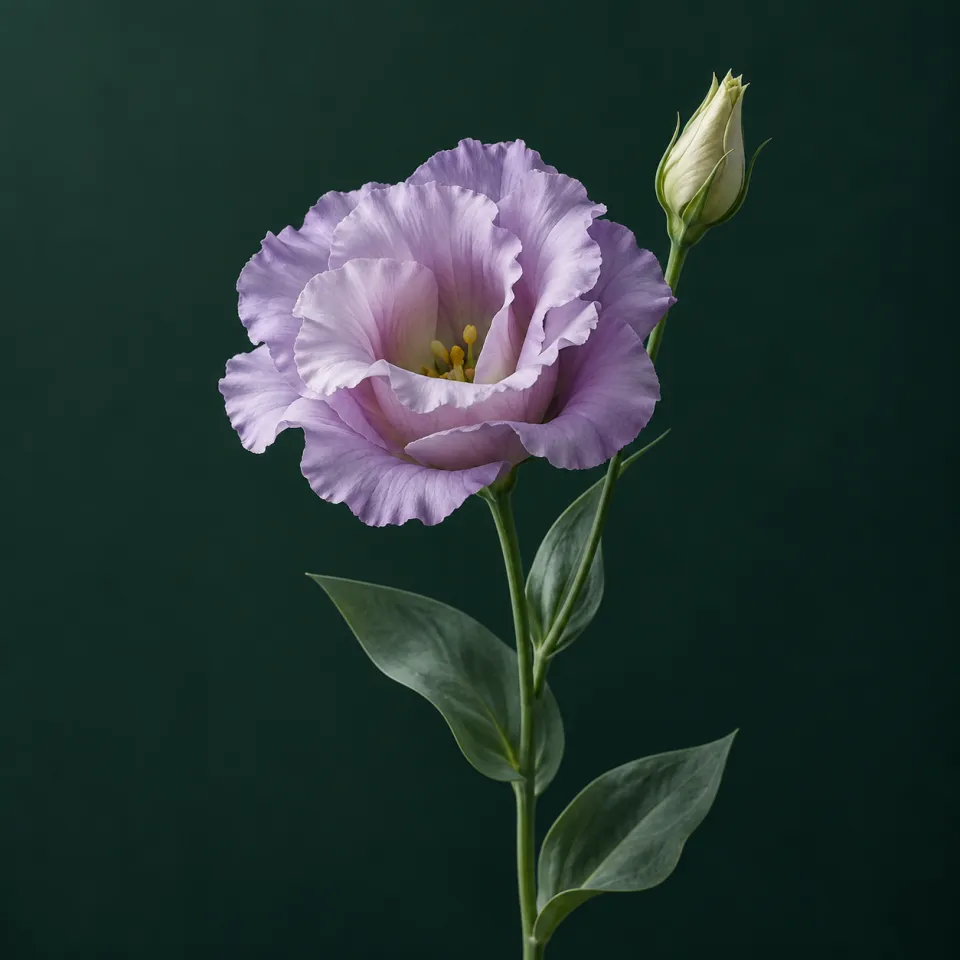
We suggest white lisianthus: bell-shaped flowers with a satin look that hold their own without mixing. Choose a bunch with some flowers already open, so it looks good that same day. It is not a traditional flower for the feast; if another one means more to you, take that.
If you collect it on the Monday, trim the stems a little when you get home, remove any leaves that would sit below the water and leave it overnight in a clean vase in the coolest spot. Wrap it just before you leave.
A home visit: a cyclamen for the winter
If you are having lunch with family on the 8th or visiting someone, a plant works better than a bouquet that needs arranging straight away. We suggest a florist’s cyclamen, Cyclamen persicum: it flowers from early winter to spring and does well in a bright, cool corner, out of direct sun and away from the heating.
It is frost tender, so don’t leave it on an exposed terrace. Water at the edge of the pot or from the saucer, without wetting the centre, and don’t leave water in the outer pot: too much water rots the tuber, which is also toxic if eaten. If there are pets at home, the guide to flowers and pets will help you place it.
If you are looking for a plant for Natal, the guide to Christmas in Portugal covers the poinsettia and explains why wild azevinho, holly, may not be cut or sold on the mainland.
An order and a card for the 8th
For church you could ask: “A bunch of white lisianthus, about eight stems with a few flowers open, wrapped and without a container, to take to the parish on Tuesday the 8th. I’ll collect it on Monday the 7th in the afternoon.” For a home: “A white or pink cyclamen in a pot, with an outer pot I can empty, to give at a lunch on the 8th.”
An offering doesn’t need a card. For the home that welcomes you, keep it simple: “Flowers for this home all winter long. Happy Feast of the Immaculate Conception.” The card guide has more examples.
Which flowers to choose
Compare flowers to choose the format, colours and care that suit the occasion.

Lisianthus
Main flower in our selectionTo take flowers to the statue in your parish church on 8 December, we suggest a wrapped bunch of white lisianthus without a container. It is not a prescribed flower: ask in the sacristy first whether they accept flowers that day.

Cyclamen
For a home visit on the 8th, we suggest a potted florist’s cyclamen: it flowers in winter in a bright, cool spot, away from heating and frost.
Guides to help with your decision
Immaculate Conception in Spain: flowers for 8 December and the 2026 long weekend
8 December 2026 falls on a Tuesday and is a holiday throughout Spain; in ten territories Monday 7 is too. Flowers for a name day, a visit or the church.
Christmas in Portugal · Natal and Consoada flowers
25 December and dinner on the 24th in Portugal: choose a poinsettia for the home or a table arrangement, with delivery suited to your plans.
Three Kings’ Day in Portugal: janeiras, bolo-rei and optional flowers
6 January 2027 falls on a Wednesday and is a working day in Portugal. Janeiras on the night of the 5th, bolo-rei until Kings’ Day and, if you want to bring something more, a plant that keeps going in January.
Immaculate Conception in Italy: flowers for the Virgin in Rome or for the home
8 December 2026 falls on a Tuesday and is a public holiday across Italy. Which flowers to leave at the Immacolata in Piazza Mignanelli, Rome, and what to give on the day the tree goes up.

Immaculate Conception in Peru: flowers for the parish or a visit
8 December is a public holiday in Peru, on a Tuesday in 2026 and followed by another holiday on the 9th. White flowers for an offering or a visit, and when to buy them.

Should you give a bouquet or a potted plant?
Choose between a bouquet and a plant according to space and care. Compare houseplants with a rose bush for Sainte-Catherine in France on 25 November.
How to transport a bouquet by car or plane
How to carry a bouquet, a potted plant or dried flowers without crushing them. Packing, water and checks for flights and bringing plants into your destination.

What to write in a card with flowers
Ideas for writing a flower card in your own words. Examples for birthdays, thanks, anniversaries and sensitive moments.

Which flowers to give to someone with cats or dogs
Flowers for a home with cats or dogs: options to consider, checking the whole bouquet and precautions with lilies, holly and mistletoe at Christmas.
How to order flowers from a distance and plan delivery
Send flowers from a distance: format, date, address and handover, including a group gift. Examples and practical advice for different countries.
Frequently asked questions
Is 8 December a public holiday in Portugal?
Yes, it is a mandatory public holiday nationwide. In 2026 it falls on a Tuesday, as does 1 December; Monday the 7th is a working day.
Why is the Immaculate Conception the patroness of Portugal?
Because at the Cortes of 1646 the country consecrated itself to Nossa Senhora da Conceição, crowning her image in Vila Viçosa as queen and patroness.
Which flowers do people take to church on 8 December?
There is no required flower. Ask your parish whether they accept flowers that day and in what format; a wrapped white bunch, for example of lisianthus, is our suggestion.
Can I have flowers delivered on the 8th?
Only if the florist delivers on the holiday. The safest option is delivery on Monday the 7th, which is a working day.
Sources and what they support
- Código do Trabalho · Artigo 234.º Feriados obrigatórios (PGDL)
Art. 234, as worded by Law 8/2016: mandatory public holidays are 1 January, Good Friday, Easter Sunday, 25 April, 1 May, Corpus Christi, 10 June, 15 August, 5 October, 1 November and 1, 8 and 25 December. Does not regulate shop or delivery hours.
- Diocese de Viseu · Homilia da Solenidade da Imaculada Conceição (2023)
Homily by the Bishop of Viseu: Pius IX proclaimed the dogma on 8 December 1854 in the bull Ineffabilis Deus; the first celebration of the Immaculate Conception in Portugal took place in Coimbra on 8 December 1320; Portugal consecrated itself by crowning the image of Nossa Senhora da Conceição in Vila Viçosa as queen and patroness at the Cortes of 1646. Does not cover flowers or 2026 programmes.
- RHS · Eustoma grandiflorum
Lisianthus is a common name for Eustoma grandiflorum, with bell-shaped, satin-textured flowers, used as a cut flower. Does not cover religious use or availability in Portugal.
- Iowa State University Extension · How to care for cut flowers
Home cut-flower care: clean container, leaves above water, fresh cut on stems, prompt hydration, a cool spot and daily water checks. General guidance; does not guarantee every bud opens.
- NC State Extension · Cyclamen persicum
Florist’s cyclamen: flowers from early winter to spring, is frost tender, prefers bright indirect light and cool conditions; water at the edge or base without wetting the crown, as excess water rots the tuber, which is poisonous. US climate; no Portuguese calendar.
How we put these guides together
We review dates, care and recommendations to help you plan each gift.
Spotted something we should review? Contact Agenda Floral.