Guides
How to care for rosemary in a pot
Care difficulty4 out of 10
Pay attention to watering and growing conditions.
Editorial guide, with suitable light and climate. 0: very easy; 10: very delicate. More stars mean more care.
Potted rosemary needs sun, air and a mix that lets water escape. Check below the surface and water thoroughly when the upper part has dried and the pot is lighter. Do not abandon it dry because it is Mediterranean or keep it constantly wet. To keep it compact, trim leafy shoots without cutting into bare old wood and protect roots from severe cold.
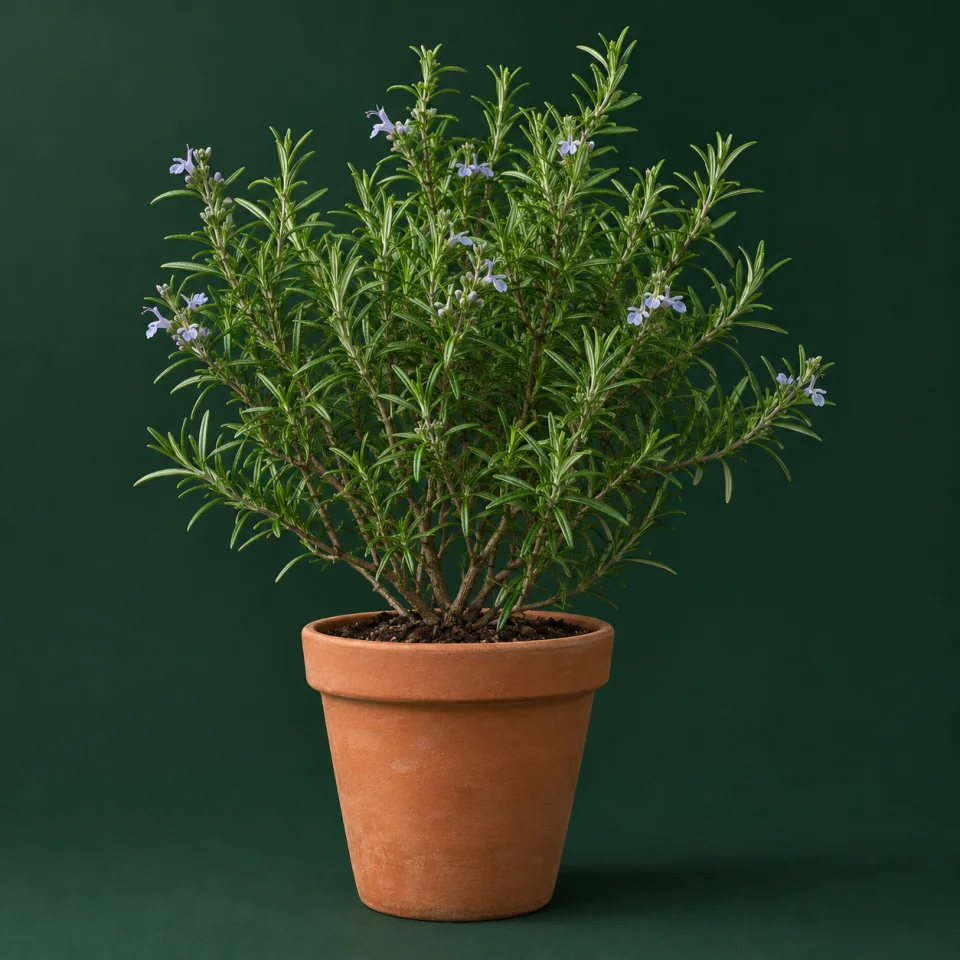
Botanical reference: Salvia rosmarinus (Rosmarinus officinalis)
Choose rosemary that fits your space
Salvia rosmarinus is aromatic, narrow-leaved rosemary, previously called Rosmarinus officinalis. It is an evergreen shrub, not a seasonal plant to discard after flowering. Upright and trailing forms differ in vigour and hardiness. Keep the label to learn its space and shelter needs. A compact plant can start on a balcony; not every form stays small or flowers in the same colour or season.
Sun and air rather than a dark corner
Find a sunny terrace or balcony spot with air around the branches. Acclimatise a sheltered plant gradually to sun and wind so the pot does not dry suddenly. Avoid crowding it among pots with perpetually wet foliage. Keeping it indoors is often harder: when shelter is necessary, choose a genuinely bright, ventilated spot away from radiator heat.
Drought in soil differs from drought in a pot
Put a finger below the surface and check weight. When the top has dried and the pot is lighter, wet the rootball slowly until water drains out, then empty the surplus. Wait if it remains damp and heavy inside. Avoid little daily sips and prolonged complete drying. Heat and wind call for more checks; rain or slower growth may reduce demand. A roof overhang can stop rain reaching the roots.
A stable container with free drainage
Choose a pot proportionate to the rootball, with clear holes and a draining shrub or herb mix. A fine mix that dries slowly needs better aeration, not a decorative stone layer hiding the problem. If roots fill the container or the medium deteriorates, repot in mild weather into a slightly larger size without burying the base deeper. Neither annual repotting nor an enormous starting pot is essential.
Trim green growth rather than bare wood
After flowering, lightly trim tips to maintain shape, leaving leaves on each branch. Avoid cutting back to bare old stems and expecting reliable regrowth. For kitchen sprigs, take small amounts and distribute cuts without stripping the plant; confirm identity and that growing methods and treatments suit food use. A newly bought ornamental rosemary is not automatically a ready-to-eat herb.
Little feed and a cutting if you want to keep it
A pot in the same mix for a long time may need nutrients, but heavy feeding cannot fix poor sun or wet roots. Match a suitable product to the label and existing nutrients during growth only. To propagate, cut a healthy non-flowering tip, remove lower leaves and place in a draining, barely moist mix. Give brightness without scorching sun while it roots. Not every cutting succeeds, and rooting products are not compulsory.
Winter and absences without a full saucer
Hardiness depends on cultivar and climate, and potted roots are more exposed than roots in soil. For severe frost or prolonged cold, protect the container or move it to a bright, airy shelter. Avoid continuous rain on a cold, saturated rootball too. Keep checking moisture even as demand drops. When away in heat, ask someone to check weight and soil; an extra watering before leaving cannot replace that inspection.
Dry-looking foliage calls for an inside check too
Brown leaves or drooping branches can follow drought, cold or roots damaged by overwatering. Check drainage and moisture before adding more; a soft base in wet soil needs investigation. Look beneath leaves and along branches for mites, aphids or mealybugs; a white coating also deserves a check of air circulation and cause. Rosemary is listed as non-toxic to dogs and cats, without extending that to oils, concentrates or applied products. Consult a vet if ingestion causes symptoms.
Guides to help with your decision

Father’s Day in Peru: flowers to give and the 2027 date
Father’s Day in Peru is the third Sunday of June: 20 June 2027. Flower and plant ideas, when to buy and a message for the card.

Which flowers to give to someone with cats or dogs
Flowers for a home with cats or dogs: options to consider, checking the whole bouquet and precautions with lilies, holly and mistletoe at Christmas.
How to care for lavender in an outdoor pot
Sun, drainage, watering and pruning for potted Lavandula angustifolia, including winter care and warning signs.
How to care for a bougainvillea in a pot
Sun, watering, support, pruning and cold protection for Bougainvillea glabra on a terrace. Protect its roots without forcing drought for colour.
How to care for thyme in a pot
Sun, water, pruning, cuttings and winter rain for Thymus vulgaris. Protect its roots and pick sprigs without stripping the plant.
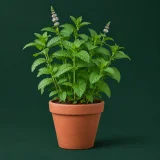
How to care for spearmint in a pot
Light, water, roots, pruning and harvesting for Mentha spicata. Keep steady moisture without waterlogging and give it its own pot to contain spreading.
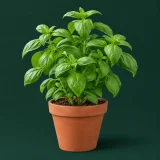
How to care for basil in a pot
Sun, warmth, water and harvesting basil. Avoid a dried-out pot, handle crowded supermarket plants and pick without stripping the stems.
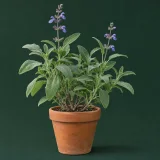
How to care for culinary sage in a pot
Sun, water, harvest and pruning Salvia officinalis. Keep fresh shoots without cutting into bare wood and protect pots from excessive rain.
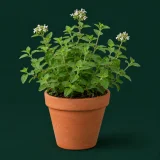
How to care for oregano in a pot
Sun, watering, harvest and division of Origanum vulgare. Keep a useful clump without soaked roots or assuming Mediterranean means no water.
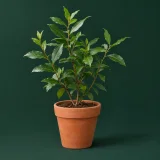
How to care for bay laurel in a pot
Light, watering, cold protection and pruning for potted Laurus nobilis. Help its roots get enough water without leaving them waterlogged.
Frequently asked questions
Can I keep it permanently in a dim kitchen?
That is usually a poor spot. It needs plenty of sun and air; being close to the sink cannot make up for low light. If indoor shelter is your only option, choose the brightest suitable spot and manage moisture and ventilation. The outdoor category helps you choose, without promising survival through every balcony winter.
Will rosemary cut back to old wood recover?
Do not count on it. Bare old wood usually responds poorly to hard pruning. Light cuts into leafy growth are more prudent. If healthy tips remain, a cutting may help preserve the plant while you assess the original specimen, without guaranteeing rooting or recovery.
Sources and what they support
- RHS · Growing rosemary
Salvia rosmarinus name, cultivars, sun, draining containers, water, modest nutrition, cold roots and light pruning avoiding old wood. No British calendar, universal temperature limit or compulsory age-based replacement.
- NC State Extension · Salvia rosmarinus
Identity, opposite linear leaves, small two-lipped flowers, sun, water/drainage and moisture problems. Its severe-pruning option is not advice to cut bare old wood; the conservative RHS/Wisconsin approach is followed.
- Wisconsin Extension · Rosemary (revised June 2026)
Morphology, air circulation, light feeding, moderate harvest avoiding old wood and non-flowering shoot cuttings. Wisconsin climate not generalised; no mandatory hormones, medicinal uses or guaranteed harvest size/timing.
- ASPCA · Rosemary
Lists rosemary under synonym Rosmarinus officinalis as non-toxic to dogs and cats. Does not establish safety of essential oils, concentrates, fertilisers or treatments, or recommend an ingestion amount.
How we put these guides together
We review dates, care and recommendations to help you plan each gift.
Spotted something we should review? Contact Agenda Floral.