Guides
How to care for thyme in a pot
Care difficulty3 out of 10
Pay attention to watering and light and placement.
Editorial guide, with suitable light and climate. 0: very easy; 10: very delicate. More stars mean more care.
Potted thyme needs plenty of sun, air and a mix that does not hold water too long. Let the upper layer dry, check inside and water thoroughly only when needed, allowing drainage. Lightly trim leafy shoots after flowering without cutting into bare old wood. Hardiness in the ground does not prevent a small pot drying out or becoming waterlogged.
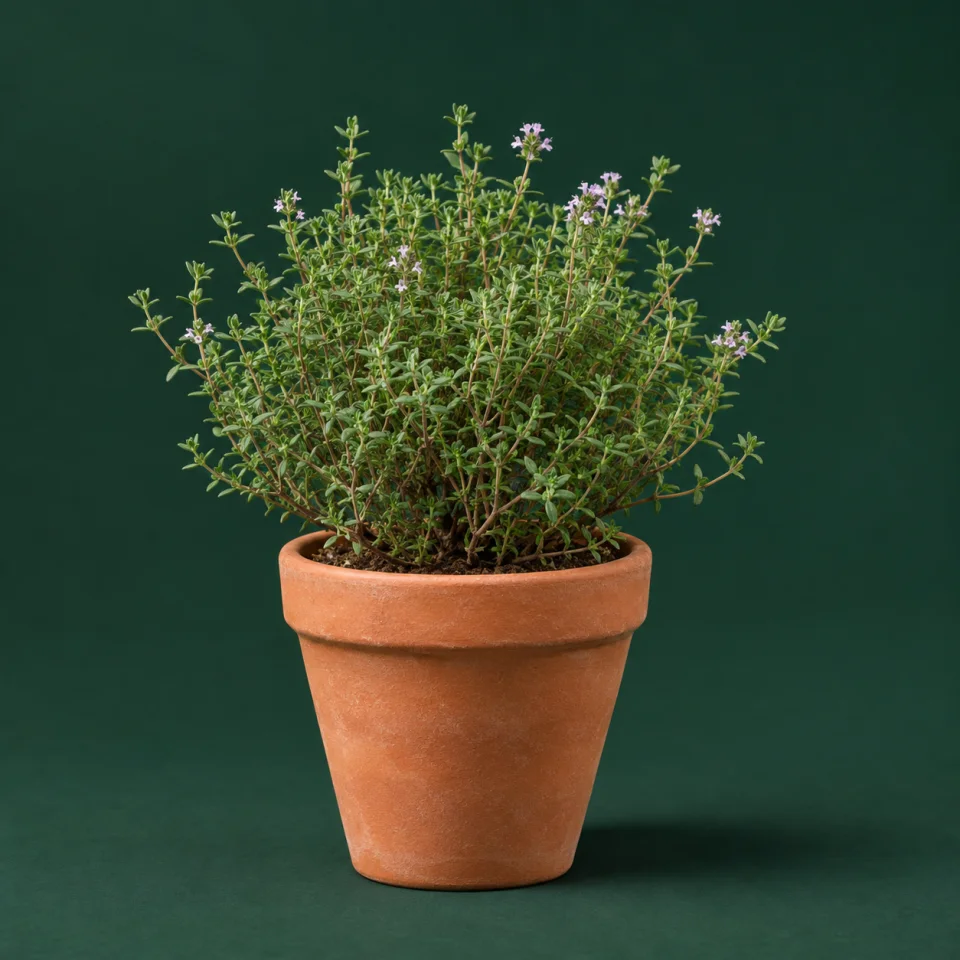
Botanical reference: Thymus vulgaris
Common thyme forms a woody little shrub
This guide covers Thymus vulgaris, with small aromatic leaves and stems becoming woody at the base. Other thymes creep, smell citrusy or have different foliage: keep the label rather than treating all as one variety. Common thyme forms a low bush with tiny flowers. It is perennial and can stay with you after flowering, though appearance changes with age, conditions and climate.
Sun and room around the stems
Choose a sunny balcony or terrace spot with air and no larger plants shading it. Acclimatise a protected-grown plant gradually outdoors. Hot wind can dry a small pot quickly; check its weight during the transition. A dim kitchen is not equivalent to a sunny balcony. There is no need to mist foliage to recreate humid conditions.
Drying between waterings is not forgetting the pot
Feel below the surface and check weight. When the upper part is dry and the pot has lost moisture, wet the rootball slowly until it drains. Empty water retained in a saucer or outer pot. Wait if it remains damp and heavy inside. New plants need follow-up; check more in heat or wind. Avoid a fixed watering day or keeping the mix wet with constant little sips.
Real drainage and a proportionate pot
Use clear drainage holes and an airy herb or shrub mix, adding a mineral component if its structure needs improving. Starting in an enormous slow-drying pot is unnecessary. When roots occupy the pot or the mix deteriorates, repot in mild conditions at the same depth without burying the base. Remove fallen leaves that cover and keep it damp; an attractive surface cannot fix blocked drainage.
Trim green shoots and harvest small amounts
After flowering, lightly trim to prevent sprawling, leaving leaves on the branches. Avoid cutting to bare old stems and expecting reliable regrowth. For kitchen sprigs, confirm culinary thyme with growing methods and treatments suitable for food. Distribute small cuts over healthy shoots and let a young plant grow before harvesting heavily. Some flowers can remain for visiting pollinators.
Modest nutrition and optional propagation
Before feeding, check nutrients already in the mix; avoid routine extra doses or using feed to compensate for shade or damaged roots. If nutrients are needed during growth, use a suitable product according to its label. To propagate, try a healthy non-flowering tip with lower leaves removed in a draining, barely moist mix away from strong sun. A low stem can also be pegged down to root before separation. Neither success nor timing is guaranteed.
Cold, rain and absences need separate checks
Hardiness depends on species, variety and conditions; roots in a container are more exposed than in the ground. For severe or prolonged cold, protect the pot and choose bright shelter suited to your climate. During persistent rain, move it to an airy place where it will not stay soaked. Avoid a dark storage room. When away in heat, ask for soil and weight checks even with rain forecast: a covered balcony can remain dry.
Dry branches or chewed leaves are not a diagnosis
Before adding water, check whether roots are dry or the mix stays wet with a softening base. Cold, drought and root damage can look similar above ground. Look along stems and leaves for animals or insects feeding; identify the issue before treatment, especially if harvesting. Thymus vulgaris is listed as non-toxic to dogs and cats, without extending that to oils, concentrates or applied products. Consult a vet if ingestion causes symptoms.
Guides to help with your decision

Which flowers to give to someone with cats or dogs
Flowers for a home with cats or dogs: options to consider, checking the whole bouquet and precautions with lilies, holly and mistletoe at Christmas.
How to care for lavender in an outdoor pot
Sun, drainage, watering and pruning for potted Lavandula angustifolia, including winter care and warning signs.
How to care for rosemary in a pot
Sun, water, drainage, pruning and cold protection for Salvia rosmarinus. Keep your rosemary leafy without soaking roots or cutting into bare old wood.
How to care for spearmint in a pot
Light, water, roots, pruning and harvesting for Mentha spicata. Keep steady moisture without waterlogging and give it its own pot to contain spreading.
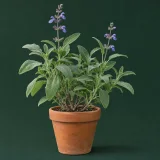
How to care for culinary sage in a pot
Sun, water, harvest and pruning Salvia officinalis. Keep fresh shoots without cutting into bare wood and protect pots from excessive rain.
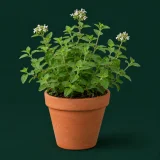
How to care for oregano in a pot
Sun, watering, harvest and division of Origanum vulgare. Keep a useful clump without soaked roots or assuming Mediterranean means no water.
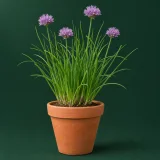
How to care for chives in a pot
Light, water, harvest and division of Allium schoenoprasum. Keep useful leaves without dry roots or mistaking dormancy for a dead plant.
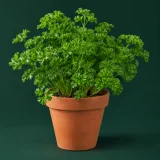
How to care for parsley in a pot
Light, water, sowing and harvest of Petroselinum crispum. Protect its roots and know when a flowering plant needs replacing for leaf crops.
Frequently asked questions
Does a brown base mean the thyme is dead?
Not by itself. Thyme makes woody growth at the base while tips can remain green and firm. Check branches and moisture. Soft tissue, bad smell and saturated mix need investigation. Avoid cutting everything to the base or promising recovery from watering alone.
Can it stay outdoors all winter?
It can suit many climates, but no promise applies to every pot and variety. Check identity, cold forecast and drainage. A pot wet for days and exposed to cold needs more protection than an established plant in the ground. Shelter still needs light and air.
Sources and what they support
- RHS · Growing thyme
Common versus creeping thyme, sun, draining containers, adjusted water, light pruning avoiding old wood, cuttings/layering and winter rain. No British calendar, universal hardiness, unlimited harvest or compulsory replacement.
- NC State Extension · Thymus vulgaris
Identity, small aromatic leaves, woody base, flowers, sun/drainage, containers and vegetative propagation. Drought/frost tolerance in soil cannot guarantee every pot or turn pruning measurements into a recipe for every size.
- ASPCA · Thyme
Lists Thymus vulgaris as non-toxic to dogs and cats. Not extended to every thyme, essential oils, concentrates or products, and no ingestion amount is prescribed.
How we put these guides together
We review dates, care and recommendations to help you plan each gift.
Spotted something we should review? Contact Agenda Floral.