Guides
How to care for parsley in a pot
Care difficulty4 out of 10
Pay attention to watering and growing conditions.
Editorial guide, with suitable light and climate. 0: very easy; 10: very delicate. More stars mean more care.
Parsley needs light, fertile mix and regular moisture without standing water. Give its root room and harvest a few outer stems at a time, cutting near the base without pulling out the centre. It is biennial: leaves come first, then the plant concentrates on flowers and seed. When that stage arrives, start another plant if you want continuing leaf harvests. Extra fertiliser cannot keep it young indefinitely.
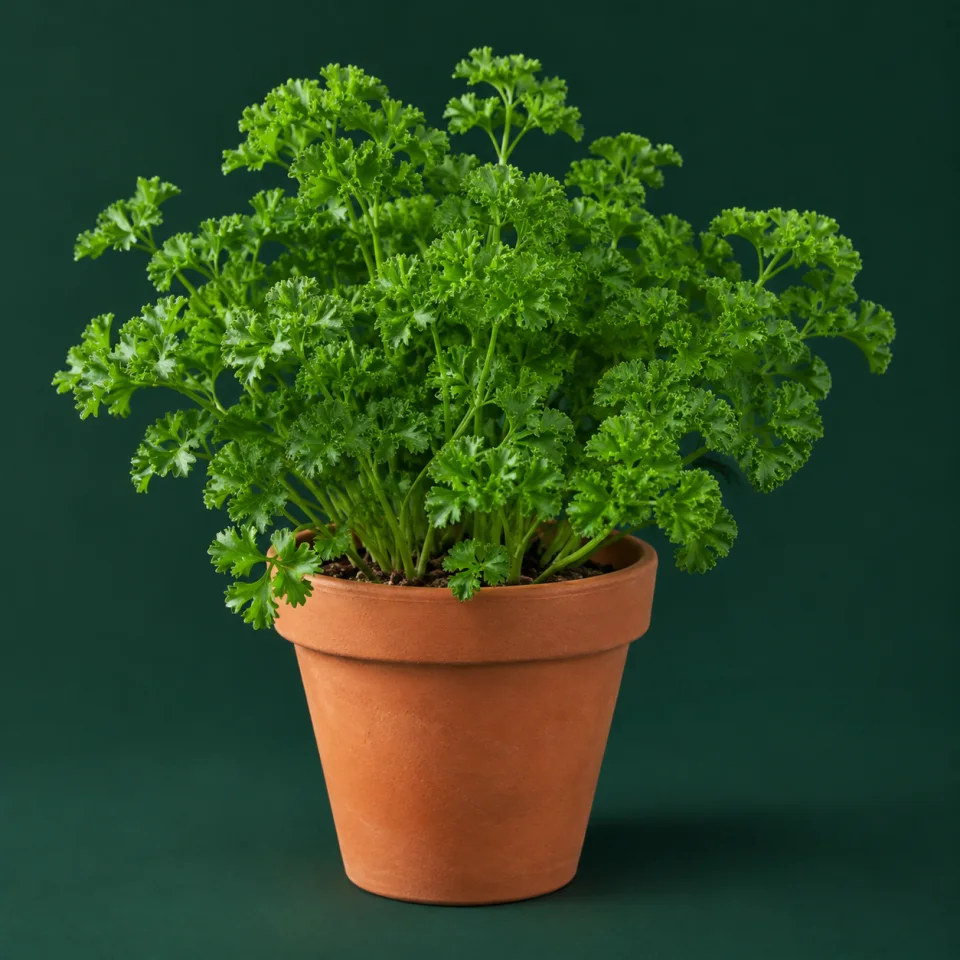
Botanical reference: Petroselinum crispum
Curly or flat, start with a known identity
This guide covers Petroselinum crispum, including curly and flat-leaved forms. The photo shows curly parsley, without certifying a cultivar or another plant’s suitability for food. Keep the label and cook only with identified plants grown for eating and treated with compatible products. Wash the stems you harvest. Do not transfer these instructions to similar-looking wild herbs: neither a photo nor a smell establishes a safe identification.
Start with seed or a plant raised for growing on
Sowing directly in its final pot avoids moving the root. Cover seed with about 1 cm of mix, water gently and maintain light, mild warmth and slight moisture. Germination can take weeks; do not discard the pot because nothing appears straight away. A nursery plant saves that waiting period, without guaranteeing an immediate crop. Crowded supermarket pots are intended for short indoor harvests: keep them indoors rather than introducing possible diseases outside. For outdoor growing choose seed or plants intended for cultivation.
Give it light without overheating the container
Choose sun or bright partial shade. On a very hot balcony, protection during the strongest hours helps the root ball dry less quickly. Gradually acclimatise an indoor-raised plant to outdoor conditions. If sheltering from cold, keep it somewhere very bright rather than in a dark kitchen beside heating. Lower light and activity can mean fewer leaves; there is no need to force equal production throughout the year.
Room for a root that dislikes disturbance
A container at least about 25 cm wide and deep is a useful reference. Use clear drainage holes and fertile potting mix that holds moisture without compacting. Transfer a young plant with its root ball intact at the previous level, without routinely untangling or cutting its taproot. If a healthy growing plant needs more room, move up carefully. Do not divide the centre as you might a clump of chives: seed is the renewal method described here.
Water after checking the mix
Feel the upper layer and lift the pot. As it begins losing moisture, wet the root ball and let surplus water escape; do not wait for complete drying. If it remains heavy and wet, check again later. Heat and wind can increase use, while cool conditions prolong moisture. Before an absence, show a helper these signs. A permanent water reserve in the saucer does not replace that attention and can damage roots.
Harvest outer stems and feed modestly
Wait for enough growth, then take a few outer stems near the base with clean scissors. Leave the centre and sufficient leaves to continue; pulling up a bunch or stripping everything at once weakens the plant. Remove yellowing lower leaves. If nutrients are needed during growth, use a balanced feed suitable for edible crops according to its label and existing mix reserves. Do not combine several schedules or try repairing soaked roots with fertiliser.
Prepare the next parsley when flowers arrive
Its biennial cycle explains the move from a leafy period to a flower stalk and seed, before the plant finishes. Its age may be unknown when purchased. Cutting a flower stalk does not automatically return it to the first stage. For continuing leaves, start another young plant or sow ahead. Keep a flowering plant if you want its seeds, without expecting the same leaf crop or a timetable identical across climates.
Check damage and keep pets away
Look for aphids, slug or snail bites and leaf spots before treatment. Check drainage and the base if wilting persists; use only products authorised for that edible crop according to the label. Parsley is toxic to dogs and cats. Its furanocoumarins can cause photosensitisation, described after eating large amounts, with sunburn or dermatitis on sun exposure. This condition does not establish a safe dose or make it a pet treat. Keep plants and trimmings out of reach and contact a vet promptly for possible ingestion, without home remedies.
Guides to help with your decision
How to care for thyme in a pot
Sun, water, pruning, cuttings and winter rain for Thymus vulgaris. Protect its roots and pick sprigs without stripping the plant.
How to care for basil in a pot
Sun, warmth, water and harvesting basil. Avoid a dried-out pot, handle crowded supermarket plants and pick without stripping the stems.
How to care for chives in a pot
Light, water, harvest and division of Allium schoenoprasum. Keep useful leaves without dry roots or mistaking dormancy for a dead plant.
Frequently asked questions
Why does it yellow even when I keep up with watering?
More frequent water is not always helpful. Check whether the inside remains saturated, drainage holes are clear and only older outer leaves are yellowing or the whole plant is weakening. Review light, pests and any flower stalk. Correct the cause you find before adding water or feed; colour alone does not identify the problem.
How can I use a small harvest left over?
Wash healthy stems from a plant grown for cooking. Fresh leaves retain flavour best; you can also chop and freeze them with a little water in an ice-cube tray for cooked dishes. To dry them, leave stems somewhere airy until completely dry before sealing the container. Do not close damp leaves in a jar expecting them to dry inside.
Sources and what they support
- RHS · Parsley
Curly/flat P. crispum, biennial cycle, slow sowing at 1 cm, minimal root disturbance, pot at least 25 cm, draining moisture, modest feed and outer-stem harvest. Supermarket pots kept indoors for biosecurity. No UK months, guaranteed deadlines or perpetual plant.
- NC State Extension · Petroselinum crispum
Biennial identity, curly or flat leaves, light and draining moisture, taproot sensitive to transplanting, outer-stem cutting and flowering phase. No medicinal/cancer claims, local calendar or stacked feeding schedules.
- ASPCA · Parsley (Petroselinum crispum)
Toxic to dogs/cats; furanocoumarins and photosensitisation described with large amounts. Retain that condition without inferring a safe dose. Vet advice for possible ingestion; no remedies.
How we put these guides together
We review dates, care and recommendations to help you plan each gift.
Spotted something we should review? Contact Agenda Floral.