Guides
How to care for chives in a pot
Care difficulty3 out of 10
Pay attention to watering and growing conditions.
Editorial guide, with suitable light and climate. 0: very easy; 10: very delicate. More stars mean more care.
Chives need fertile mix that holds moisture and lets surplus water drain away. They grow in sun or partial shade, but a pot should not be treated like a dry herb bed. Check the mix and water before the whole root ball dries out. Harvest with scissors without pulling up the clump, and allow room to divide it when crowded. Leaves can disappear during cold-weather dormancy. Chives are toxic to dogs and cats.
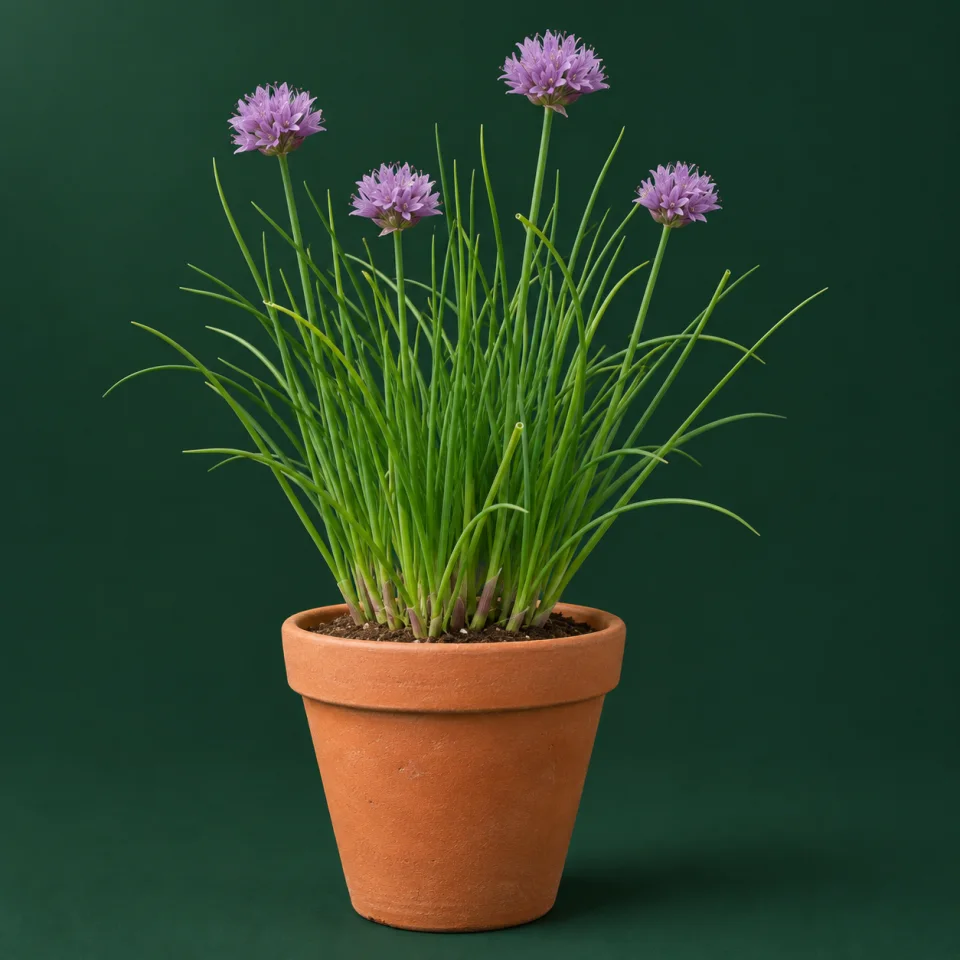
Botanical reference: Allium schoenoprasum
Identify your chives before using them in food
This guide covers Allium schoenoprasum, a bulbous perennial forming clumps of fine, cylindrical, hollow leaves. Flowers are usually mauve pompoms. Garlic chives, Allium tuberosum, have flat leaves and white flowers and belong to another species. Keep the label. For cooking, use only identified plants grown for food with compatible treatments, and wash your harvest. A photo, scent or similar leaves found outdoors cannot establish that an unfamiliar plant is safe to eat.
Choose a bright spot you can keep an eye on
Put the container in sun or bright partial shade, somewhere you can check it and harvest without knocking the clump. A plant raised indoors needs gradual outdoor acclimatisation. On a very hot balcony, shelter from the hottest hours can help the mix retain moisture. Do not hide it in darkness to prevent drying. A very bright indoor windowsill can support leaves, but it does not mean the plant must look the same throughout the year.
Give the clump more room than a small nursery pot
Choose a container at least about 20 cm wide and deep, with clear drainage holes. This gives more room than a little purchase pot, although a mature clump may need more space or division. Use fertile container mix that retains water without turning muddy. Keep the previous planting level, settle gently and water. Compacted mix or roots filling the volume suggest fresh mix or division.
Keep moisture regular without a standing-water reserve
Feel the upper layer and lift the pot. As it starts losing moisture, water the root ball and let it drain; do not wait until every leaf droops with thirst. Equally, do not repeat while the inside remains heavy and wet. Wind, heat and small containers speed drying. Before going away, show a helper these checks. Do not copy thyme’s drier watering pattern or leave stagnant water to make up for several days without attention.
Feed modestly while it is making leaves
A growing plant long kept in the same mix may benefit from modest suitable feed for an edible crop. Follow the label and account for existing nutrients. More product does not turn a weak clump into a heavy harvest. If leaves yellow over soaked soil, check roots and drainage first. During dormancy or just after division, avoid forcing growth with fertiliser.
Cut leaves without pulling out the little bulbs
Let a young plant establish before harvesting heavily. Use clean scissors to take the leaves you need near their base, without pulling them or repeatedly stripping the whole clump. Flowers can stay for pollinators. Afterwards remove their tougher stalks at the base unless you want seed. An established healthy clump can also be cut back to about 5 cm to renew its foliage, but this offers no fixed regrowth date and will not rescue diseased roots.
Divide a crowded clump rather than replacing it on a deadline
When growth becomes tightly crowded and fresh leaves struggle, divide a healthy clump in mild conditions as growth resumes or after its active season. Each portion needs roots and shoots; replant straight away at the same level and water to settle. Three or four years is a useful density-check reference, not an expiry date. Seed is another option: sow 0.5–1 cm deep in slightly moist seed mix with light and gentle warmth, without promising germination by a particular date.
Check symptoms and keep pets away
Wilting can come from thirst or roots damaged in waterlogged mix. Check both before adding more water. Look for aphids or raised orange spots consistent with rust, separate affected parts and use only products authorised for that edible crop according to the label. Keep leaves, flowers and cuttings away from dogs and cats: chives can cause digestive upset and red blood cell damage, including haemolytic anaemia. For possible ingestion, contact a vet promptly without waiting for symptoms or trying home remedies.
Guides to help with your decision
How to care for thyme in a pot
Sun, water, pruning, cuttings and winter rain for Thymus vulgaris. Protect its roots and pick sprigs without stripping the plant.
How to care for basil in a pot
Sun, warmth, water and harvesting basil. Avoid a dried-out pot, handle crowded supermarket plants and pick without stripping the stems.
How to care for oregano in a pot
Sun, watering, harvest and division of Origanum vulgare. Keep a useful clump without soaked roots or assuming Mediterranean means no water.
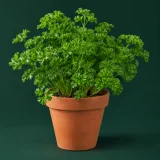
How to care for parsley in a pot
Light, water, sowing and harvest of Petroselinum crispum. Protect its roots and know when a flowering plant needs replacing for leaf crops.
Frequently asked questions
Is it dead if leaves disappear in cold weather?
Not necessarily. Leaves may die back while the underground parts remain dormant. Check for a firm base, fresh shoots and soil that is staying saturated. Protect the container from locally severe cold without removing light, and adjust water to its low activity. Do not try waking it with lots of water and feed; a soft base calls for checking the clump’s health.
Can it share a planter with thyme or basil?
Chives prefer more regular moisture than thyme. Basil often needs a closer watering pattern, but it requires warmth and does not necessarily share the same cold tolerance. If space or water needs clash, group separate pots together: you can harvest the herbs in one place without forcing identical moisture on all of them. A shared planter must also allow for mature plant size.
Sources and what they support
- RHS · Chives
Identity versus A. tuberosum, sun or partial shade, fertile moist draining mix, pot at least 20 cm, container watering, harvest/cutting, division and seed. No UK months, fixed schedule or guaranteed flowers/regrowth.
- NC State Extension · Allium schoenoprasum
Bulbous perennial with hollow leaves, sun/partial shade, pollinator flowers and division. Rot risk with poor drainage; ground drought tolerance does not justify drying a pot.
- ASPCA · Chives (Allium schoenoprasum)
Toxic to dogs/cats, with digestive upset and red blood cell damage/haemolytic anaemia. Prompt vet advice for possible ingestion, without waiting for symptoms, safe doses or remedies.
How we put these guides together
We review dates, care and recommendations to help you plan each gift.
Spotted something we should review? Contact Agenda Floral.