Guides
How to care for culinary sage in a pot
Care difficulty4 out of 10
Pay attention to watering and growing conditions.
Editorial guide, with suitable light and climate. 0: very easy; 10: very delicate. More stars mean more care.
Culinary sage needs sun, air and draining soil. Check water in pots even though it tolerates drought in the ground: water as the upper layer starts drying and let it drain, without standing water or always drying the entire rootball. Harvest lightly from young plants and prune above leafy growth. Bare old wood may not reshoot.
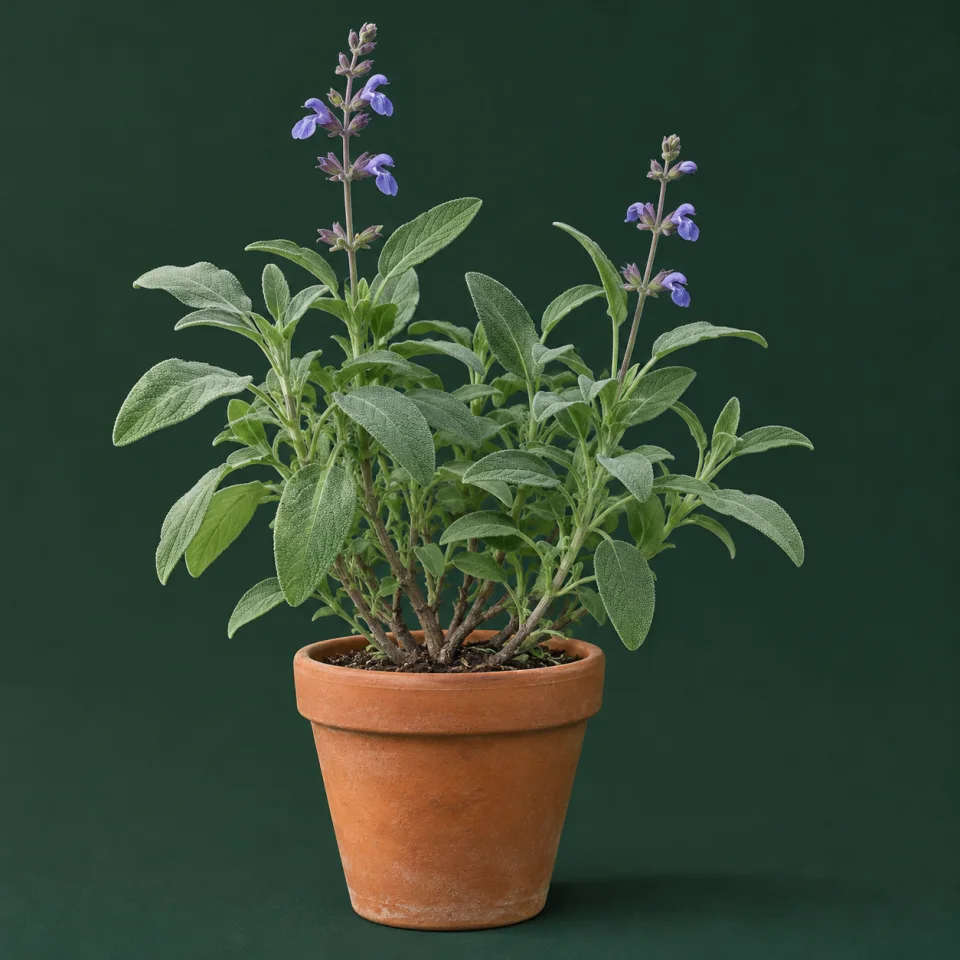
Botanical reference: Salvia officinalis
Make sure it is culinary sage
This guide covers Salvia officinalis, a perennial shrub with aromatic, slightly velvety grey-green leaves and a base that becomes woody. Cultivars vary in size and colour. Not every plant called sage is this species. For cooking, choose an identified plant grown for food use with compatible treatments; a photo or similar-looking leaves are insufficient.
Sun and airflow, with shelter suited to your climate
Choose a sunny ventilated place protected from the strongest winds. Gradually acclimatise an indoor-grown plant before leaving outside. Ground hardiness does not ensure the same response from exposed pot roots. During severe cold or persistent rain, move the container somewhere bright and sheltered. Avoid shutting it in a dark kitchen for protection.
Room for roots without trapped water
Around 30cm in width and depth is a useful reference for a developed plant, adjusted for cultivar and roots. Use draining container mix, with a mineral component if needed, and clear holes. Retain the original planting depth without burying the neck. Move up slightly when roots or medium require it, rather than providing a huge volume of wet soil in advance.
Potted sage still needs water
Newly planted sage needs closer attention while establishing. Check surface mix and weight: as the top starts drying, moisten the rootball and empty the saucer. Avoid saturation or weeks without water just because it is Mediterranean. Heat and wind dry pots quickly; cold and rain can keep them wet too long. Before leaving, explain these checks and shelter from excess rain while retaining light.
Light feeding according to mix reserves
Intensive feeding is unnecessary for its natural grey-green colour. An established plant growing in the same pot for some time may benefit from moderate suitable general feed at label rates, accounting for medium reserves. Avoid stacking several products. If it yellows in cold or with wet roots, correct those conditions first; nutrients do not fix every weakness.
Harvest and prune where leaves remain
Let a young plant establish and pick lightly. Take leaves or tips from an adult without stripping it. As growth resumes after the main frost risk, trim gently above leafy shoots to encourage a compact bush. Avoid cutting into bare old wood, which may not reshoot. You can leave some flowers for pollinating insects and remove the spent stems afterwards.
Renew a tired plant with healthy shoots
Old sage may open out and become very woody. If little green growth remains, prepare a replacement instead of cutting to ground level and hoping for recovery. Take a healthy young non-flowering shoot, cut below a node, remove lower leaves and insert in moist, unsaturated cutting mix. Give brightness without scorching sun and ventilate any cover. Once rooted, acclimatise gradually and pot individually, without a promised deadline.
Check marks and roots before spraying
Look for poor drainage, crowded foliage and small insects underneath leaves before treatment. Pale marks, powdery mildew or wilt have more than one possible explanation and do not always require a product; isolate affected plants and remove damaged material. Treatments must be suitable for the edible crop and follow their labels. Salvia officinalis is classified non-toxic to dogs and cats, without extending this to concentrated oils, fertilisers or other sages. Ask a vet if an animal develops symptoms.
Guides to help with your decision
How to care for rosemary in a pot
Sun, water, drainage, pruning and cold protection for Salvia rosmarinus. Keep your rosemary leafy without soaking roots or cutting into bare old wood.
How to care for thyme in a pot
Sun, water, pruning, cuttings and winter rain for Thymus vulgaris. Protect its roots and pick sprigs without stripping the plant.
How to care for basil in a pot
Sun, warmth, water and harvesting basil. Avoid a dried-out pot, handle crowded supermarket plants and pick without stripping the stems.
How to care for oregano in a pot
Sun, watering, harvest and division of Origanum vulgare. Keep a useful clump without soaked roots or assuming Mediterranean means no water.
How to care for bay laurel in a pot
Light, watering, cold protection and pruning for potted Laurus nobilis. Help its roots get enough water without leaving them waterlogged.
Frequently asked questions
Why does the centre become woody and bare?
A woody base is normal growth, and age can affect shape. Low light and lack of light trimming may also leave long sparsely leafed stems. Keep green shoots and improve the site rather than cutting to bare wood and assuming it will refill. If little green remains, renew from a healthy shoot without imposing replacement every fixed number of years.
Can it share a pot with other herbs?
Rosemary and thyme are often a closer fit than basil or spearmint because of sun and drainage needs, provided there is space for adult sizes. Basil needs more regular moisture, while spearmint occupies containers with underground stems. If unsure about space or watering, group separate pots so each can be adjusted easily.
Sources and what they support
- RHS · Growing sage
Salvia officinalis, sun/shelter, 30cm container reference, drainage, pot versus ground watering, light feeding, green-growth pruning, harvest and renewal by cuttings/layering. No UK months, permanent pot drought or fixed-age replacement.
- NC State Extension · Salvia officinalis
Culinary identity, simple opposite hairy leaves, sun, poor drainage/rot, old wood rarely resprouting, light early harvest and problems. Other sages are not this species; medicinal history is not a recipe.
- RHS · Softwood cuttings
Young non-flowering shoot, cut below a node, lower leaves removed, moist unsaturated cutting medium and light without scorching sun; ventilation if covered. Combined with sage-specific advice, without a rooting deadline or guarantee.
- ASPCA · Sage
Salvia officinalis classified non-toxic to dogs and cats. Not extended to all Salvia, concentrated oils, growing products or animal diets.
How we put these guides together
We review dates, care and recommendations to help you plan each gift.
Spotted something we should review? Contact Agenda Floral.