Guides
How to care for bay laurel in a pot
Care difficulty4 out of 10
Pay attention to watering and growing conditions.
Editorial guide, with suitable light and climate. 0: very easy; 10: very delicate. More stars mean more care.
Bay laurel grows well in a pot with sun or partial shade, shelter from wind and a medium that drains freely. Check moisture before watering: a Mediterranean shrub still depends on you in a container. Provide modest feeding while it grows, room for its roots and protection when your local winter requires it. If you want leaves for cooking, start with an identified Laurus nobilis grown for food.
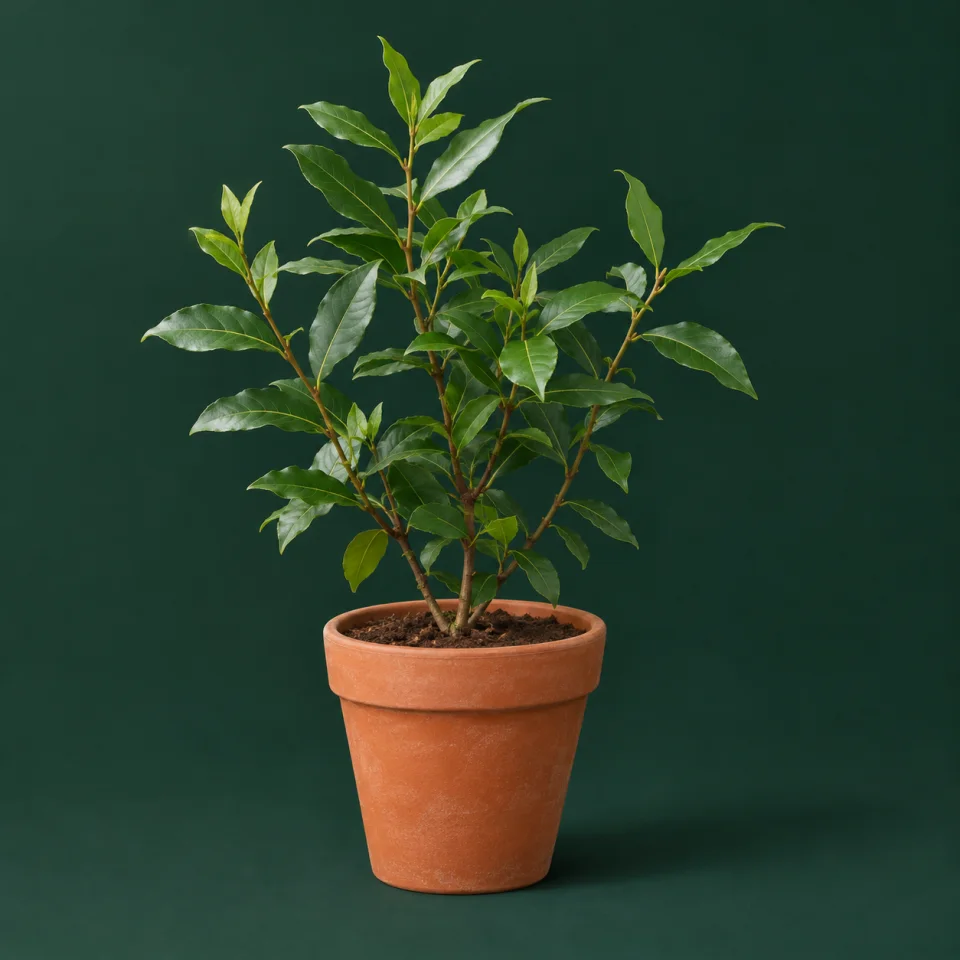
Botanical reference: Laurus nobilis
Start with the right bay
This guide covers culinary bay, Laurus nobilis, an evergreen shrub. Do not confuse it with cherry laurel, Prunus laurocerasus, a different, poisonous species. Similar looks, scent or a common name cannot establish what is safe to eat. Keep the plant label and do not gather leaves from hedges or unknown plants. The photograph helps you picture its shape; it does not certify the identity or growing history of another specimen.
Give it light and shelter
Choose a sunny or partly shaded outdoor spot sheltered from strong wind. A bright courtyard, for instance, may work better than the exposed edge of a balcony. Leave room to check and move the pot. In a cold climate, arrange a bright, cool, frost-free shelter before it is needed. Do not put it in a dark living room for winter: it remains a shrub that needs light, even when growth slows.
Use a stable pot with free drainage
Choose a container a little larger than the rootball, with open drainage holes and a stable base. A tall shrub in a tiny pot can topple easily. Use fertile, free-draining potting medium suitable for container shrubs; a loam-based or mineral-containing mix adds stability. Keep the outlets clear and empty water trapped inside decorative outer pots. If the patio surface blocks drainage, lift the base slightly on secure pot feet.
Water by checking the medium
Feel below the surface and learn the difference between the weight of a freshly watered pot and one starting to dry. When water is needed, wet the rootball slowly and let the surplus drain; wait if it is still moist. Heat, wind and crowded roots can increase demand. Cold reduces it without removing the need to check. Before going away, show your helper what moisture to look for. A permanently full saucer cannot replace that judgement.
Make room for roots and replace nutrients
A pot has limited nutrient reserves. During growth, choose feed suitable for the intended crop, follow its label and allow for fertiliser already present in the medium. Do not stack products to hurry a stalled plant. Check the rootball if it dries unusually fast or is packed with roots. Repotting is commonly considered every two or three years, depending on growth and condition, using fresh medium and a slightly larger pot. Seek help before root-pruning a large tub specimen.
Protect the roots as well as the leaves
Container roots are more exposed than roots in the ground. Before severe cold, move the pot into shelter, insulate the container and avoid leaving the medium soaked. Where your climate requires it, use a bright, frost-free overwintering space. Wrapping the pot does not guarantee survival through every winter. Check your local forecast and arrange help in advance if moving it is difficult. A published minimum temperature is not a promise for every specimen or balcony.
Prune gently and harvest a few leaves
Shorten wayward shoots with clean secateurs during growth in mild conditions. Cutting individual stems avoids the half-cut leaves left by shearing across the whole shrub. There is no need to make a perfect ball. Recovery from hard pruning can be slow. For cooking, take a few healthy mature leaves from an identified plant grown for food, observing any approved product instructions. Wash them and remove them before serving: they remain tough after cooking.
Check problems and keep pets away
Yellow leaves do not automatically call for fertiliser. Check moisture, drainage, cold exposure and root space first. Inspect leaf undersides and shoots for scale insects or bay psyllids, and identify the problem before treating a plant you harvest. Laurus nobilis is toxic to dogs and cats and can cause vomiting and diarrhoea. Large ingestion of whole leaves may cause obstruction. Prevent access and contact a veterinarian promptly after possible ingestion, without waiting for symptoms or trying home remedies.
Guides to help with your decision
How to care for rosemary in a pot
Sun, water, drainage, pruning and cold protection for Salvia rosmarinus. Keep your rosemary leafy without soaking roots or cutting into bare old wood.
How to care for culinary sage in a pot
Sun, water, harvest and pruning Salvia officinalis. Keep fresh shoots without cutting into bare wood and protect pots from excessive rain.
How to care for oregano in a pot
Sun, watering, harvest and division of Origanum vulgare. Keep a useful clump without soaked roots or assuming Mediterranean means no water.
How to care for Japanese spindle in a pot
Light, watering, pruning and scale on Euonymus japonicus. An outdoor foliage shrub whose rootball still needs care despite its adaptable nature.
How to care for Japanese pittosporum in a pot
Light, water, pruning and winter shelter for Pittosporum tobira. Choose a compact form and give its roots room with free drainage.
How to care for an oleander in a pot
Sun, watering, pruning and winter shelter for Nerium oleander on a patio, with practical care for its roots and safe handling of a poisonous plant.

How to care for a dwarf Alberta spruce in a pot
Sun, airflow, watering in winter too, spider mites and reverted shoots for Picea glauca 'Conica'. How to choose one as a living Christmas tree and keep it afterwards.
Frequently asked questions
Can bay and rosemary share a pot?
Sharing makes it harder to manage water and roots for two growing shrubs. Separate pots placed together are simpler for a beginner. You can check each rootball, move only the plant needing shelter and avoid giving bay the sparse watering appropriate to rosemary already established in garden soil.
Should I cut off every brown branch after frost?
Avoid stripping the shrub immediately. Shelter it, check moisture without soaking it and wait until mild conditions make living wood and recovering shoots easier to distinguish. Then remove dead growth. Extensive damage or uncertain root health deserves local advice; extra fertiliser cannot repair dead tissue.
Sources and what they support
- RHS · Bay
Container-grown Laurus nobilis: sheltered sun or partial shade, checked moisture without waterlogging, medium and feeding, repotting, pruning and flavouring leaves removed before serving. Cold and container roots require local adaptation; no universal British calendar.
- RHS · Bay tree care
Moderate container watering, free drainage and protection of roots from cold; several possible causes of yellow leaves and slow recovery after hard pruning. No −5°C guarantee or routine root pruning for beginners.
- NC State Extension · Laurus nobilis
Evergreen shrub identity, leathery leaves, sun or partial shade and drainage; scales, psyllids and root problems. North Carolina climate zones are not instructions for every country. No medicinal uses.
- NC State Extension · Prunus laurocerasus
Cherry laurel is a different species with high poison severity in Extension. The name laurel and a photograph cannot establish edible identity; no wild-identification key is provided.
- ASPCA · Bay Laurel (Laurus nobilis)
Toxic to dogs and cats; eugenol and other essential oils, vomiting and diarrhoea. Large ingestion of whole leaves may cause obstruction: that condition is retained without inferring a safe dose. Prompt vet contact for possible ingestion.
How we put these guides together
We review dates, care and recommendations to help you plan each gift.
Spotted something we should review? Contact Agenda Floral.