Guides
How to care for an oleander in a pot
Care difficulty5 out of 10
Pay attention to growing conditions and watering.
Editorial guide, with suitable light and climate. 0: very easy; 10: very delicate. More stars mean more care.
A potted oleander needs sun, watering as the root ball begins to dry and a clear outlet for excess water. Drought tolerance in the garden does not mean it can go without water in a hot container. Choose a compact variety and plan a bright frost-free shelter if your climate requires one. Every part is poisonous if swallowed, so children and pets must also be unable to reach the plant or fallen material.
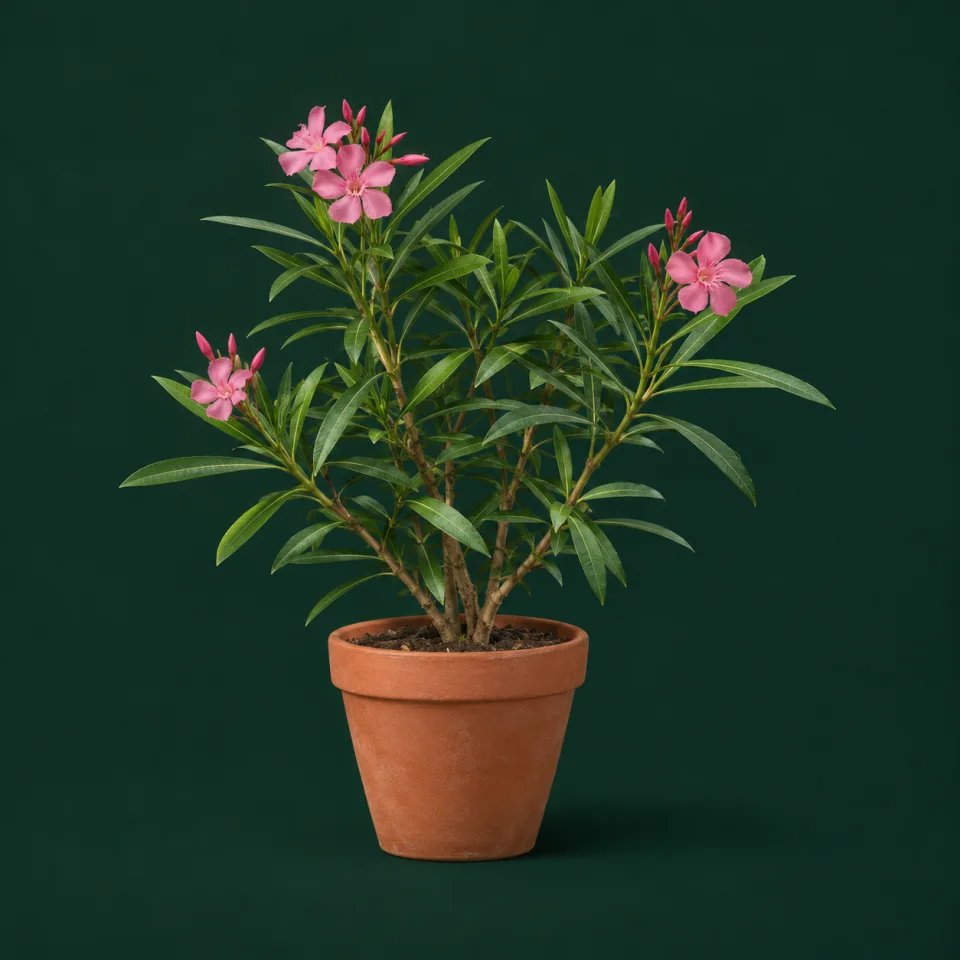
Botanical reference: Nerium oleander
Choose a plant you can manage and move
Nerium oleander is an evergreen shrub with narrow leathery leaves and flowers clustered at shoot tips. It is neither culinary bay nor yellow oleander, Cascabela thevetia. For a small patio, choose a compact variety with a known name and mature size. Allow for the weight of the plant and pot when you need to move it under cover. If you cannot prevent children or animals reaching leaves, flowers or fallen pieces, choose another plant for that space.
Plenty of sun without overheating the pot
Find a sunny, airy spot sheltered from wind that might overturn the container. Too little light can produce long, open growth and fewer flowers. A plant raised in a greenhouse or shade needs a gradual introduction to outdoor sun. On a very hot patio, avoid placing the container against a wall that heats it further. Protecting the pot from extreme heat does not require keeping the whole canopy in shade. Leave enough room to check and water it easily.
A stable container and a well-drained mix
Use a stable pot with clear drainage holes and a little more room than the root ball, rather than moving straight into an enormous tub. A structured potting mix for container shrubs, with mineral components, should hold moisture without becoming compacted. A special acidic mix is unnecessary. Keep the stem base at its previous level and leave room below the rim for watering. Empty the saucer or outer pot after drainage; permanently standing water beneath the roots is not a substitute for proper watering.
Water the roots and plan for time away
Check moisture beneath the surface. As the upper layer begins to dry, water slowly to moisten the root ball, then let excess drain away. In hot or windy weather check daily, even after rain, without assuming every check calls for more water. Avoid letting the entire mix dry out and the leaves wilt. Before going away, test whatever watering arrangement your helper will use. Explain how to collect fallen material with gloves as well as how to judge the moisture.
Feed and repot when the plant needs it
During active growth, use a fertiliser suitable for container shrubs or flowering plants according to its label, allowing for any feed already in the mix. Apply it to moist compost and reduce or stop as growth slows in cold weather. Extra fertiliser will not repair waterlogged roots. Repot when roots crowd the container or the mix has lost its structure, during mild growing conditions. Move up only one pot size and do not routinely cut healthy roots to keep to an annual schedule.
Prune lightly to leave room for flowers
Oleander flowers on new growth. If its size suits the space, remove dead or damaged branches and make small adjustments after a flush of flowers. Repeated shearing removes shoots that might bloom. Hard pruning can reduce an overgrown plant, but it is not an annual requirement or a promise of immediate flowers. Wear gloves and use garden tools kept separate from food utensils. Collect cuttings and fallen leaves, never use the material in cooking and never burn it, as the smoke is harmful. Follow local arrangements for plant-waste disposal.
Arrange winter shelter before cold arrives
Where frost occurs, plan a cool, very bright, ventilated place that remains frost-free. Wrapping a pot in fleece does not make every balcony a suitable winter shelter. In mild climates it may remain outside in a sheltered position, with attention to the forecast and drainage. Under cover it still needs moisture checks, although it uses less water and receives no rain. Wait until the risk of cold has passed before assessing and removing damaged branches; a green trunk alone does not guarantee recovery.
Check leaves and roots before treating a problem
Look for aphids on new shoots, scale insects, mealybugs and tiny mites, particularly while the plant is under cover. Sticky honeydew and a black coating can accompany sap-feeding insects. With yellow leaves or wilting, first check whether the root ball is dry, saturated or affected by cold. Avoid spraying before identifying the problem and seek a diagnosis if decline continues. For possible human ingestion, seek urgent medical or poison-centre advice; contact a vet immediately for an animal. Do not wait for symptoms or try home remedies.
Guides to help with your decision
How to care for lavender in an outdoor pot
Sun, drainage, watering and pruning for potted Lavandula angustifolia, including winter care and warning signs.
How to care for bay laurel in a pot
Light, watering, cold protection and pruning for potted Laurus nobilis. Help its roots get enough water without leaving them waterlogged.
How to care for Japanese pittosporum in a pot
Light, water, pruning and winter shelter for Pittosporum tobira. Choose a compact form and give its roots room with free drainage.
Frequently asked questions
Why does my oleander have leaves but few flowers?
Check how much sun it receives and when you have pruned it. Shade and repeated clipping can reduce flowering. Also review watering and fertiliser amounts before adding more feed. A recently hard-pruned plant needs to rebuild its shoots; there is no fixed date that guarantees blooms.
Can I treat it as a plant that hardly needs watering?
Not in a pot. Roots cannot seek moisture beyond the container. Let the upper layer begin to dry, check deeper down and adjust watering to heat, wind and plant size. An oleander growing in the ground has different water reserves.
Sources and what they support
- RHS · Nerium oleander L.
Identity, narrow evergreen leaves and terminal flowers; sun, moist drained medium, broad pH range and frost-free shelter. Container cultivation in full light, pests under cover and handling protection. H3 describes UK conditions, not a safe temperature for every pot.
- NC State Extension · Nerium oleander
Compact forms, flowers on new growth, light pruning after flowering and removal of cold damage after winter. Containers moved under cover in cold climates. Distinguishes yellow oleander; neither its temperature threshold nor ground drought tolerance is universalised.
- RHS · Container maintenance
General container care: check moisture in heat and wind, maintain drainage, avoid drought/saturation extremes, feed according to medium and growth, repot for crowded roots or lost structure and check covered evergreens for water. Not an oleander-specific schedule or dose.
- UF/IFAS Extension · Oleander
Sun supports flowering, dwarf forms and flowers on new wood; all parts poisonous if swallowed, irritating sap, gloves and no burning cuttings. Site inaccessible to children and animals. Florida ground drought tolerance and regional pests are not fully transferred to pots elsewhere.
- UC Marin Master Gardeners · Poisonous plants
Nerium oleander leaves and branches are dangerous if burned or used in cooking. Keeping garden tools separate from food utensils is a consistent editorial precaution, not a validated decontamination protocol.
- ASPCA · Oleander
Nerium oleander is toxic to dogs, cats and horses through cardiac glycosides; prompt veterinary contact for suspected ingestion. No safe dose, waiting period or home remedy.
- MedlinePlus · Oleander poisoning
Poisonous substances in all oleander parts and the need for immediate medical help after exposure. US telephone numbers, clinical treatments, quantities and prognoses are not transferred to a global reader.
How we put these guides together
We review dates, care and recommendations to help you plan each gift.
Spotted something we should review? Contact Agenda Floral.