Guides
How to care for Japanese spindle in a pot
Care difficulty3 out of 10
Pay attention to watering and growing conditions.
Editorial guide, with suitable light and climate. 0: very easy; 10: very delicate. More stars mean more care.
Japanese spindle accepts sun or partial shade with a draining mix and enough water for its rootball. In a very hot summer, relief from afternoon sun may suit it better. Avoid waterlogging, and do not assume a tough garden shrub can live without watering in a pot. Shorten individual branches to keep it compact and inspect leaves and stems while watering, especially for euonymus scale.
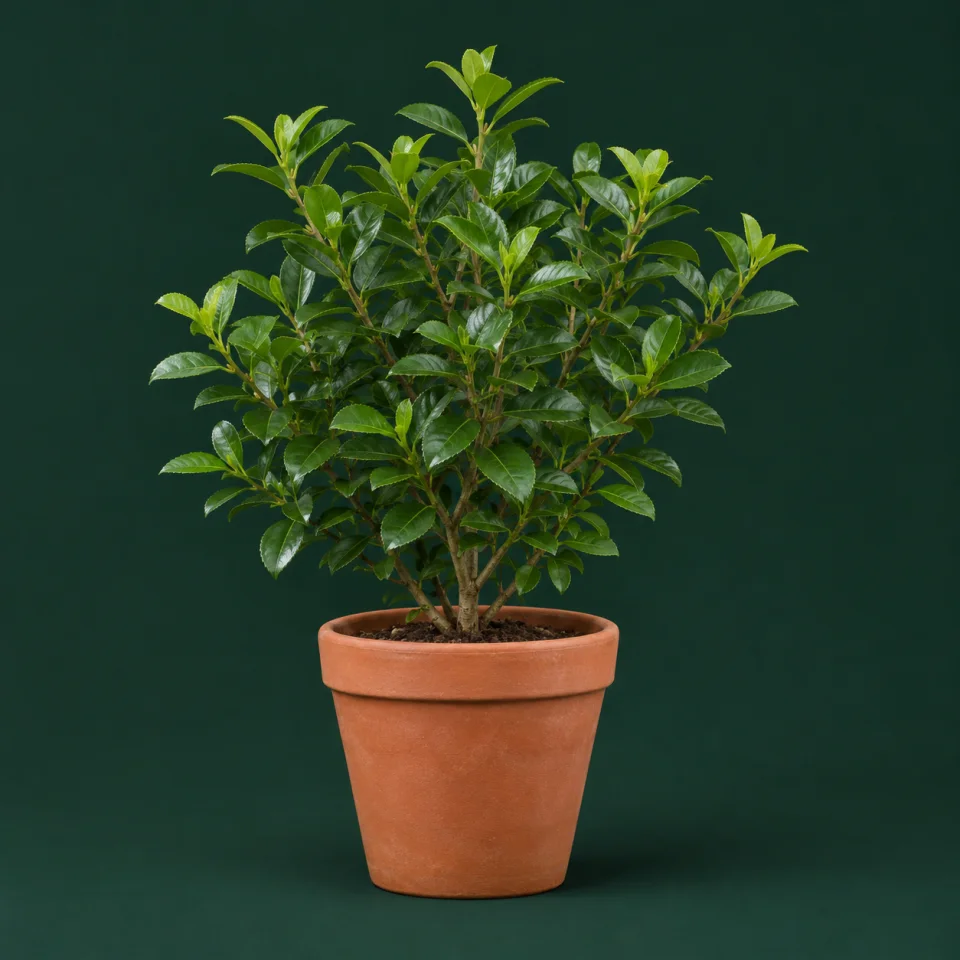
Botanical reference: Euonymus japonicus
Choose its eventual size, not just the sales pot
Euonymus japonicus is an evergreen shrub with green-leaved forms and others marked white or yellow. A compact selection suits a small terrace better than a form intended for a tall hedge. Keep the labelled name so you can check its habit. Not every spindle is this species: Euonymus fortunei may grow differently. A young specimen does not stay small simply by remaining indefinitely in its original container.
Match sun and shade to heat and foliage
Provide sun or bright partial shade. On a very hot balcony, offer relief from the harshest afternoon sun and keep the pot away from a heat-radiating wall. Heavily variegated forms may struggle in deep shade; that does not mean they need the opposite extreme of unrelenting sun. Gradually adjust a plant moved from shelter. Healthy green foliage can also be its natural appearance, without any treatment missing.
A stable base and open-textured medium
For an established shrub, a pot around 30 cm or more wide and deep is a useful guide. Adjust the increase to a small plant’s rootball rather than surrounding it with a huge mass of wet mix. Choose open holes and potting medium for shrubs, with organic matter and a stable soil-based component. It accepts a range of soil reactions without special acidifying treatment. Maintain its planting depth and leave the stem base clear.
Water the roots without storing it in a saucer
Check below the surface and compare pot weight. When the medium begins to dry, water slowly to moisten the rootball and let excess leave. Wait if it is still damp. A small watering that only wets the top may leave the inside dry. Empty the decorative outer pot and adjust checks for wind and heat. Before going away, ask your helper to check before watering. Do not compensate by leaving the saucer full for days.
Renew room and nutrients when needed
During container growth, a general liquid feed can help. Follow its label and allow for nutrients already in fresh mix. Do not combine products to fix yellow leaves without checking water and roots first. When roots fill the pot, it dries unusually fast or the medium loses structure, move to a slightly larger container with fresh mix in mild conditions. Annual repotting is not compulsory. If its size becomes unmanageable, choose more room or a more compact selection.
Cut stems and recognise reverted shoots
To maintain dense growth, shorten shoots with clean secateurs during active growth in mild weather. Cutting individual stems avoids many half-cut leaves developing brown edges. On a variegated plant, an entirely green vigorous shoot may be a reversion; remove it at its origin if you want to retain the pattern. Do not do this to a naturally green-leaved plant. Light shaping is usually enough for a compact specimen.
Winter light and protected roots
It remains an outdoor plant as temperatures fall. Reduce watering according to moisture and activity, while still checking during dry spells. If winter threatens to freeze the rootball, move the pot into shelter and insulate it without blocking drainage. A hedge’s hardiness in the ground does not guarantee the same protection for roots in a balcony pot. Avoid a heated room as permanent shelter, and do not hard-prune immediately before very adverse conditions.
Look closely before adding products
Euonymus scale can form small pale coverings on leaves and darker ones on stems, with yellow mottling and leaf fall when infestation is heavy. A white powder may be mildew; not every mark requires spraying. Check roots and drainage if it declines in wet medium, and seek diagnosis if the cause is unclear. This plant is harmful if eaten, including by pets. Do not use it as food, and keep fruit and trimmings away from children and animals. For possible ingestion, promptly contact a poison service or veterinarian, without home remedies.
Guides to help with your decision
How to care for a camellia in a pot
Camellia japonica care: shade, acidic mix, watering, falling buds and pruning after flowers, with practical checks before acting.
How to care for bay laurel in a pot
Light, watering, cold protection and pruning for potted Laurus nobilis. Help its roots get enough water without leaving them waterlogged.
How to care for skimmia in a pot
Shade, watering, potting mix and pruning for Skimmia japonica. Tell reddish flower buds from berries and keep roots moist without waterlogging.
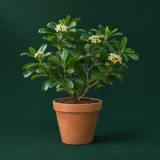
How to care for Japanese pittosporum in a pot
Light, water, pruning and winter shelter for Pittosporum tobira. Choose a compact form and give its roots room with free drainage.
Frequently asked questions
Can several potted plants screen a terrace?
You can create a foliage screen by choosing a form with suitable height and width and stable containers. Keep access to water each rootball and inspect the inward-facing leaves. Do not crowd small pots together for an instant wall: root space, wind exposure and maintenance still matter.
Can I prune it hard if it has become overgrown?
It can tolerate this when healthy and growing under suitable conditions, but hard pruning should not be the first response to damaged roots or heavy scale. Resolve the underlying problem first. Plan major reduction and recovery during favourable conditions rather than expecting every woody stem to regrow.
Sources and what they support
- RHS · Euonymus japonicus
Evergreen species, sun/partial shade, broad pH tolerance with drainage and container suitability. Garden size is not fixed container size. Warns of harmful ingestion for humans/pets. No doses, invented animal symptoms or guarantee of no fruit.
- RHS · Growing euonymus
Containers with stable medium and a 30 cm guide, ongoing watering and modest feeding. Light pruning of individual stems without cutting leaves; remove green reversions on variegated forms. Separate pot and ground care, without UK months or guaranteed hard-pruning recovery.
- RHS · Evergreen euonymus
Green or variegated forms, flexible exposure with heavily variegated forms struggling in deep shade. Avoid permanently wet medium and excessive drought. This page covers several Euonymus: do not transfer climbing habit or another species’ calendar.
- NC State Extension · Euonymus japonicus
Identity and opposite leathery leaves; broad light/soil tolerance, afternoon relief in heat, pruning tolerance, euonymus scale and mildew. Human toxicity described for large amounts, retained without a safe dose. No pet symptoms transferred, ground tolerance imposed on pots or species inferred from mixed images.
- RHS · Euonymus scale
Unaspis euonymi particularly affects E. japonicus; pale scales on leaves and dark scales on stems, yellow mottling, leaf drop and dieback with heavy infestation. Light presence need not require treatment; no imported British months/distribution or recovery guarantee.
- Kew · Euonymus japonicus
Euonymus japonicus Thunb. accepted; includes Euonymus pulchellus among synonyms. Taxonomy and use records do not establish cultivar, pot size, edibility or treatments.
How we put these guides together
We review dates, care and recommendations to help you plan each gift.
Spotted something we should review? Contact Agenda Floral.