Guides
How to care for a bougainvillea in a pot
Care difficulty6 out of 10
Pay attention to light and placement and watering.
Editorial guide, with suitable light and climate. 0: very easy; 10: very delicate. More stars mean more care.
A potted bougainvillea needs sun, good drainage and a structure to hold its stems. Let the upper layer dry between waterings without waiting for the whole rootball to become parched. Shelter it from frost and avoid trimming every new shoot: that growth prepares the next flowers. The coloured parts are bracts; the true flowers are small and pale.
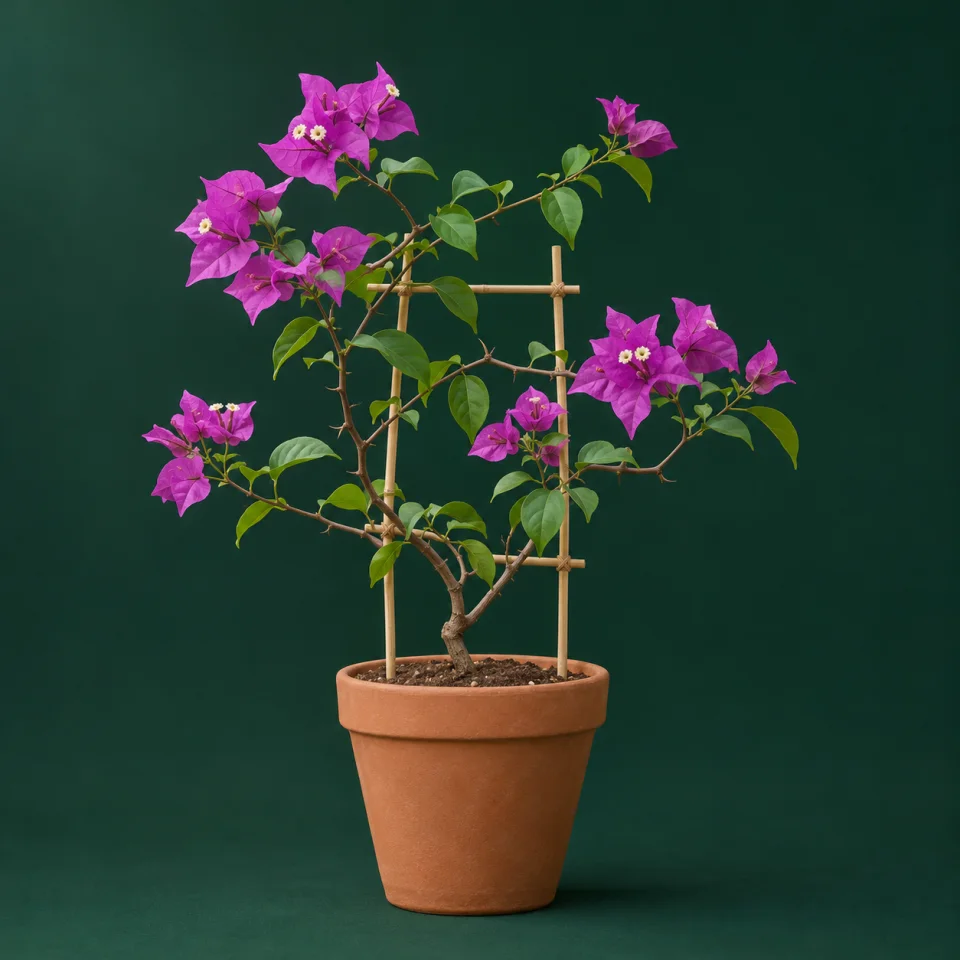
Botanical reference: Bougainvillea glabra
Choose a plant that fits your terrace
This guide covers Bougainvillea glabra, a woody thorny climber. Shops also sell hybrids and cultivars with different vigour: keep the label and ask about mature size. A compact form may be easier to manage than a large climber. Thin, papery purple bracts surround tiny flowers; fading colour alone does not prove the plant needs feeding.
Introduce it to its sunny spot gradually
Look for a sunny outdoor position sheltered from strong wind. Acclimatise it gradually if it came from shade or a greenhouse; a hot pot dries faster than soil in the ground. A dark indoor corner cannot replace a bright terrace. Notice the actual heat on your balcony and watch cold forecasts. Plan its frost-free home before the support and branches make moving difficult.
Water thoroughly when the top has dried
Touch the soil and check the container’s weight. When the upper layer has dried and the pot feels lighter, wet the rootball slowly and let it drain; empty the surplus. Avoid constant wetness and deliberate wilting to force flowers. An established plant in the ground handles drought differently from a pot. Check more in heat, wind or active growth; reduce water when growth slows.
Repot without pulling the roots apart
Use a stable pot with holes and an airy container mix. If roots fill the pot and keeping enough moisture becomes difficult, move up proportionately in mild conditions during growth. Support the rootball, keep the depth and avoid tugging, combing roots or routinely breaking it apart: they are delicate. An enormous pot is unnecessary too. Check whether roots escaping below have anchored in the ground before moving it.
Tie and prune wearing gloves
Guide stems on their own support with ties that do not constrict. Wear sturdy gloves and collect cut branches; thorns make narrow passageways awkward for children and animals too. Trim what is needed after flowering and plan structural pruning before new growth according to your climate. Constantly cutting every tip can remove shoots that would flower. Never lift the plant by pulling its branches.
Feed moderately; try cuttings if you want
During growth, match a suitable fertiliser to its label and the nutrients already in the mix. Too much nitrogen can make leaves without solving poor colour; combining products is no shortcut. Reduce or stop when growth slows. To propagate, try a healthy semi-ripe cutting in a draining mix with gentle warmth and light away from strong sun. Keep moderate moisture and be patient: rooting is neither universal nor equally fast.
Plan for cold and time away
When cold threatens, move pot and support to a bright frost-free place. Around 10°C at night is a protected-growing reference, not an exact boundary between life and death. Cooling or relocation may cause leaf drop. Lower activity usually means less water, but check the soil. When away, leave someone instructions to inspect the pot instead of filling a reservoir or giving an extra watering in advance.
Find the cause before correcting
Yellow leaves, leaf drop and poor colour have several possible explanations. Check light, moisture, drainage and recent changes. Wilting in wet soil does not automatically call for more water: investigate roots and damage. Look for aphids, mealybugs, whitefly or mites before treatment; avoid blind applications of iron or insecticide. Do not eat ornamental plant parts. If an animal becomes unwell after ingestion, consult a vet with the name and products used.
Guides to help with your decision
How to care for lavender in an outdoor pot
Sun, drainage, watering and pruning for potted Lavandula angustifolia, including winter care and warning signs.
How to care for star jasmine in a pot
Light, water, support and cold protection for potted Trachelospermum jasminoides. Care for foliage and flowering without waterlogging.
How to care for pink jasmine in a pot
Jasminum polyanthum watering, light, pruning and shelter. Distinguish pink buds and white flowers from hardy yellow winter jasmine.
How to care for rosemary in a pot
Sun, water, drainage, pruning and cold protection for Salvia rosmarinus. Keep your rosemary leafy without soaking roots or cutting into bare old wood.
How to care for Brazilian jasmine in a pot
Light, watering, support and winter shelter for Mandevilla sanderi. Care for the roots, retain flowering growth and handle the sap sensibly.
Frequently asked questions
It has plenty of leaves, so why no colour?
First check how much sun it gets, how much you feed and whether you constantly trim the tips. Excess nitrogen, shade or removal of new growth can reduce flowering. Adjust what you observe without deliberately making it wilt. A changed routine cannot guarantee immediate bracts.
It lost leaves after coming indoors. Is it dead?
Leaf drop alone does not show that: cold, moving or slower activity can contribute. Look for firm stems and check roots, light and moisture. Soft or dark tissue with an unpleasant smell and soaked soil needs investigation. Keep it bright and frost-free, water when needed and avoid feeding to force it awake.
Sources and what they support
- NC State Extension · Bougainvillea glabra
Identity, bracts versus tiny flowers, thorny stems, support, sun and drying between waterings. Not every commercial colour or size belongs to this species; drought tolerance in soil is not a watering plan for pots.
- RHS · Growing bougainvilleas
Container growing in the genus, light, frost-free shelter, a 10°C night reference, pruning and semi-ripe cuttings. Adapted to actual climate, not universal months, a death threshold or a commercial forcing recipe.
- University of Florida IFAS · Bougainvillea
Sun, cold protection, gloves for thorns and less flowering with excess nitrogen or overly frequent pruning. Florida context: its flowering season is not exported and neither neglect nor forced pot drought is recommended.
- University of Washington · Miller Library · Transplanting bougainvillea
Delicate roots and handling the rootball when transplanting. A question about a container-rooted specimen, drawing on earlier literature; not annual repotting, tearing roots or keeping an inadequate pot forever.
- University of Hawai‘i CTAHR · Bougainvillea · OF-38 (2007)
B. glabra identity, bracts, checking water in pot culture, nutrition and fragile young roots. A 2007 production publication: tropical calendars, forced wilting and production treatments are excluded.
How we put these guides together
We review dates, care and recommendations to help you plan each gift.
Spotted something we should review? Contact Agenda Floral.