Guides
How to care for star jasmine in a pot
Care difficulty5 out of 10
Pay attention to regular maintenance and watering.
Editorial guide, with suitable light and climate. 0: very easy; 10: very delicate. More stars mean more care.
Star jasmine needs plenty of light, shelter from cold wind and a stable pot with good drainage. Water as the upper mix starts losing moisture, without drying the entire root ball. Its stems twine around a support: guide them without tight ties. If winters are cold, plan protection for the plant and roots before severe frost arrives.
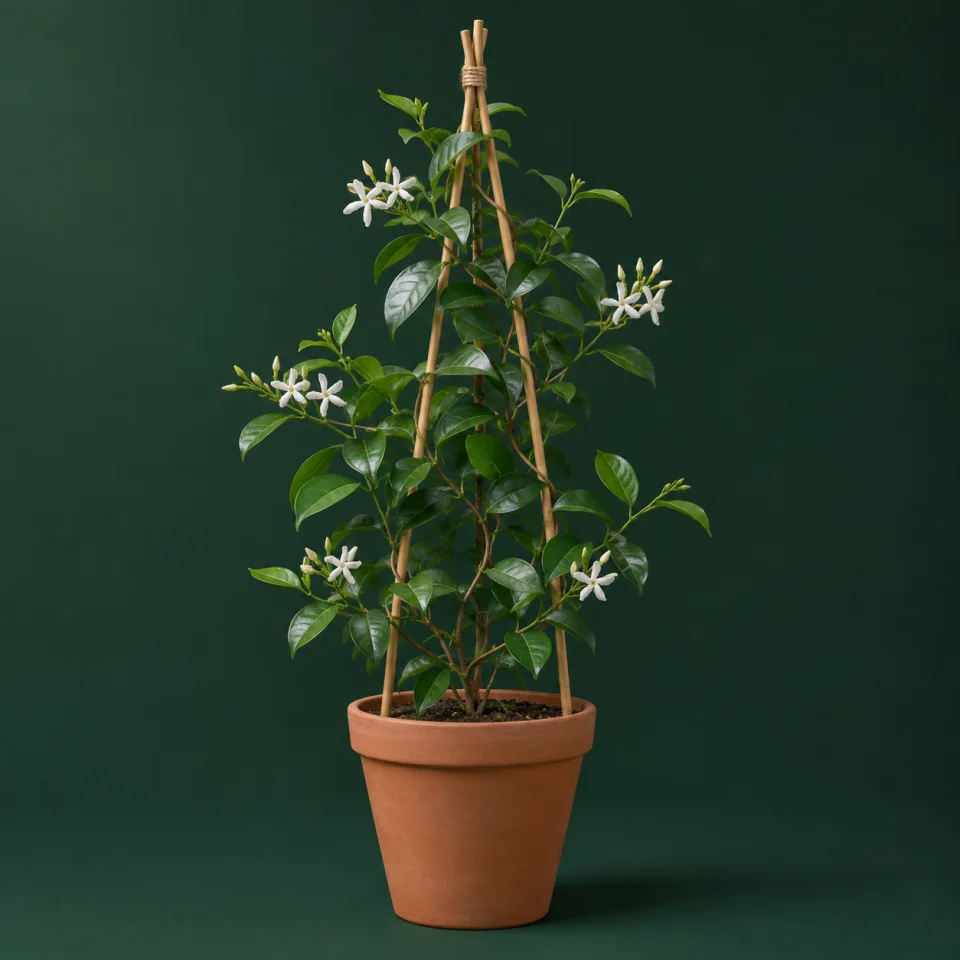
Botanical reference: Trachelospermum jasminoides
Trachelospermum, despite the jasmine name
Check Trachelospermum jasminoides on the label. It has simple opposite leaves and small white flowers with five slightly twisted lobes, like a pinwheel. It does not belong to Jasminum; care or food uses of any plant called jasmine cannot be transferred. Scent can be strong, so choose somewhere enjoyable without crowding a narrow passage. Allow for a woody climber, rather than just its purchase size.
Light, gentle warmth and shelter
Choose sun or light shade according to climate, with protection from cold wind. On a very hot balcony, avoid overheating the pot and acclimatise a new plant to strong sun. Deep shade can limit flowering. If winter shelter is needed, arrange a bright, cool, frost-free place away from radiators. Hardiness in the ground does not guarantee hardiness for roots enclosed in a pot.
Drought tolerance does not mean no water
An established plant in the ground may tolerate dryness that a pot handles poorly. Feel beneath the surface and judge the weight. As the upper layer starts drying, water slowly to moisten the root ball and let it drain. Empty surplus and do not wait for complete drying. Check more in heat, wind or active growth. Cold weather needs less water, but sheltered plants receiving no rain still need checking.
A stable pot you can handle
Choose holes, room for the root ball and stability for its support. Use airy mix for long-term container plants that retains moisture, rather than heavy soil staying soaked. If moving it for winter, consider weight before choosing size. Repot when roots fill the container during mild conditions and growth, increasing proportionately and keeping the previous depth.
Guide stems and prune with a purpose
Provide trellis, wires or a separate frame for twining; it does not cling like ivy. Secure young stems with soft ties, checking they do not constrict thickening growth. Severe annual pruning is unnecessary. Lightly shorten after flowering to control length; remove damaged wood when damage can be assessed and weather is mild. Wear gloves, keep sap from eyes or mouth and clean sticky latex from tools.
Modest feeding and patience for flowers
During growth, feed according to the label and nutrients already present; reduce or pause as it slows. Do not solve absent flowers solely with fertiliser: check light, establishment, water and pruning. For propagation, layer a flexible stem into another pot, keeping it attached until roots develop before cutting free. This is optional, without a promised rooting or flowering deadline.
Distinguish cold colouring from damage
Some leaves turn bronze or red in cold, but colour alone does not establish health. If leaves dry, many drop or it wilts in damp mix, check exposure, drainage and roots. Inspect undersides and stems for mites or scale insects. Separate an affected plant and identify the cause before treatment. In severe cold protect the container too, without blocking holes or letting water accumulate.
Absences, pets and correct identification
Leave instructions for moisture checks and surplus removal; arrange help during hot unattended periods. The ASPCA lists Trachelospermum jasminoides as non-toxic to dogs and cats. That does not apply to every jasmine or make leaves and flowers food or tea ingredients. Prevent chewing and access to feed or treatments. For illness after ingestion, seek veterinary advice with the species and products used.
Guides to help with your decision

Which flowers to give to someone with cats or dogs
Flowers for a home with cats or dogs: options to consider, checking the whole bouquet and precautions with lilies, holly and mistletoe at Christmas.
How to care for lavender in an outdoor pot
Sun, drainage, watering and pruning for potted Lavandula angustifolia, including winter care and warning signs.
How to care for English ivy in an outdoor pot
Water, light, pruning and support for Hedera helix on a patio or balcony. Manage its growth and protect roots, animals and walls.
How to care for pink jasmine in a pot
Jasminum polyanthum watering, light, pruning and shelter. Distinguish pink buds and white flowers from hardy yellow winter jasmine.
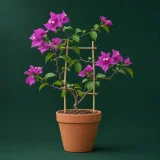
How to care for a bougainvillea in a pot
Sun, watering, support, pruning and cold protection for Bougainvillea glabra on a terrace. Protect its roots without forcing drought for colour.
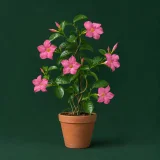
How to care for Brazilian jasmine in a pot
Light, watering, support and winter shelter for Mandevilla sanderi. Care for the roots, retain flowering growth and handle the sap sensibly.
Frequently asked questions
Can it stay outside all winter?
Climate, exposure, pot size and plant condition matter. Mild sheltered places may allow it outside; severe or prolonged frost needs protection or bright frost-free shelter. Plan moving before cold, particularly when its support is attached to a wall.
Why does it have leaves but no flowers?
It may need more light, time to establish or different pruning. Check for drought, waterlogging and excessive feed too. No product guarantees blooms. A plant bought in flower does not promise the same display on every balcony.
Sources and what they support
- NC State Extension · Trachelospermum jasminoides
Identity separate from Jasminum, opposite leaves, pinwheel flowers, twining stems, milky sap and trimming after bloom. Established drought tolerance is not a dry-pot rule; generic poisonous tag is not used as a veterinary assessment.
- RHS · Growing trachelospermum
Light/shelter, support, containers, water without complete drying or saturation, feed and winter protection. Structural maintenance near growth onset differs from light post-flower trimming. No months, universal minimum or flowering guarantee.
- RHS · Trachelospermum jasminoides
Evergreen woody species, light, shelter, cold-related bronzing, cuttings and pests. Size/vigour vary across profiles and conditions: no timed screening promise or ground hardiness for every pot.
- RHS · Container maintenance
Actual moisture below the surface even after rain, roots, mix nutrients and container protection. Checking frequency is not compulsory watering; British months are not copied.
- RHS · Layering
Explains rooting a stem while attached before separation. Optional star-jasmine method supported by its guide, without deadlines, guaranteed success or required wounding of a healthy plant.
- ASPCA · Confederate jasmine
Explicitly lists Trachelospermum jasminoides as non-toxic to dogs/cats. Not permission for food, tea or other plants called jasmine; sap and products still require care.
How we put these guides together
We review dates, care and recommendations to help you plan each gift.
Spotted something we should review? Contact Agenda Floral.