Guides
How to care for English ivy in an outdoor pot
Care difficulty3 out of 10
Pay attention to watering and growing conditions.
Editorial guide, with suitable light and climate. 0: very easy; 10: very delicate. More stars mean more care.
Potted ivy needs some moisture with good drainage, a position away from extreme heat and space for its stems. Check the root ball before watering: toughness in the ground does not stop a container drying out. Trim growth that exceeds its space and give it its own support if you want it to climb. It is toxic to dogs and cats.
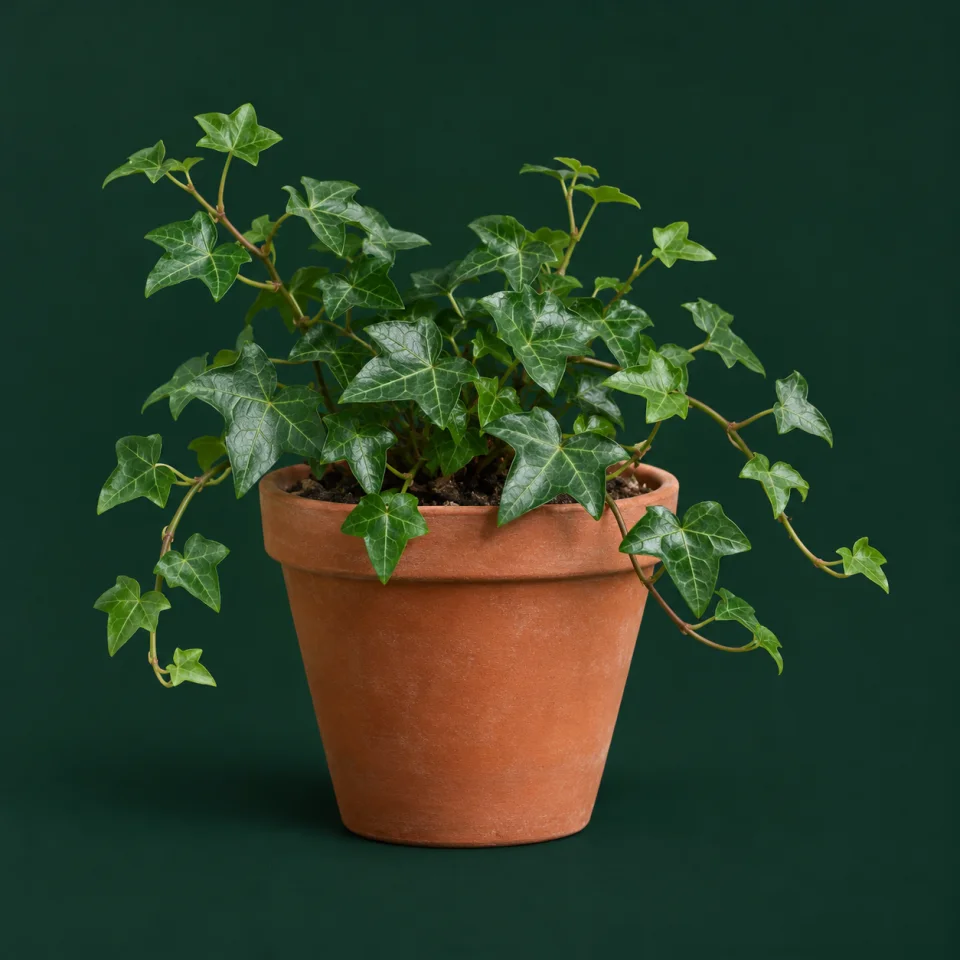
Botanical reference: Hedera helix
Choose ivy that fits your space
This guide covers Hedera helix. Compact cultivars are often easier to manage in pots; keep the cultivar name because vigour and leaf size vary. Juvenile stems have lobed leaves and can climb or trail. Adult growth has different leaves and may flower, but do not expect flowers or berries on a young trimmed plant. It is neither pothos nor Swedish ivy.
Light and cool roots before a baking wall
A patio or balcony with bright partial shade is a useful starting point. It tolerates different exposures, but strong sun can heat and dry a pot considerably. Variegated forms may lose colour in excessive shade. Acclimatise changes and watch the leaves. Protect the container and roots in severe cold; species hardiness does not make every pot invulnerable.
Water the root ball, not the calendar
Feel below the surface and check the weight. As the upper mix starts drying, slowly moisten the root ball and let surplus drain. Avoid standing water and leaving everything dry for days. Check more often in heat or wind and use less water during slow growth. Check even after rain: foliage or an overhang may leave the mix almost dry.
Drainage and room for roots
Use a stable container with holes and potting mix retaining moisture without compacting. If water stops draining, check blockages and structure. When roots fill the pot, move up proportionately during mild conditions and active growth, keeping the planting depth. An enormous pot or routine lime additions are unnecessary. Before feeding, account for nutrients already in the mix.
Guide and trim stems without letting them escape
Let it trail or train it over its own frame. Keep stems away from gutters, delicate paint and loose mortar; do not encourage attachment to just any facade. Check that they do not root beyond the container. Trim surplus with a clean tool to maintain size. Wear gloves and long sleeves because it can irritate skin; collect cuttings rather than leaving them in the surroundings.
Modest feed and an optional cutting
If it is growing and the mix needs it, feed according to the label; reduce or pause as growth slows. Flower-forcing products are unnecessary. To propagate, choose healthy climbing stem with leaves and a node, remove leaves that would be buried and place the node in draining mix. Keep moderate moisture and light away from fierce sun. Not every tip roots; taking cuttings is optional.
Check leaves and roots before treatment
Dry leaves can accompany dryness, sun or root damage; yellow leaves do not give a single diagnosis either. Check moisture, undersides and stems for mites, aphids or scale insects. If it wilts in damp mix, investigate roots and possible damage rather than adding water automatically. Separate an affected plant, carefully remove damaged leaves and seek the cause before treatment. Avoid continually soaking foliage.
Absences, children and animals
Leave instructions for checking moisture, rather than a fixed interval or full saucer. Arrange help to check the pot during a hot unsupervised absence. Ivy is toxic to dogs and cats: leaves matter even without berries. Keep the plant and trimmings away from animals and children. If an animal eats part, seek veterinary advice with the name Hedera helix; do not improvise remedies.
Guides to help with your decision
Which flowers to give to someone with cats or dogs
Flowers for a home with cats or dogs: options to consider, checking the whole bouquet and precautions with lilies, holly and mistletoe at Christmas.
How to care for a pansy in a pot
Watering, light, faded flowers and protection from cold and heat. Care for Viola × wittrockiana according to your climate and its growth.
How to care for hardy cyclamen in a pot
Cyclamen hederifolium care: light, watering, warm-weather rest and renewed growth. Separate natural leaf loss from a damaged tuber.
How to care for star jasmine in a pot
Light, water, support and cold protection for potted Trachelospermum jasminoides. Care for foliage and flowering without waterlogging.
Frequently asked questions
Can it grow in a hanging pot without climbing?
Yes. Juvenile stems can trail, but length and moisture still need attention. Choose a compact cultivar and secure container, trimming before growth reaches other spaces. Hanging does not make it safe if an animal reaches fallen leaves or trimmings.
Will rain take care of watering?
Not always. A covered balcony or the foliage itself may keep rain from the root ball. Check below the surface and water only when needed. If rain keeps the pot soaked, improve drainage or temporarily move it to a sheltered bright position.
Sources and what they support
- NC State Extension · Hedera helix
Identity, juvenile/adult phases, containers, problems and spreading stems. Invasive status in North Carolina is not turned into a ban or identical harm in every country.
- RHS · Growing ivy
Group guide including Hedera helix: compact cultivars, adaptable light, pruning, gloves and climbing-stem cuttings. No flowers promised on juvenile plants or British months/hardiness applied to every pot.
- RHS · Container maintenance
General container care: check moisture even after rain, nutrients, roots, drainage and cold protection. No compulsory daily watering, universal months or hungry plants’ feeding copied to ivy.
- ASPCA · English ivy
Hedera helix is toxic to dogs and cats; leaves as well as berries matter. Lack of flowers does not mean safety; no doses or home remedies.
How we put these guides together
We review dates, care and recommendations to help you plan each gift.
Spotted something we should review? Contact Agenda Floral.