Guides
How to care for hardy cyclamen in a pot
Care difficulty5 out of 10
Pay attention to watering and changes and signs of stress.
Editorial guide, with suitable light and climate. 0: very easy; 10: very delicate. More stars mean more care.
Hardy cyclamen needs light shade, drainage and watering that follows its cycle. With leaves or shoots, maintain moderate moisture; as it rests in warm weather, greatly reduce water. Cyclamen hederifolium can lose every leaf without dying. A soft base, bad smell or soaked mix calls for checking damage rather than assuming rest.
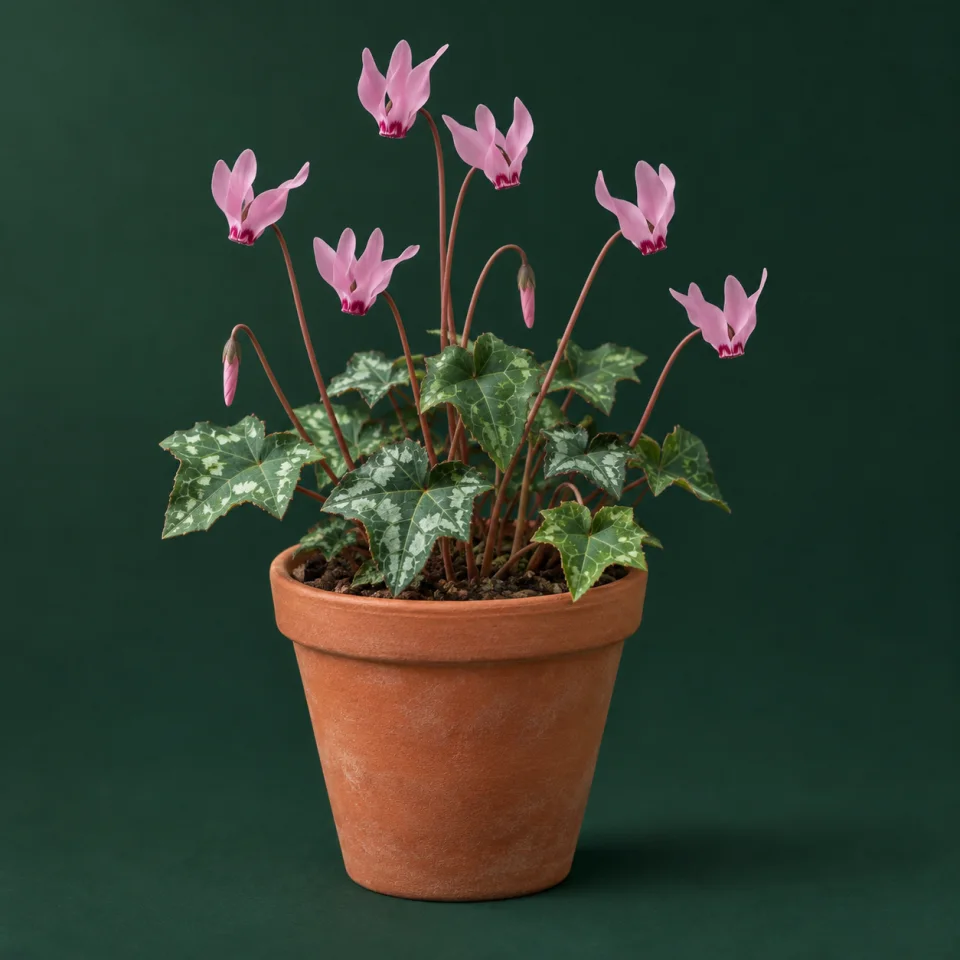
Botanical reference: Cyclamen hederifolium
The species name matters
Look for Cyclamen hederifolium rather than just hardy cyclamen. Small flowers have swept-back petals, and variably patterned leaves often resemble ivy. It is not large florist cyclamen derived from Cyclamen persicum or Cyclamen coum, which flowers at another time. Buy an identified potted plant: its condition is easier to judge than a dry tuber of uncertain origin.
A bright outdoor place with light shade
A ventilated patio or balcony spot protected from strong sun and pot overheating usually works. A heated living room is not needed for winter. In temperate climates it often flowers in late summer or autumn, then retains leaves through the cool period. Follow shoots and local climate instead of imposing northern-hemisphere months. Cold tolerance cannot make every pot invulnerable.
More water in growth, less in rest
With active leaves or shoots, feel the mix and water as it starts losing moisture, without drying the whole root ball. Drain and empty the saucer. As leaves gradually yellow in warmth and it rests, greatly reduce watering: mix may remain barely moist, never soaked. Shelter from persistent rain if it keeps the pot wet. Do not force leaves with extra water or feed.
Care for the tuber and mix
Use drainage holes and airy mix with organic matter and a draining mineral component. Preserve the depth of a well-grown potted plant instead of burying it deeper for support. This species roots mainly from the sides and shoulders of its tuber. Do not automatically copy half-exposed-tuber instructions for some florist cyclamen. For a loose tuber, check species, orientation and planting depth first.
Little disturbance and measured nutrition
Remove dry flowers and leaves carefully without pulling healthy shoots. Frequent repotting or an enormous container is unnecessary; if outgrown, repot proportionately in its growth pause with minimal root injury. Nutritious mix needs no constant feeding. For depleted mix, use modest feed only in growth according to the label, never on a resting or damaged tuber.
Do not divide the tuber like a potato
Seed is the usual propagation route. After flowering some stalks coil to bring a capsule towards the soil: this can be seed development rather than a diseased stem. Leave it if you want to collect ripe seed later. Do not promise fast flowers; seedlings need time to develop. Cutting a healthy tuber into pieces is not the maintenance recommended here.
Separate rest from problems
Gradual leaf loss as warmth arrives fits its cycle, whereas sudden collapse in wet mix needs attention. Check drainage, smell, soft tissue, mould and possible animal or insect damage. Separate an affected plant before treatment. Do not repeatedly dig up a healthy tuber to check life. When shoots or flowers reappear, resume watering gradually according to moisture and temperature.
Cold, absences and safety
Protect the container from severe freezes according to your climate and keep drainage clear, without making shelter hot. Tell a helper whether it is growing or resting. It is toxic if eaten, including to dogs and cats. Keep plant, tuber and debris away from children and pets. For animal ingestion consult a vet with the species name.
Guides to help with your decision
All Saints’ Day in Austria: grave flowers and when to buy them
All Saints’ Day, 1 November, is a national public holiday in Austria; All Souls’ Day, the 2nd, is not. What goes on the grave, plants that cope with November and when to buy in 2027.

Which flowers to give to someone with cats or dogs
Flowers for a home with cats or dogs: options to consider, checking the whole bouquet and precautions with lilies, holly and mistletoe at Christmas.
How to care for a pansy in a pot
Watering, light, faded flowers and protection from cold and heat. Care for Viola × wittrockiana according to your climate and its growth.
How to care for a primrose in a pot
Watering, cool light and Primula vulgaris after flowering. Keep its rosette healthy without mistaking the last flowers for the end of the plant.
How to care for English ivy in an outdoor pot
Water, light, pruning and support for Hedera helix on a patio or balcony. Manage its growth and protect roots, animals and walls.
How to care for winter heath in a pot
Water, light, potting medium and pruning for Erica carnea. Keep the rootball from drying out and avoid cutting into bare old wood.
How to care for Christmas rose in a pot
Cool shade, water and drainage for Helleborus niger. Keep healthy leaves and protect the rootball without moving it beside a heater.
How to care for Dalmatian bellflower in a pot
Light, watering and after-flowering care for Campanula portenschlagiana. Keep the clump healthy and protect potted roots from excess water and cold.
Frequently asked questions
Should I discard it if all leaves disappear in heat?
Not for that reason alone. A healthy tuber can rest without leaves. Keep the pot shaded, ventilated and much drier than in growth, without saturation. Bad smell, soft tissue or collapse outside its cycle needs investigation, rather than proving normal dormancy.
Can it be watered like a primrose?
Avoid treating them identically. Primrose may have an active rosette when this cyclamen is resting. Check species, shoots and moisture separately. Dormant Cyclamen hederifolium needs much less water; sharing a tray with frequently watered plants may waterlog it.
Sources and what they support
- NC State Extension · Cyclamen hederifolium
Tuberous species, leaf/rest cycle, side roots, moist drainage, seeds and ingestion toxicity. No US months, absolute pot hardiness or confusion between tuber and bulb.
- RHS · Hardy cyclamen
Partial shade, container mix with mineral and organic components, avoiding excess moisture in rest and problems. Garden planting depths are not one pot recipe for every species.
- Cyclamen Society · Cyclamen hederifolium
Identity, reflexed petals, auricles, variable ivy-like leaves appearing during flowering and tuber with mainly side roots. No image-based cultivar identification or single mandatory leaf shape.
- Cyclamen Society · Garden and greenhouse guide
Species in pots: ventilation, shade, moisture without saturation in growth and minimal moisture in rest. Growing potted plants establish more readily. No soap, guaranteed longevity or extreme depths from other species.
- Royal Botanic Gardens, Kew · Cyclamen
Distinguishes hederifolium, coum and repandum; foliage/rest, water in dry growing spells, modest nutrition and coiled seed stalks. Wakehurst experience is not a universal calendar or climate guarantee.
How we put these guides together
We review dates, care and recommendations to help you plan each gift.
Spotted something we should review? Contact Agenda Floral.