Guides
How to care for a pansy in a pot
Care difficulty4 out of 10
Pay attention to watering and growing conditions.
Editorial guide, with suitable light and climate. 0: very easy; 10: very delicate. More stars mean more care.
Pansies do best outdoors in cool weather with good light and moist, freely draining mix. Water when the upper layer starts drying, remove faded flowers and protect the pot from severe freezes. Prolonged heat can exhaust them: extra water and fertiliser cannot guarantee a year-round plant.
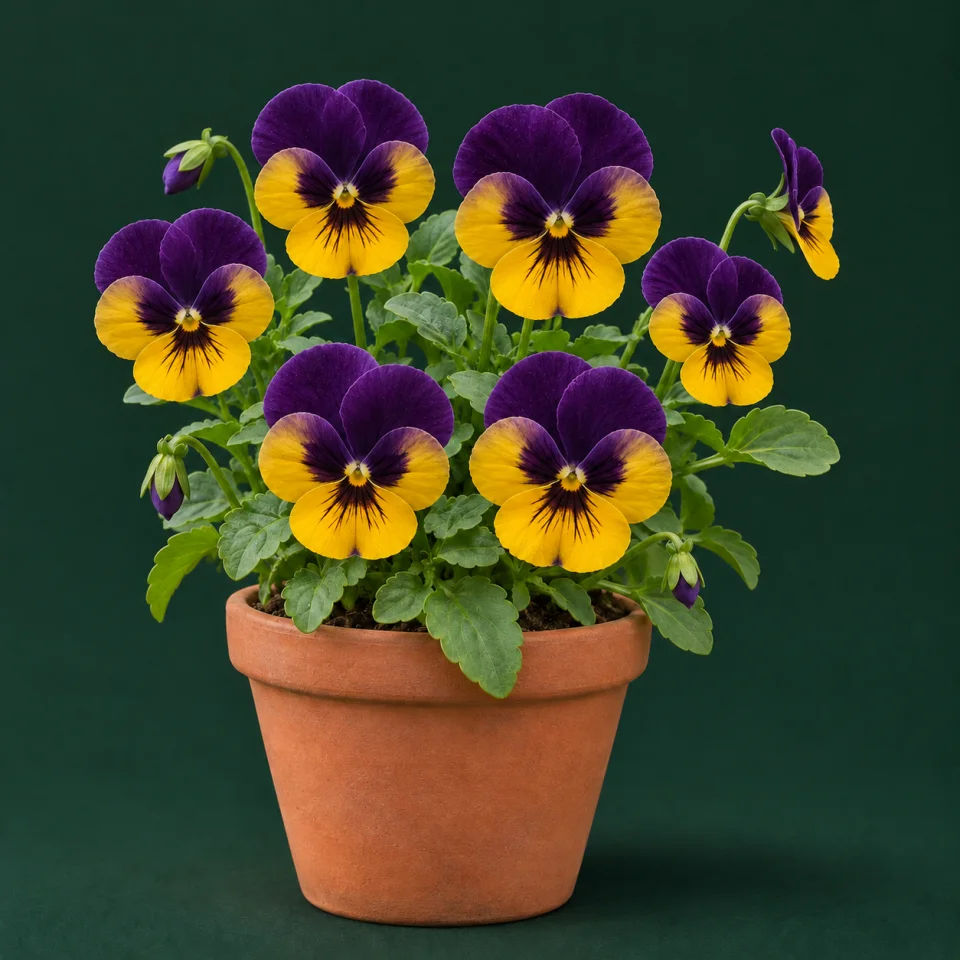
Botanical reference: Viola × wittrockiana
Choose a pansy for your climate
This guide covers Viola × wittrockiana, the large-flowered garden pansy with five petals and often central blotches. It is not an indoor African violet or every other Viola. Choose compact growth, healthy leaves and several buds, without suspicious spots or a soft base. Keep the label: size, habit and cold tolerance vary between cultivars.
Outdoor light and cool weather
Provide a balcony, patio or outdoor windowsill with good light. In cool weather sun can suit it; when sun strongly heats the pot, give partial shade during the hottest hours. Acclimatise a nursery plant gradually. A warm room is not its usual refuge. Choose the cool season in your own climate instead of borrowing another country’s months.
Steady moisture without a flooded base
Feel beneath the surface and check weight. As the upper layer starts drying, slowly moisten the root ball and let excess escape. Water the mix without soaking flowers and empty the saucer. Wind or mild weather can dry it even in winter; after rain, check before adding water. Do not dry the whole root ball or leave roots submerged.
Keep planting depth and drainage
Use container mix that retains moisture without compacting and a pot with clear holes. Keep its previous planting level without burying the crown, and space plants according to the label’s mature size. A tiny pot dries faster; an oversized one can stay wet. When roots fill the container, move to a proportionate size during mild conditions.
Faded blooms and measured feeding
Cut or pinch spent flowers with their small stalk and remove seedpods when aiming to extend flowering. Clear deteriorating debris between leaves. During active growth a modest flowering-plant feed may help, following its label and existing nutrients. Reduce or pause feeding in cold, stalled growth. Do not combine products to force more flowers.
Protect the pot in severe cold
Acclimatised pansies tolerate cold and light freezes, but not every plant survives every winter. Use a frost-suitable container and protect roots especially in severe spells, in a bright sheltered place without intense heating. Keep drainage clear. Do not water a frozen root ball or force thawing with hot water. Flowering may pause and return in milder conditions.
Heat, spots and declining plants
Sustained heat can bring stretched growth, smaller flowers and the end of the growing display. Offer cooler conditions and check moisture without constant watering. If it collapses in wet mix, inspect base and roots before feeding. Look for slugs, snails and damaged undersides. Spots have several causes: separate the affected plant, remove damaged debris and identify the problem. One spot cannot confirm a particular disease.
Absences and pets
Leave instructions for checking mix and emptying excess, without turning the saucer into a permanent reservoir. If heat exhausts the plant, replacing it in another cool season is reasonable, rather than a care failure. Do not eat ornamental pansies: treatments may be present. Prevent pets chewing plants or reaching mix, feed and products. Consult a vet for symptoms or uncertain ingestion.
Guides to help with your decision

Which flowers to give to someone with cats or dogs
Flowers for a home with cats or dogs: options to consider, checking the whole bouquet and precautions with lilies, holly and mistletoe at Christmas.
How to care for petunias in pots and window boxes
Sun, watering, feeding and spent flowers for garden petunias, with variety differences and end-of-season care.
How to care for a wax begonia in a pot
Light, watering, flowers, repotting and winter care for wax begonias. Distinguish fibrous-rooted semperflorens plants from tuberous begonias.
How to care for a primrose in a pot
Watering, cool light and Primula vulgaris after flowering. Keep its rosette healthy without mistaking the last flowers for the end of the plant.
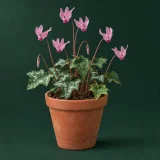
How to care for hardy cyclamen in a pot
Cyclamen hederifolium care: light, watering, warm-weather rest and renewed growth. Separate natural leaf loss from a damaged tuber.
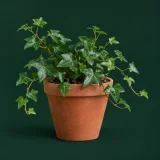
How to care for English ivy in an outdoor pot
Water, light, pruning and support for Hedera helix on a patio or balcony. Manage its growth and protect roots, animals and walls.
Frequently asked questions
Will it live and flower for years in the same pot?
Do not rely on that. It is commonly grown as a cool-season plant, and heat can finish it despite good care. A healthy plant may continue when climate allows, but other violets’ hardiness does not promise indefinite life for this pansy.
Why does it stop flowering in midwinter?
Severe cold and low light can slow growth and flowers. Check moisture and drainage, protect from extremes and wait for milder conditions. Extra fertiliser or moving it to a hot room is not an automatic solution.
Sources and what they support
- NC State Extension · Viola × wittrockiana
Horticultural identity, five petals, foliage, moist drainage, deadheading and heat limits. Potential edibility does not cover treated ornamental plants; no lifespan guarantee.
- Iowa State University Extension · Pansies and violas
Cool-season growing, light adjusted to heat, moisture, light feeding and common problems. No Iowa months, fixed feeding frequency or perennial claims borrowed from other Viola.
- RHS · Winter containers
Winter-flowering pansies, pauses in cold, light, moisture checks and container/root protection. This does not establish survival for every cultivar in every freeze.
- RHS · Pansy leaf spots
Spots with different causes, possible stem/crown injury, buying healthy plants and hygiene. No diagnosis from one spot or promise of a home-fungicide cure.
- University of Georgia · Pansy care
Spent flowers and seedpods, drainage holes, rot from excess water and decline in heat. Georgia dates, feeding and personal observations are not universal rules.
How we put these guides together
We review dates, care and recommendations to help you plan each gift.
Spotted something we should review? Contact Agenda Floral.