Guides
How to care for Dalmatian bellflower in a pot
Care difficulty3 out of 10
Pay attention to watering and growing conditions.
Editorial guide, with suitable light and climate. 0: very easy; 10: very delicate. More stars mean more care.
Dalmatian bellflower can live for several years in a pot with light, moderate moisture and good drainage. It suits sun or bright partial shade; on a very hot patio, morning sun helps avoid overheating the root ball. Check the mix before watering and let excess drain away. After flowering, remove dead material without cutting back the whole green clump. Its ability to grow on walls does not mean a small pot can be left unattended.
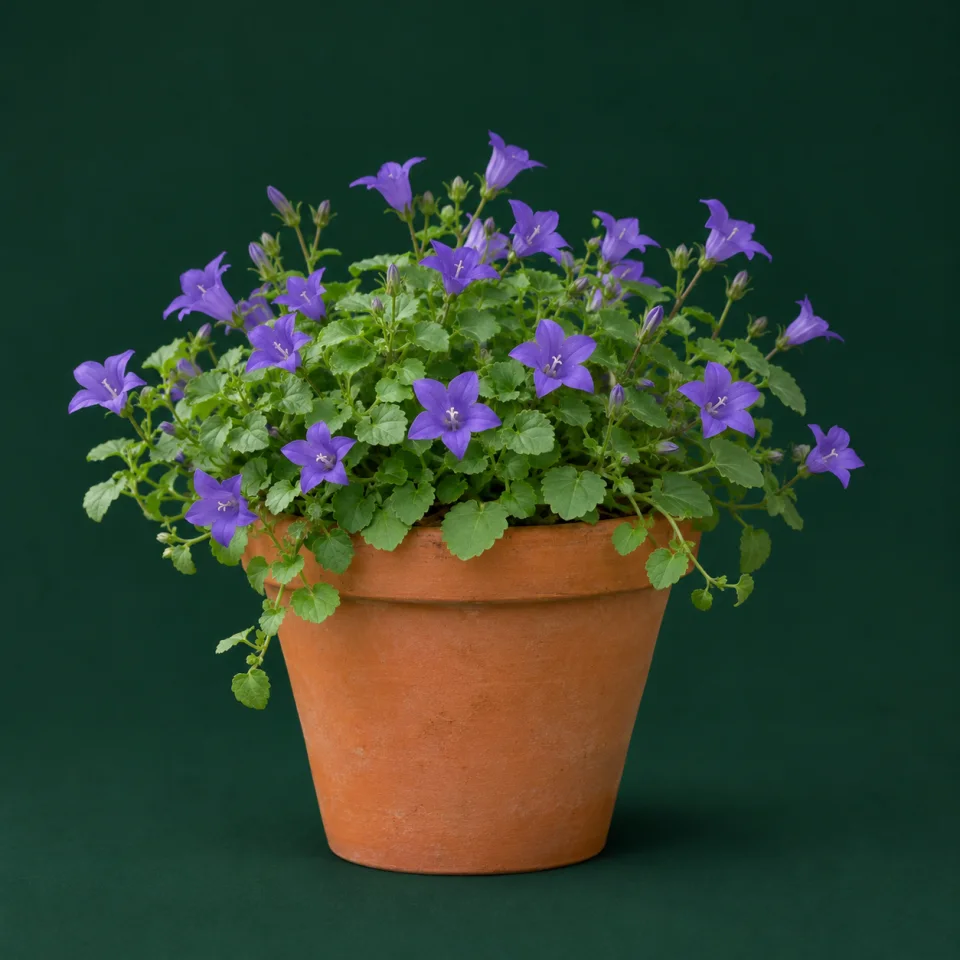
Botanical reference: Campanula portenschlagiana
Check which bellflower you have
Campanula portenschlagiana, also known as C. muralis, forms a low clump of small rounded or heart-shaped leaves and violet-blue bells. Stems can trail over a container rim. It is a perennial, not a flower to discard after its first flush. Keep the label because C. poscharskyana and C. carpatica are different species, while C. isophylla needs more protection from cold. The name bellflower and the colour of the blooms do not make all their care requirements identical.
Outdoor light with relief from intense heat
Choose sun or bright partial shade, with air circulating around the leaves. If the balcony receives fierce afternoon heat, try morning sun and light shade later. Avoid a dark, damp corner behind other pots. A plant raised under cover needs a gradual introduction to outdoor conditions rather than being put straight against a scorching wall. Leave room for stems to spread without being crushed by a larger neighbouring plant.
A container with room and clear drainage
Choose a pot with open drainage holes and a little more room than the root ball. A structured potting mix with mineral components can retain moisture without becoming heavy and compacted. Special acidic compost is unnecessary. Keep the clump base at its previous level and water to settle it. If it came in a decorative outer pot, check that water can escape. Empty the surplus and avoid burying leaves or piling wet mix against the stems.
Water before the whole root ball dries out
Check beneath the surface. As the upper layer starts to dry and the mix beneath is no longer wet, water slowly to wet the root ball and let it drain. Do not wait for the whole clump to collapse or add water while the inside remains wet. Check more often in heat or wind, even after light rain. Before going away, show your helper where to check moisture. The limited soil in a crack or pot does not give a fixed number of days between waterings.
Feed moderately and refresh when needed
During growth, use fertiliser for flowering container plants according to its label, allowing for any already in the potting mix. Apply it to moist mix and reduce or pause when growth slows. Extra feed does not fix poor drainage. If roots fill the container or the mix loses its structure, repot in mild conditions into a slightly larger pot. There is no need to repot a clump with room to grow every year or pull apart all the roots of a newly received flowering plant.
Keep the green clump after flowers fade
Remove spent flowers and finished flower stems to tidy the plant. It does not need hard pruning every season or all healthy foliage cut away after blooming. Shorten an awkward stem if needed, leaving living growth. An established overcrowded clump can be renewed by division into portions with healthy roots during a mild growing period. Seed and basal cuttings are also possible. Follow the seed packet for sowing; do not count on reproducing a particular selection’s form or reaching flowers by a fixed date.
Cool winters with the roots protected
This bellflower tolerates cold in the ground, but roots in a container are more exposed. In winter, focus on preventing soaked compost, remove the saucer and find shelter from wind and persistent rain. If prolonged freezing is forecast, protect the pot or move it to a bright, cool shelter according to your climate. A heated room is not a routine requirement. It usually retains foliage, although older or damaged leaves may dry out. Remove these and check the base before discarding the plant; not every loss of leaves is simply dormancy.
Chewed leaves, marks and ornamental use
Look for slugs and snails if leaf edges are eaten, particularly beneath the pot. White powder, spots or pustules call for checking airflow and moisture before choosing treatment. One yellow leaf is not a diagnosis. If the base softens while the mix is saturated, correct drainage and seek advice if decline continues. Keep this container ornamental, without offering leaves or flowers to pets or using it as food. Store fertilisers and treatments away from children and animals. If an animal eats the plant, consult a vet with its label.
Guides to help with your decision
How to care for a primrose in a pot
Watering, cool light and Primula vulgaris after flowering. Keep its rosette healthy without mistaking the last flowers for the end of the plant.
How to care for hardy cyclamen in a pot
Cyclamen hederifolium care: light, watering, warm-weather rest and renewed growth. Separate natural leaf loss from a damaged tuber.
How to care for sweet William in a pot
Sun, watering, deadheading and renewing Dianthus barbatus. Keep its crown healthy and understand the cycle of this short-lived plant.
Frequently asked questions
Does a bellflower on a wall need less care than my potted plant?
An established plant in a crack may reach moisture through roots you cannot see. A pot has limited volume and heats or dries differently. Keep checking moisture and drainage in your container instead of copying the apparent independence of a wall-growing bellflower.
Should I cut the whole plant back after flowering?
No. Remove dry flowers and finished flower stems, keep healthy foliage and check whether it is still growing. Flowering has pauses and depends on climate and selection. Cutting everything back or forcing it with fertiliser does not guarantee another flush and may remove leaves it still needs.
Sources and what they support
- RHS · Campanula portenschlagiana
Low evergreen perennial, synonym C. muralis, broad heart-shaped leaves and violet-blue tubular/bell flowers; sun/light shade, drained moisture and broad pH. Containers, seed and basal cuttings; hard pruning not required, remove spent flowers/stems. Slugs/snails, rust, mildew and leaf spots. H5 does not guarantee potted-root survival.
- RHS · How to grow specialist campanulas
Group guidance: drained mineral mix, same planting depth, water during establishment/growth, labelled container feeding, flower cleanup, established-clump division and winter shelter according to hardiness. Its tender species, UK months, temperatures and frequency are not imposed on C. portenschlagiana.
- RHS · Container maintenance
Container principles: checked moisture, drainage, accounting for feed already in the mix, repotting for crowded roots/degraded structure and protecting the ball from freezing. A wall-growing plant is not an unattended pot, and no water-free interval is fixed.
- Kew · Campanula portenschlagiana Schult.
Accepted temperate perennial/subshrub with C. muralis as synonym. Do not merge C. poscharskyana, C. carpatica, C. isophylla or catalogue flower C. medium. Botanical identity does not certify a cultivar or food safety from a photo.
- RHS · Campanula isophylla, especie distinta
Comparison profile: C. isophylla is a tender perennial needing cover when frost threatens. Supports retaining the identity of a flowering gift. Its pruning, pests, temperatures and watering are not transferred to C. portenschlagiana.
- Giftinformationscentralen · Murklocka
Exact human-poison profile for C. portenschlagiana: no known poisonings and a statement limited to tasting a small amount. Not evidence of food suitability, safety of treated ornamentals or veterinary safety. The guide labels it neither toxic nor harmless to pets.
How we put these guides together
We review dates, care and recommendations to help you plan each gift.
Spotted something we should review? Contact Agenda Floral.