Guides
How to care for sweet William in a pot
Care difficulty4 out of 10
Pay attention to watering and growing conditions.
Editorial guide, with suitable light and climate. 0: very easy; 10: very delicate. More stars mean more care.
Sweet William needs light, regular moisture and a freely draining pot, with its lowest leaves above the medium. Partial shade can help in very hot summers; a small pot cannot rely on the drought tolerance associated with other pinks. Remove finished flower heads and respect the cycle: Dianthus barbatus is usually biennial or a short-lived perennial, and is also grown as an annual. Reaching the end does not always mean it needs rescuing.
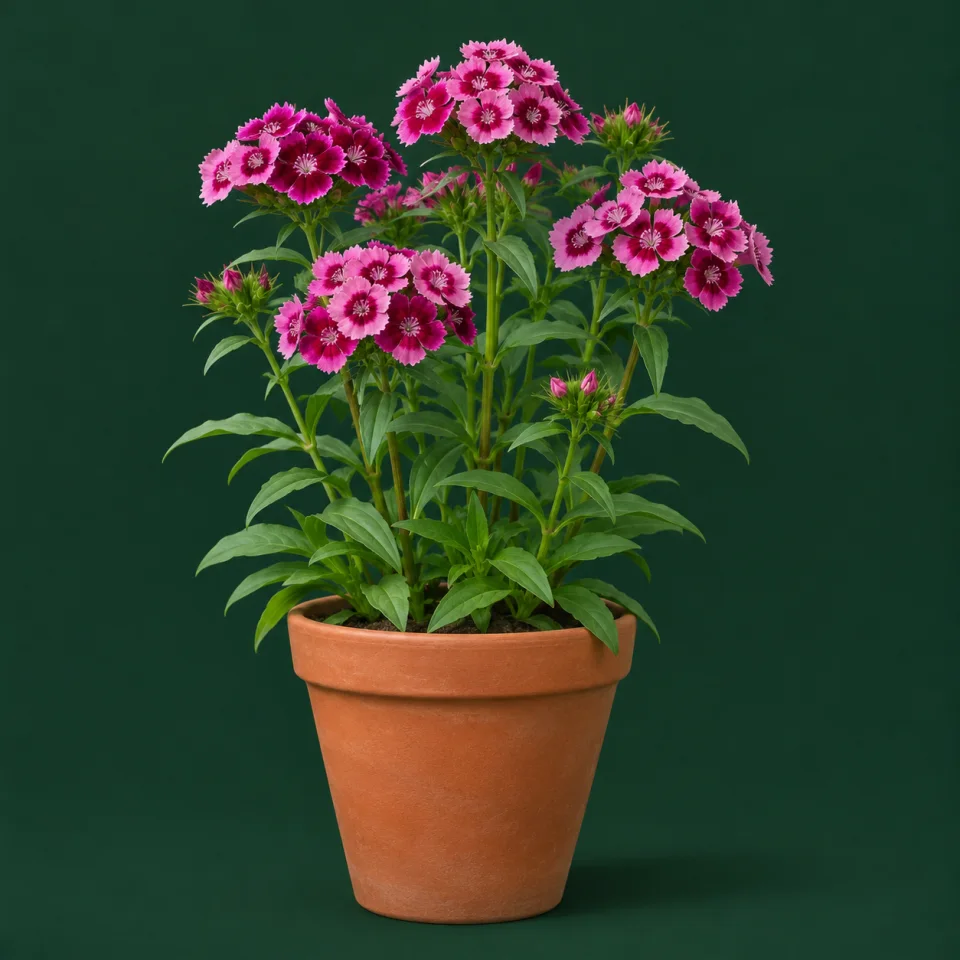
Botanical reference: Dianthus barbatus
A different pink with its own cycle
Dianthus barbatus is sweet William, with small flowers gathered into dense heads. It is not the common carnation, Dianthus caryophyllus, and you need not copy every part of carnation care. Keep the label, because a photograph cannot identify the cultivar. It usually produces leaves before its main flowering; some selections and growing methods bring that process forward. Check your plant or seed information rather than assuming it will flower this year simply because the plant is green.
Provide sun and relief from strong heat
Choose a bright outdoor position with sun. In a very hot summer, partial shade protecting it from the harshest heat may suit it better than an overheated balcony. Deep shade is not an equivalent flowering position. Space pots so air can circulate and you can inspect the base. Gradually acclimatise a plant moved from protected conditions. For winter, adjust container shelter to the local climate without treating a hardiness rating as a survival guarantee.
Keep drainage open and the crown clear
Use a container slightly larger than the rootball, with open holes and fertile, airy, free-draining potting medium for flowering plants. There is no need to improvise with heavy garden soil. Maintain the original planting depth and keep the lowest leaves above the medium. The crown, where stems emerge, should not be buried beneath soil or wet mulch. Water after potting and empty any water caught inside a decorative outer pot.
Enough water without a soggy base
Check moisture below the surface and the weight of the pot before watering. If it is beginning to dry, wet the rootball slowly and let surplus water leave; wait if it is still moist. Do not aim for complete drought between waterings or add a little every day out of habit. Hot weather may mean daily checks, which do not mean automatic daily watering. Before an absence, give your helper one simple instruction: check first and drain afterwards, without filling the saucer as a reservoir.
Feed to support growth
During growth, a potted plant can benefit from fertiliser for flowering plants. Follow the label and allow for nutrients already in fresh potting medium so you do not double up. If it wilts, check water, roots and heat before feeding. Extra fertiliser cannot force a rosette to flower while it is in a different stage. When growth slows, reconsider its actual needs instead of maintaining the same feeding programme all year.
Remove finished heads without stripping the plant
Once a head has finished, cut its stem with clean scissors back to a side shoot or healthy leafy section. This tidies the plant and can encourage further flowering, without guaranteeing another flush. Do not pull stems out or cut off the entire rosette because one flower has faded. If you want seeds, let a healthy head mature and accept a drier-looking patch while it does so.
Renewal is part of caring
For sowing, follow the instructions for your particular selection and climate: the wait for flowers is not identical for every plant. Prick out seedlings when manageable and give them room without crowding their crowns. After flowering, you can keep a plant with a firm base and healthy new growth to see whether it continues. If its cycle finishes or the base rots, start again with seed or a healthy young plant. Extra food cannot make a short-lived plant permanent.
Watch the base, leaves and access
A soft base in very wet medium calls for checking drainage, not more water because it looks limp. Watch for rust spots or pustules, aphids and slug or snail damage. Identify the problem before treating and remove diseased debris. Keep the plant away from children and pets, and do not use it as food. It may irritate skin: wear gloves if sensitive and wash your hands. For possible ingestion, contact the appropriate poison service or veterinarian rather than trying home remedies.
Which flowers to choose
Compare flowers to choose the format, colours and care that suit the occasion.
Guides to help with your decision
How to care for petunias in pots and window boxes
Sun, watering, feeding and spent flowers for garden petunias, with variety differences and end-of-season care.
How to care for pot marigold through its growing season
Sun, moderate water, spent flowers, seeds and heat: Calendula officinalis care in containers, distinct from Tagetes marigolds.
How to care for a carnation in a pot
Sun, watering, stems, spent flowers and winter: practical potted Dianthus caryophyllus care matched to its variety.
How to care for Dalmatian bellflower in a pot
Light, watering and after-flowering care for Campanula portenschlagiana. Keep the clump healthy and protect potted roots from excess water and cold.
Frequently asked questions
Why are there healthy leaves but no flowers?
It may be building its pre-flowering rosette, getting too little light or following a different selection’s rhythm. Check the label and exposure before changing water and feed together. A plant bought in bloom and a newly germinated seedling are not starting from the same stage.
Is it dead if the flowering season is over?
Not necessarily. Check whether the base is firm and healthy leaves or shoots remain. Keep light and moisture suited to its activity while observing. A finished flush does not prove death, but does not guarantee another: its short life cycle and rootball condition matter more than a calendar date.
Sources and what they support
- RHS · Growing dianthus
Dianthus container care: maintain planting depth, keep low leaves above medium, provide drainage, check water, feed pots and remove faded flowers. Do not transfer drought tolerance from established border plants or greenhouse carnation care.
- RHS · Annual and biennial dianthus
Short-lived group: light, fertility and steady moisture without permanently wet or excessively dry medium. Usual biennial sweet William cycle; renewal need not mean failure. Do not assign a cycle or flowering date from a photograph.
- RHS · Dianthus barbatus
Identity, lance-shaped leaves, clustered flower heads, biennial or short-lived perennial cycle, sun, containers and deadheading. Skin-allergen caution for humans/pets. No cultivar claim or universal winter-hardiness guarantee.
- NC State Extension · Dianthus barbatus
Biennial or short-lived perennial, often grown annually; sun and partial shade in very hot summers, draining moisture, crown rot, rust and slugs/snails. Notes low toxicity, contact irritation and pet concern; no imported ASPCA D. caryophyllus, doses or other-species symptoms.
How we put these guides together
We review dates, care and recommendations to help you plan each gift.
Spotted something we should review? Contact Agenda Floral.