Guides
How to care for a carnation in a pot
Care difficulty4 out of 10
Pay attention to watering and growing conditions.
Editorial guide, with suitable light and climate. 0: very easy; 10: very delicate. More stars mean more care.
A potted carnation needs sun, air and draining mix without a constantly wet base. Check moisture before watering, remove finished flowers and support stems if they lean. Keep the label: a border carnation and a perpetual-flowering type do not necessarily need the same winter protection.
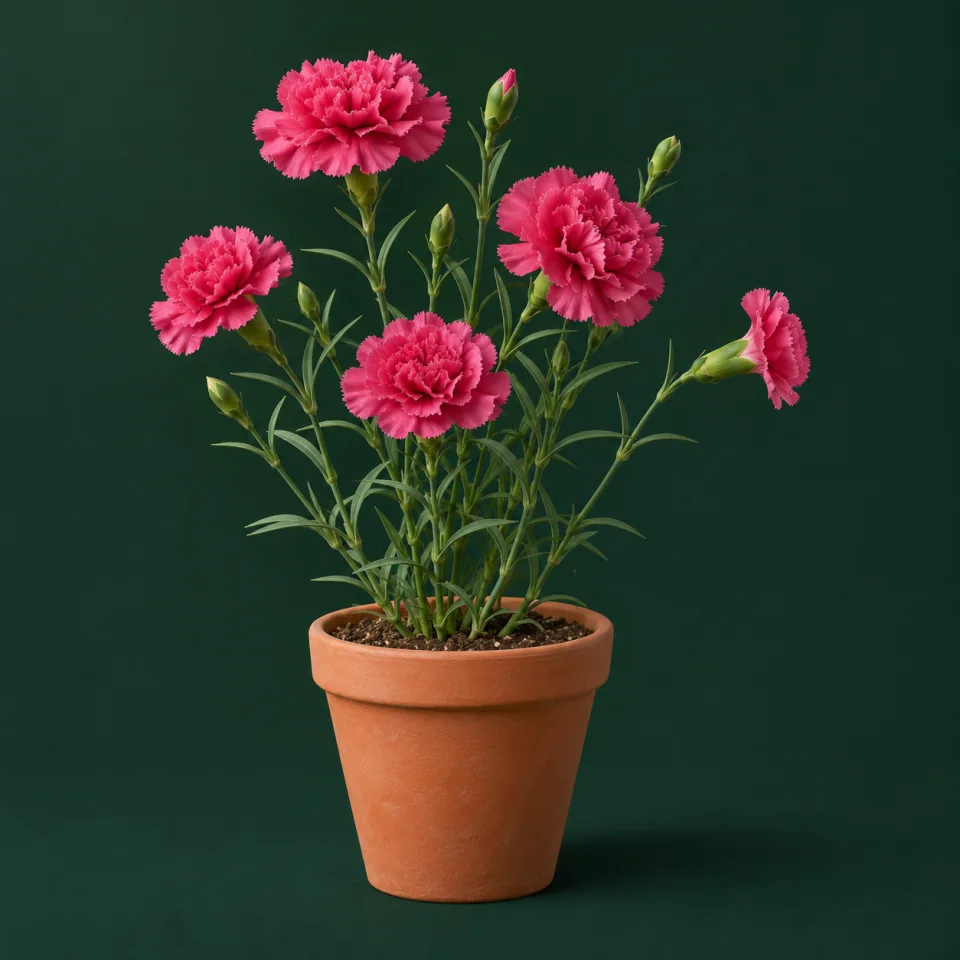
Botanical reference: Dianthus caryophyllus
Start with the label, not just the flower
This guide covers Dianthus caryophyllus, with narrow leaves and jointed stems. For a manageable terrace, choose a compact variety labelled for pots; tall cut-flower carnations may need more space and support. Check the botanical name: other potted Dianthus may be different species. Check the variety and intended use: a plant sold in bloom does not reveal how much cold it tolerates.
Sun and air, with attention to heat
Find a sunny position with space around the foliage rather than squeezing it among plants. Gradually acclimatise one raised under shelter. Carnations prefer cooler conditions to an overheated corner between walls. If the pot gets very hot and the plant declines in the afternoon, review the harshest exposure and water before adding feed. Permanent shade is not a substitute for flowering light.
Water the rootball and allow drainage
Feel below the surface and check weight. As the upper mix starts losing moisture, water slowly to wet the rootball and let it drain below. Empty the saucer rather than leaving roots in a permanent reserve. Check more often in heat or wind without making daily watering compulsory. If foliage droops while mix stays wet, inspect drainage and roots before watering again.
Keep the lowest leaves above the mix
Use free-draining outdoor potting mix with neutral to slightly alkaline pH. There is no need to alter it by eye with lime or home recipes. Keep the same planting depth, lowest leaves above the surface and drainage holes clear. When roots fill the container and watering becomes difficult to manage, repot during growth into a slightly larger one, preserving healthy roots and space between plants.
Feed and support for stems
During growth and flowering, use flowering-plant fertiliser according to the label and nutrients already in the mix. Do not increase doses for a pause without checking light and roots. Tall stems carrying heavy flowers may need a stake or ring; avoid tight ties or driving support through the plant base. A compact variety can be easier if you want to move and tend the pot comfortably.
What to cut when a flower finishes
Remove a faded flower and its stem section down to the next side shoot or bud, sparing flowers still doing well on the same branch. Use clean scissors and collect debris. A light trim after flowering may tidy the clump while keeping healthy green growth. Do not strip it routinely or promise new flowers on a fixed date; variety, season and conditions matter.
Winter depends on the carnation type
There are hardy border carnations and perpetual-flowering or Malmaison types needing frost-free protection. Do not apply the hardiness of all Dianthus to an unidentified plant. Check the label and terrace lows; any required shelter needs light and conditions suited to the variety. In cold weather, watch particularly for excess water around the base. Slower growth usually requires less water, with soil checks each time.
Problems, time away and pets
Inspect shoots and undersides for aphids; damaged leaves, rust-like marks or a soft base need review of moisture, air and roots before treatment. Separate a confirmed problem and avoid unidentified spraying. When away, leave instructions to check the pot and empty the saucer. Carnations can irritate skin and digestion and are toxic to cats and dogs: wear gloves if sensitive, collect trimmings and seek advice for suspected ingestion with the label, without home remedies.
Which flowers to choose
Compare flowers to choose the format, colours and care that suit the occasion.
Guides to help with your decision

Which flowers to give to someone with cats or dogs
Flowers for a home with cats or dogs: options to consider, checking the whole bouquet and precautions with lilies, holly and mistletoe at Christmas.
How to care for pot marigold through its growing season
Sun, moderate water, spent flowers, seeds and heat: Calendula officinalis care in containers, distinct from Tagetes marigolds.
How to care for a gazania in a pot
Sun, drying between waterings, closed flowers and cold: practical Gazania rigens care for a free-draining terrace pot.
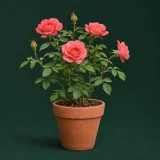
How to care for a miniature rose in a pot
Sun, water, repotting, spent flowers and cold: practical miniature rose care after the gift arrives.
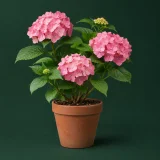
How to care for a hydrangea in a pot
Shade, water, potting mix and pruning for Hydrangea macrophylla: protect roots and flower buds without chasing colour at any cost.
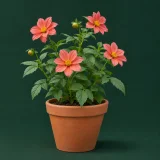
How to care for a dahlia in a pot
Compact patio dahlias: light, watering, containers, faded flowers and tubers. Care through growth and prepare protection from cold.
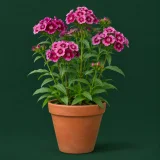
How to care for sweet William in a pot
Sun, watering, deadheading and renewing Dianthus barbatus. Keep its crown healthy and understand the cycle of this short-lived plant.
Frequently asked questions
Should I discard it after the first flowers finish?
Not for that reason alone. Dianthus caryophyllus is perennial, although some cultivated forms are short-lived or grown seasonally. Remove spent growth, assess roots and shoots and continue suitable care. Another flush or several years on every terrace cannot be guaranteed.
Can a gifted carnation stay indoors?
It needs ample light and conditions suited to its variety. A dark living room replaces neither a sunny terrace nor a bright greenhouse. Check whether it is a border or protected type before moving it; acclimatise for outdoors and avoid cold it is not prepared for.
Sources and what they support
- RHS · Dianthus caryophyllus
Identity, sun, drainage and deadheading. Species identity does not determine every potted variety’s hardiness.
- RHS · Growing dianthus
Containers, planting depth, water/feed, support and differences between border, perpetual and Malmaison carnations. No copied months or genus-wide hardiness.
- NC State Extension · Dianthus caryophyllus
Size variation, preference for cooler summers, neutral/alkaline mix and possible rust/rot. No universal calendar or diagnosis from spots.
- ASPCA · Carnation — Dianthus caryophyllus
Exact entry: toxic to cats and dogs, with digestive/skin irritation. Typically mild signs are not a guarantee for an individual case.
How we put these guides together
We review dates, care and recommendations to help you plan each gift.
Spotted something we should review? Contact Agenda Floral.