Guides
How to care for a hydrangea in a pot
Care difficulty7 out of 10
Pay attention to watering and changes and signs of stress.
Editorial guide, with suitable light and climate. 0: very easy; 10: very delicate. More stars mean more care.
A bigleaf hydrangea needs bright light with light shade, moisture retained in its rootball and a freely draining pot. Protect it from harsh sun and check water more closely in heat. Keep healthy stems: many varieties form flowers on the previous year’s wood, which hard pruning can remove.
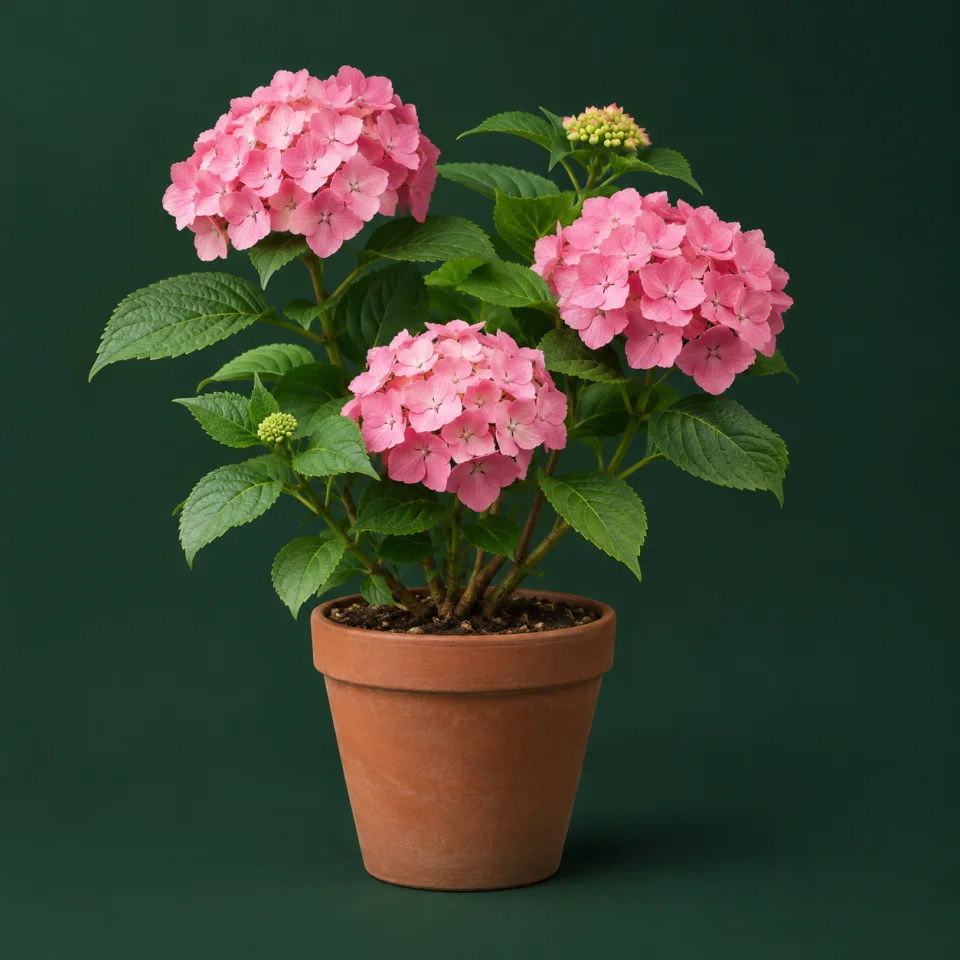
Botanical reference: Hydrangea macrophylla
Start with the variety, not just colour
This guide covers Hydrangea macrophylla, with rounded mopheads or flatter lacecap flowers. Not all hydrangeas share pruning needs. Keep the label and choose a compact variety for your space: a gift pot does not describe mature size. Check stems and leaves as well as blooms, and distinguish a flowering plant from cut stems needing only a vase.
Gentle light and shelter from heat
A bright patio with light shade often suits it better than a terrace overheating its pot. Gentle morning sun can work; protect against harsh afternoon sun according to climate and exposure. Adjust shop- or greenhouse-grown plants gradually, avoiding frost on tender growth. Being sold as a gift does not make a hot, dark living room a permanent home.
Steady moisture without submerged roots
Feel a few centimetres into the mix and assess pot weight. As it begins losing moisture, water slowly through the rootball and let excess drain below; empty the outer pot. Do not wait for everything to dry out. Check more often in wind and heat without imposing daily watering. If it collapses, check first: adding water to still-moist soil can worsen damaged roots. Review heat and drainage too.
A stable container and moisture-holding drainage
Choose holes, root space in proportion to the plant and enough stability for its crown. Use quality container-shrub mix; moisture retention does not mean a heavy, constantly saturated mass. When roots fill the pot and moisture becomes difficult to manage, repot during growth in mild conditions into a slightly larger container. Preserve planting level, leave watering space and do not bury stem bases.
Feed and colour without kitchen recipes
In a pot, match feeding to growth, the label and existing nutrients. Higher doses may produce leaves without fixing poor flowering. In varieties able to shift pink or blue, acidity and available aluminium play a part; not every variety changes. Ericaceous mix and clean rainwater may help retain blue, but do not let the plant dry out if that water runs short. Avoid vinegar, nails or guessed doses to correct colour.
Prune with the buds in view
Many macrophylla varieties bloom on stems formed the previous year; some rebloomers also flower on new shoots. Do not copy hard pruning for paniculata or cut every stem to one height. On mopheads, faded flowers can stay to shelter buds, then be removed above the first strong healthy pair once severe cold risk eases. Remove confirmed dead wood and follow variety guidance for renewing mature plants.
Yellow leaves, spots or few flowers
Check water, light, roots and previous pruning before adding feed. Late frost or cutting may remove buds while the plant remains alive. Spots, powder or insects call for inspecting undersides and stems, improving air movement without drying out, and removing unhealthy debris. Identify the cause before choosing a labelled treatment. An ageing flower changing shade alone does not prove water shortage or a need to alter pH.
Winter, time away and safety
It is deciduous: leaf loss on entering dormancy may be normal. Check moisture and drainage occasionally without watering as during full growth. Garden hardiness does not protect potted roots equally; choose shelter for the variety and local cold rather than relying only on wrapping the pot. Leave watering instructions for absences. Wear gloves if skin is irritated, and keep plants and trimmings away from chewing: ingestion is harmful to dogs and cats. Contact your vet for suspected ingestion, without home remedies.
Which flowers to choose
Compare flowers to choose the format, colours and care that suit the occasion.
Guides to help with your decision
Mother’s Day in Austria: when it is and which flowers to give
In Austria Mother’s Day falls on the second Sunday in May: 9 May 2027. Peonies, hydrangeas or lilac, and when to buy them when shops close on Sundays.
Which flowers to give to someone with cats or dogs
Flowers for a home with cats or dogs: options to consider, checking the whole bouquet and precautions with lilies, holly and mistletoe at Christmas.
How to care for a carnation in a pot
Sun, watering, stems, spent flowers and winter: practical potted Dianthus caryophyllus care matched to its variety.
How to care for a miniature rose in a pot
Sun, water, repotting, spent flowers and cold: practical miniature rose care after the gift arrives.
How to care for a camellia in a pot
Camellia japonica care: shade, acidic mix, watering, falling buds and pruning after flowers, with practical checks before acting.
How to care for a garden azalea in a pot
Shade, acidic mix, shallow roots, water and pruning for Japanese outdoor azaleas, distinguished from florist gift plants.
How to care for a fuchsia in a pot
Gentle light, watering, heat, pruning and winter care for container fuchsias. What to check when they wilt or stop flowering.
Frequently asked questions
Must a pink hydrangea be turned blue?
No. Colour is not a health test, and not all varieties change. If it is healthy and you like it, keep care steady. Know the variety, mix and water before using a specific product; avoid improvised chemistry to match a photograph.
Can it live on after being given in flower?
It can be kept if variety, climate and space suit it, without a promise of another bloom. Choose a suitable outdoor position and acclimatise when nights are safe. Finished flowers or seasonal leaf loss do not require disposal: check stems, buds and roots.
Sources and what they support
- RHS · Growing shrubby hydrangeas
Compact cultivars, light shade, container moisture, colour and winter shelter. Ground-grown care, doses and UK months are not universal pot instructions.
- RHS · Hydrangea pruning
Type-specific pruning: retain macrophylla stems and buds, mophead spent blooms and light cuts. Do not copy paniculata or arborescens pruning or promise flowers.
- NC State Extension · Hydrangea macrophylla
Identity, afternoon shade, old-wood bloom and some rebloomers flowering on new growth; possible problems. Its regional pruning date is not imposed on every climate.
- RHS · Hydrangea macrophylla
Species profile: deciduous, moist yet draining conditions, possible skin allergy and harmful if eaten by dogs or cats. UK hardiness is not a guarantee for potted roots.
- Queensland Poisons Information Centre · Hydrangea macrophylla
Exact identity: ingestion risk and skin/eye irritation. Human poison information, with no safe dose or home remedies.
How we put these guides together
We review dates, care and recommendations to help you plan each gift.
Spotted something we should review? Contact Agenda Floral.