Guides
How to care for a miniature rose in a pot
Care difficulty7 out of 10
Pay attention to watering and regular maintenance.
Editorial guide, with suitable light and climate. 0: very easy; 10: very delicate. More stars mean more care.
A miniature rose needs plenty of sun, air and steady moisture in a draining pot. Although sold as an indoor gift, it often suits a sunny terrace better after gradual adjustment. Avoid drying the whole rootball, remove spent flowers and adapt pruning and winter care to its variety and climate.
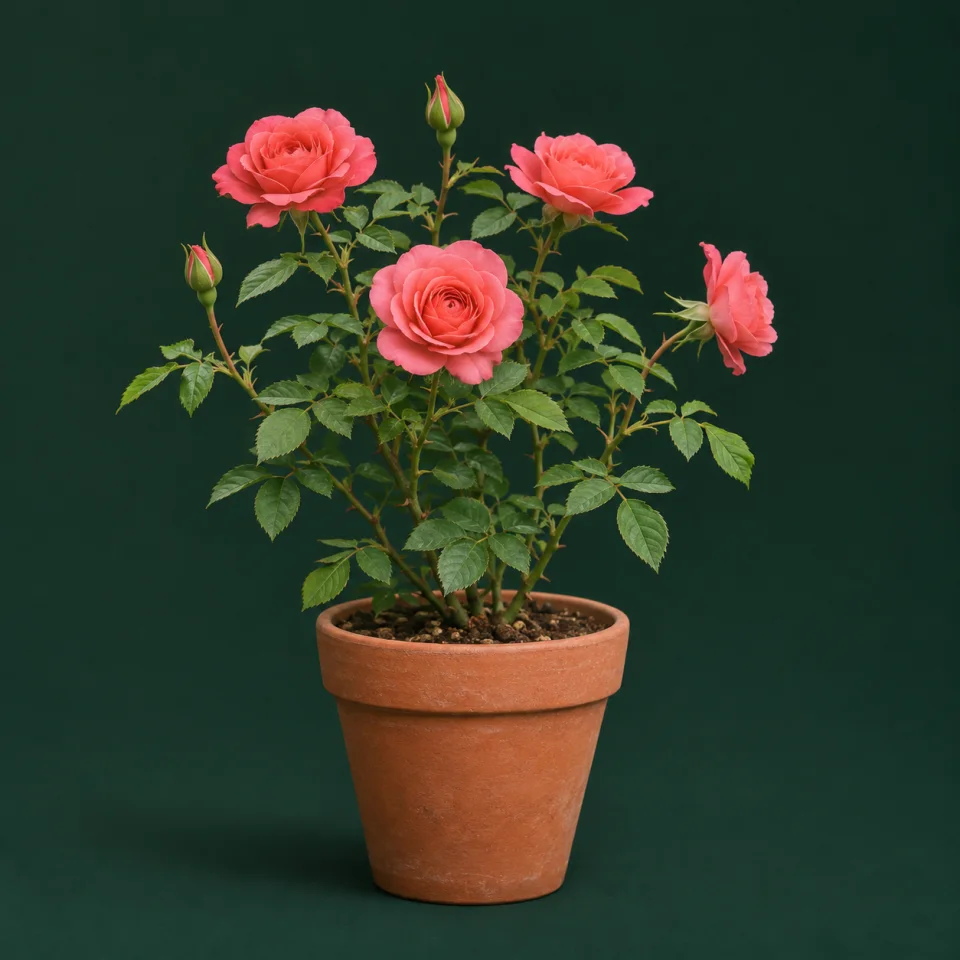
Botanical reference: Rosa, cultivares miniatura
Miniature describes a group of roses
These are Rosa cultivars with small flowers and foliage, not one species with identical needs. Keep the label and check mature size and suitability for containers: some minis grow beyond what their gift pot suggests. Look for healthy branches and leaves as well as pretty flowers. Do not routinely dismantle roots or separate every little plant in a newly purchased pot.
Gradually move towards a sunny position
Choose a place with sun for much of the day and air circulation. For greenhouse- or shop-grown plants, increase exposure gradually and avoid cold nights they are not prepared for. A dark living room will not maintain flowering well; a temporary indoor position needs a very bright window. On a hot terrace, protect the container from overheating while keeping light on the crown.
Water before the whole rootball dries
Feel a few centimetres below the surface and gently lift to gauge weight. As the upper mix starts losing moisture, water slowly to wet the rootball and let it drain below. Empty the saucer or outer pot. Small containers dry quickly in wind and heat, so check rather than fix watering days. Avoid routinely soaking all foliage; if it droops in moist mix, inspect drainage and roots before adding water.
Allow root depth and suitable mix
Choose a stable pot with holes and depth for roots, not just width for the crown. Use quality container-rose mix or suitable established-plant compost that retains moisture and drains. When roots fill the container and watering becomes difficult to manage, move up a sensible size during growth. Preserve the previous depth as a guide and healthy roots, without burying low leaves or crowding plants together.
Feed during growth
Container roses use their nutrient reserves; apply rose fertiliser according to its label and nutrients already present. Do not add doses to compensate for shade, damaged roots or seasonal pauses. Reduce or stop when growth slows towards cold weather. One yellow leaf does not prove a feeding deficiency. Review light, moisture and shoots before changing several things at once.
Spent flowers and a light prune
Use clean scissors to remove faded flowers above a healthy leaf or shoot, sparing developing buds. Tidying a mini often means removing dead, weak or crossing wood and shortening where needed rather than copying severe pruning for larger roses. Renewal pruning follows returning growth and local frost risk. Wear gloves for prickles and collect trimmings.
Spots, powder or insects
Inspect undersides and shoots for aphids or mites. Dark marks, white powder or leaf drop also call for checking light, water and ventilation, not blind treatment. Remove fallen unhealthy leaves and separate a confirmed problem. Identify the cause before choosing a product labelled for roses. Losing one flower does not mean the plant is dying: assess branches, roots and overall progress.
Winter, time away and safety
Roses in soil and pots do not have equal root protection. Check the variety and shelter the container from severe frost where needed, without assuming miniature means universally hardy. A shelter where leaves remain needs light; avoid turning rest into a hot dark living room. When away, arrange moisture checks and saucer emptying. Rosa is listed as non-toxic to cats and dogs, but prickles injure: it is not food, and trimmings, fertiliser and treatments belong out of reach.
Guides to help with your decision

Which flowers to give to someone with cats or dogs
Flowers for a home with cats or dogs: options to consider, checking the whole bouquet and precautions with lilies, holly and mistletoe at Christmas.
How to care for a gazania in a pot
Sun, drying between waterings, closed flowers and cold: practical Gazania rigens care for a free-draining terrace pot.
How to care for a carnation in a pot
Sun, watering, stems, spent flowers and winter: practical potted Dianthus caryophyllus care matched to its variety.
How to care for a hydrangea in a pot
Shade, water, potting mix and pruning for Hydrangea macrophylla: protect roots and flower buds without chasing colour at any cost.
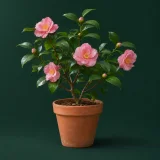
How to care for a camellia in a pot
Camellia japonica care: shade, acidic mix, watering, falling buds and pruning after flowers, with practical checks before acting.
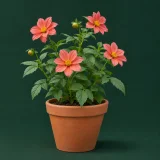
How to care for a dahlia in a pot
Compact patio dahlias: light, watering, containers, faded flowers and tubers. Care through growth and prepare protection from cold.
Frequently asked questions
Should I discard it after the first flowers?
Not simply because that flush ends. With healthy branches and roots, continue care and review space and position. Many cultivars can repeat, but variety and conditions decide; miniature does not guarantee a flowering date or years of survival.
Must it always stay in the tiny gift pot?
No. The container may suit initially, but review roots, stability and water use. Repot when genuinely full or management requires it, without moving straight into a huge pot. The label helps choose a size for that variety’s development.
Sources and what they support
- RHS · Roses in containers
Compact roses, container depth, sun, water and nutrition. No copied UK months or one pot size for every variety.
- RHS · Pruning miniature roses
Light pruning, dead/weak wood and possible pests. No copied pruning for other roses or fixed months for every climate.
- Chicago Botanic Garden · Miniature roses
Variety and size, acclimatisation, sun and steady moisture; indoors needs ample light. Winter protection is climate-dependent, not guaranteed.
- ASPCA · Rose — Rosa species
Rosa listed as non-toxic to cats/dogs. Not a safety claim for prickles, growing products or other plants called rose.
How we put these guides together
We review dates, care and recommendations to help you plan each gift.
Spotted something we should review? Contact Agenda Floral.