Guides
How to care for a dahlia in a pot
Care difficulty7 out of 10
Pay attention to watering and regular maintenance.
Editorial guide, with suitable light and climate. 0: very easy; 10: very delicate. More stars mean more care.
Choose a compact dahlia, a sunny spot sheltered from wind and a generous container with drainage. While leafy and flowering it needs regular moisture, without a full saucer or a rootball left dry for days. Remove faded flowers and feed according to growth. If foliage dies back in cold weather, check and protect the tubers before discarding the plant. It is toxic to dogs and cats.
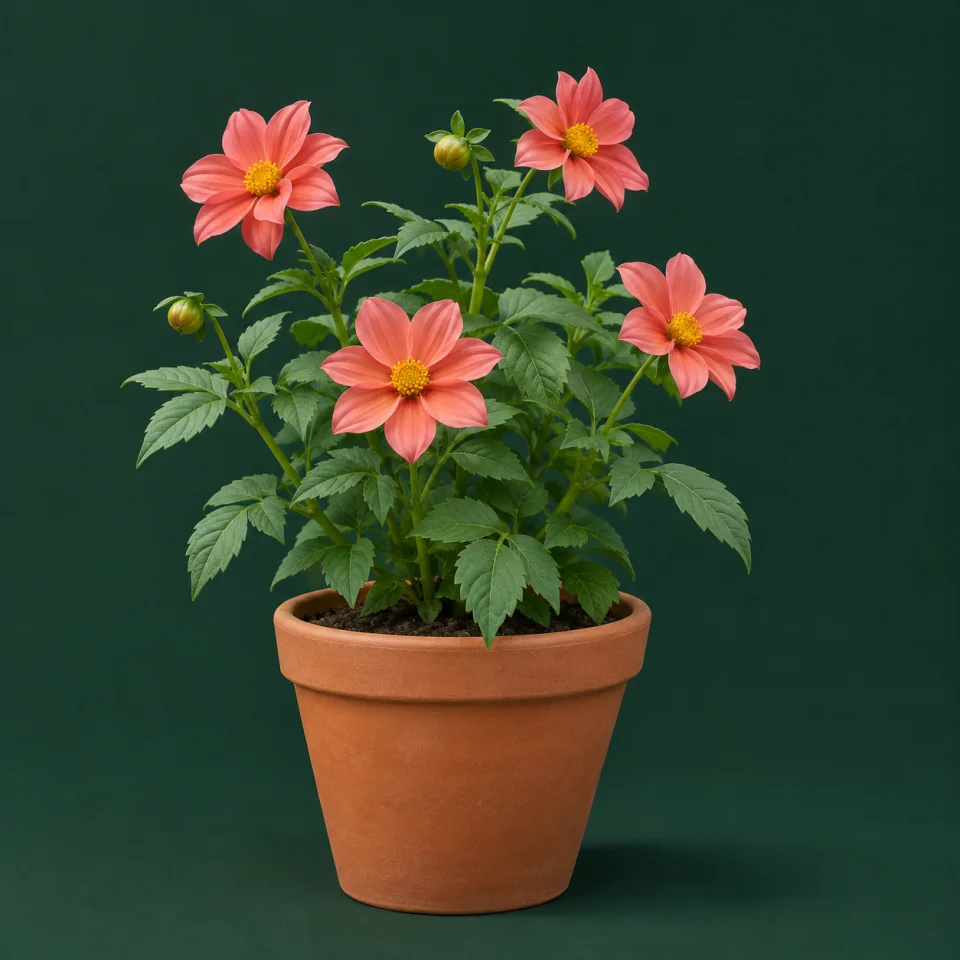
Botanical reference: Dahlia, cultivares compactos de jardín
Choose the plant size, not just the flower
This guide focuses on compact garden Dahlia cultivars for containers. A dahlia may stay small or easily outgrow a planter, so check mature height instead of judging only its shop appearance. A compact type is easier in limited space than a giant-flowered variety. The plant forms tuberous roots that can be kept; it need not be discarded after flowering.
Sun and shelter without trapped heat
Choose a sunny, airy position sheltered from wind that bends stems. A plant raised under cover needs acclimatisation before staying outside. Wait until frost risk has passed before exposing shoots. Some shade during harsh hours can help on an intensely hot patio. A dark room cannot replace its outdoor growing position.
Give the pot enough space
Use a moisture-retaining container mix that drains freely, with clear holes. A developed dahlia needs more than its small sales pot; around 50 cm wide is a reference for a standard-sized plant, not a minimum for every compact cultivar. Match the label. Repot a leafy plant at its previous depth and add support if its habit requires it, avoiding damage to tubers.
Water growing foliage differently from dormant tubers
With leaves present, check beneath the soil surface and lift the pot. As drying starts, wet the rootball slowly and drain. Avoid waiting for cactus-like complete drying. Heat and wind require more checks; arrange help using these signs during absences. A tuber just starting into growth uses far less: keep the mix only slightly moist rather than soaking it to force shoots.
Feed to support flowers, not force them
A growing and flowering container dahlia may need extra nutrients. Use suitable flowering feed supplying potassium, following its label and counting nutrients already in the mix. Too much nitrogen can favour leaves over flowers. Avoid doubling doses for a wilted, poorly lit or root-damaged plant. Stop feeding when growth ends and dormancy begins.
Remove spent heads without cutting buds
Cut a finished flower back to a lower leaf joint with a clean tool. Buds are usually rounded; spent heads without petals tend to be pointed. Check before cutting. A healthy young plant can be pinched above a leaf pair for branching if needed, but removing every side bud is unnecessary. Compact plants often support themselves; add a loose tie if a stem leans.
Keep healthy tubers for another cycle
Finished foliage does not mean the entire plant is dead. As cold dormancy approaches, reduce water and protect before the container freezes. To store tubers, carefully lift the clump after top growth finishes, shorten stems and let surface moisture and hollow stems dry out. Keep only healthy material in a ventilated box with dry insulating material, somewhere cool and frost-free. Check for rot during rest; avoid watering as though leaves remain or letting warmth cause severe shrivelling.
Check damage and keep pets away
Slugs and snails can eat young shoots; aphids, mites or spots need identification before treatment. A drooping plant calls for checks of soil, heat and roots before more water: it may already be waterlogged. Separate seriously affected plants. Wear gloves if sap irritates your skin. Do not use it as food; keep flowers, leaves and tubers away from children and pets. Ask a vet promptly about possible animal ingestion without waiting for symptoms or giving home remedies.
Which flowers to choose
Compare flowers to choose the format, colours and care that suit the occasion.
Guides to help with your decision
Which flowers to give to someone with cats or dogs
Flowers for a home with cats or dogs: options to consider, checking the whole bouquet and precautions with lilies, holly and mistletoe at Christmas.
How to care for a carnation in a pot
Sun, watering, stems, spent flowers and winter: practical potted Dianthus caryophyllus care matched to its variety.
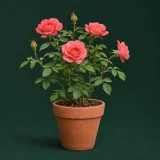
How to care for a miniature rose in a pot
Sun, water, repotting, spent flowers and cold: practical miniature rose care after the gift arrives.
Frequently asked questions
Can the pot stay outside all winter?
Climate matters, but a pot beside a wall is not automatically protected. Frost and persistent wet can damage tubers. Prepare frost-free shelter or lift and store healthy tubers. Survival in the ground in a mild area does not guarantee survival in an exposed container.
Can I cut any tuber to make another dahlia?
Do not cut it like a potato. Divide a clump once shoots can be identified, retaining roots and a piece of crown bearing a shoot in each portion. Use clean tools and grow divisions in light without frost until outdoor conditions suit. Keeping the clump whole is simpler; no division is guaranteed to establish.
Sources and what they support
- RHS · Growing dahlias
Compact cultivars, sun, generous containers, growing-season water/feed, deadheading, support and tuber protection. No UK dates, universal pot diameter or assumed frost tolerance in pots.
- NC State Extension · Dahlia
Garden hybrids, tuberous roots, moist draining soil, heat, support and protected storage. Ground hardiness zones and temperatures do not guarantee survival in exposed pots.
- ASPCA · Dahlia
Dahlia is toxic to dogs/cats, with possible digestive symptoms and dermatitis. No safe dose, food use or home treatment; seek advice for suspected ingestion.
How we put these guides together
We review dates, care and recommendations to help you plan each gift.
Spotted something we should review? Contact Agenda Floral.