Guides
How to care for a fuchsia in a pot
Care difficulty7 out of 10
Pay attention to watering and growing conditions.
Editorial guide, with suitable light and climate. 0: very easy; 10: very delicate. More stars mean more care.
Fuchsias need good light, protection from strong heat and moist potting mix with drainage. Check the mix before watering: a plant drooping in sun may already have wet roots. Choose a cultivar that fits your space and arrange frost-free shelter if its hardiness is unknown. Pinching encourages branching but delays flowers.
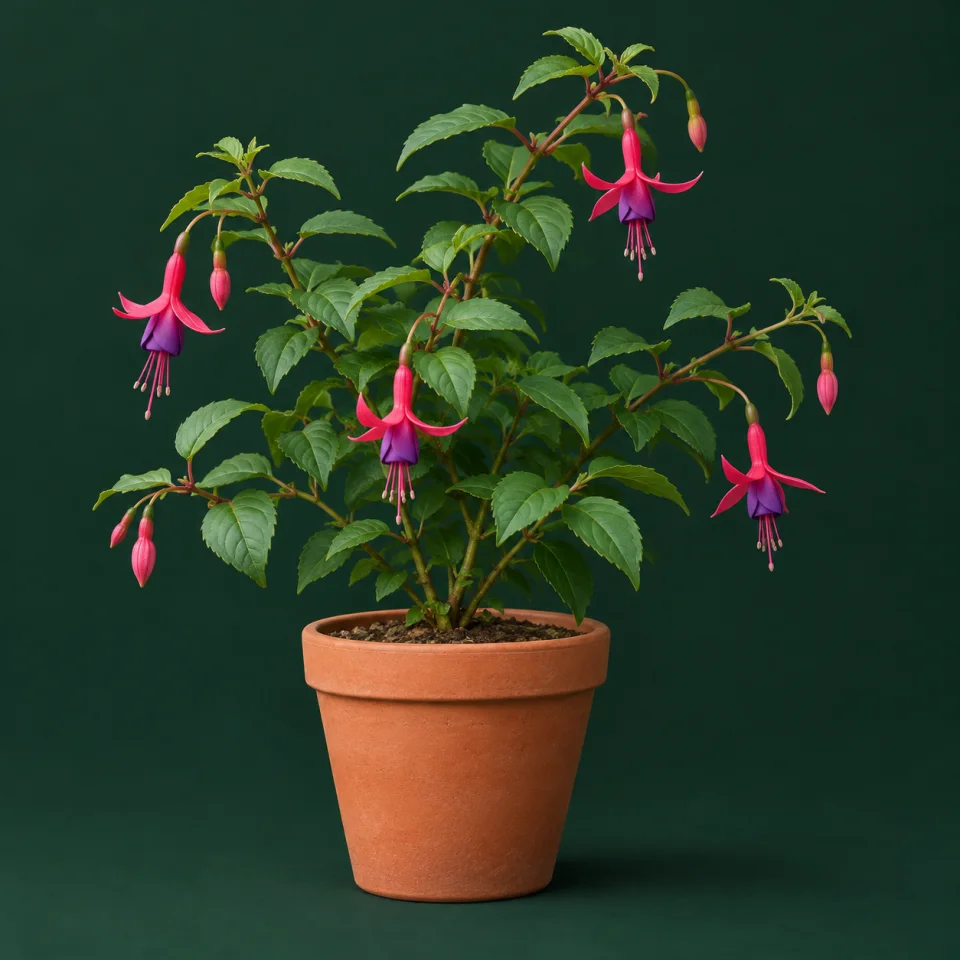
Botanical reference: Fuchsia
Start with habit and cultivar
Container fuchsias are often horticultural hybrids, not one species with identical needs. Upright and trailing forms come with single or double flowers. Choose the right habit for a shelf or basket, rather than colour alone. Keep the label with cultivar, size and hardiness. A standard trained as a small tree needs its own structural care and protection; do not prune it like a low bush.
A cool position with plenty of light
Provide good light and shelter from wind that dries and breaks stems. Mild climates may allow more sun; in hot summers, gentle morning sun or bright shade usually suits better than scorching afternoons. Deep shade does not help flowering either. Acclimatise plants outside once local frost risk has passed, and protect the container from overheating too.
Check the mix before watering
Feel just below the surface and lift the pot if practical. When moisture starts decreasing, water slowly through the root ball, let excess drain and empty the saucer. Avoid both complete drying and standing water. A windy basket may dry faster than a sheltered pot. If it droops on a very hot afternoon while the mix is wet, offer shade and cooler conditions before adding water. Drooping alone does not prove thirst.
A stable pot and draining mix
Use a good container mix that holds moisture without compacting. Keep drainage holes clear, including inside a basket or outer pot. When roots fill the container, move one modest size up during growth and preserve the planting depth. Do not bury the base deeper to imitate instructions for hardy fuchsias in garden soil. Hanging supports and fixings must bear the weight of the whole wet container.
Feed and pinch for a reason
During growth and flowering, use container-plant fertiliser according to the label and existing nutrients. Do not automatically combine slow-release and liquid feed. For more branches, pinch healthy young shoot tips early in growth, leaving leaves below. Then let shoots develop: constant pinching postpones flowering. Remove spoiled flowers and fallen debris to keep the plant clean, without expecting nonstop blooms.
Prepare for winter before frost
Bring tender or unidentified cultivars into cool frost-free shelter before cold weather. Provide light while leaves remain and water much less during slow growth, without drying the whole root ball. Reduce size only as its habit requires; never cut a standard’s trunk as if it were a low bush. With hardy cultivars, assess damage and new growth before removing dead wood. In-ground hardiness does not give container roots the same protection.
Missing flowers and damaged shoots
Low light, heat, water stress or recent pinching can interrupt flowers. Check changes before adding more feed. Inspect undersides for whitefly, aphids or mites. Badly distorted shoots, pustules or spreading patches need identification rather than an all-purpose spray. Separate the affected plant and avoid sharing cuttings or unclean tools while investigating.
Absences and accessible leaves or fruit
Arrange someone to check moisture and empty the saucer while you are away. Bright shade may reduce heat, but cannot replace checks. Do not present an ornamental pot plant as food for children or animals. Discourage chewing leaves or fruit, especially with fertilisers or treatments present. A safety profile for another species does not identify your hybrid. After uncertain ingestion or symptoms, consult the appropriate medical or veterinary professional.
Guides to help with your decision

Which flowers to give to someone with cats or dogs
Flowers for a home with cats or dogs: options to consider, checking the whole bouquet and precautions with lilies, holly and mistletoe at Christmas.
How to care for a hydrangea in a pot
Shade, water, potting mix and pruning for Hydrangea macrophylla: protect roots and flower buds without chasing colour at any cost.
How to care for a garden azalea in a pot
Shade, acidic mix, shallow roots, water and pruning for Japanese outdoor azaleas, distinguished from florist gift plants.
How to care for a wax begonia in a pot
Light, watering, flowers, repotting and winter care for wax begonias. Distinguish fibrous-rooted semperflorens plants from tuberous begonias.
How to care for busy Lizzie in a pot
Bright shade, watering, flowers and winter care for Impatiens walleriana. What to check when it droops and when to suspect downy mildew.
Frequently asked questions
Can it live in a sitting room all year?
A warm, dry or dim room may poorly suit an outdoor fuchsia. A bright cool space can provide shelter depending on cultivar and season, but that does not mean keeping it beside a heater all year. Use the label and actual conditions to decide.
Why is it leafy but not flowering?
Check light, heat and when you last pinched shoots. They need time to develop after cutting before flowers open. Repeated pruning or more fertiliser is not the answer. If leaves are damaged or growth is limp, check water and roots too.
Sources and what they support
- RHS · Growing tender fuchsias
Habit, draining moisture, pinching that delays flowering and frost-free shelter. No automatic daily water, UK months or one pruning height for every form.
- RHS · Growing hardy fuchsias
Hardier cultivars are chosen by label and conditions, not flower appearance. In-ground hardiness is not transferred to a container or guaranteed regrowth.
- Cooperative Extension · Fuchsia and heat
Oregon response on dry-heat sensitivity and moisture without saturation. Deep shade, misting and temperature ranges are not transferred as universal rules.
- ASPCA · Fuchsia triphylla
Lists Fuchsia triphylla as non-toxic to dogs/cats. One species does not identify these hybrids or establish food safety of a treated pot plant.
How we put these guides together
We review dates, care and recommendations to help you plan each gift.
Spotted something we should review? Contact Agenda Floral.