Guides
How to care for busy Lizzie in a pot
Care difficulty6 out of 10
Pay attention to watering and growing conditions.
Editorial guide, with suitable light and climate. 0: very easy; 10: very delicate. More stars mean more care.
Busy Lizzie needs bright shade or gentle light, moist draining mix and cold protection. Check before watering: it can droop in heat even with wet roots. Do not dry the entire root ball or leave standing water below. Leaf loss with white fuzzy growth underneath needs separation and identification, rather than continuing to treat the plant as thirsty.
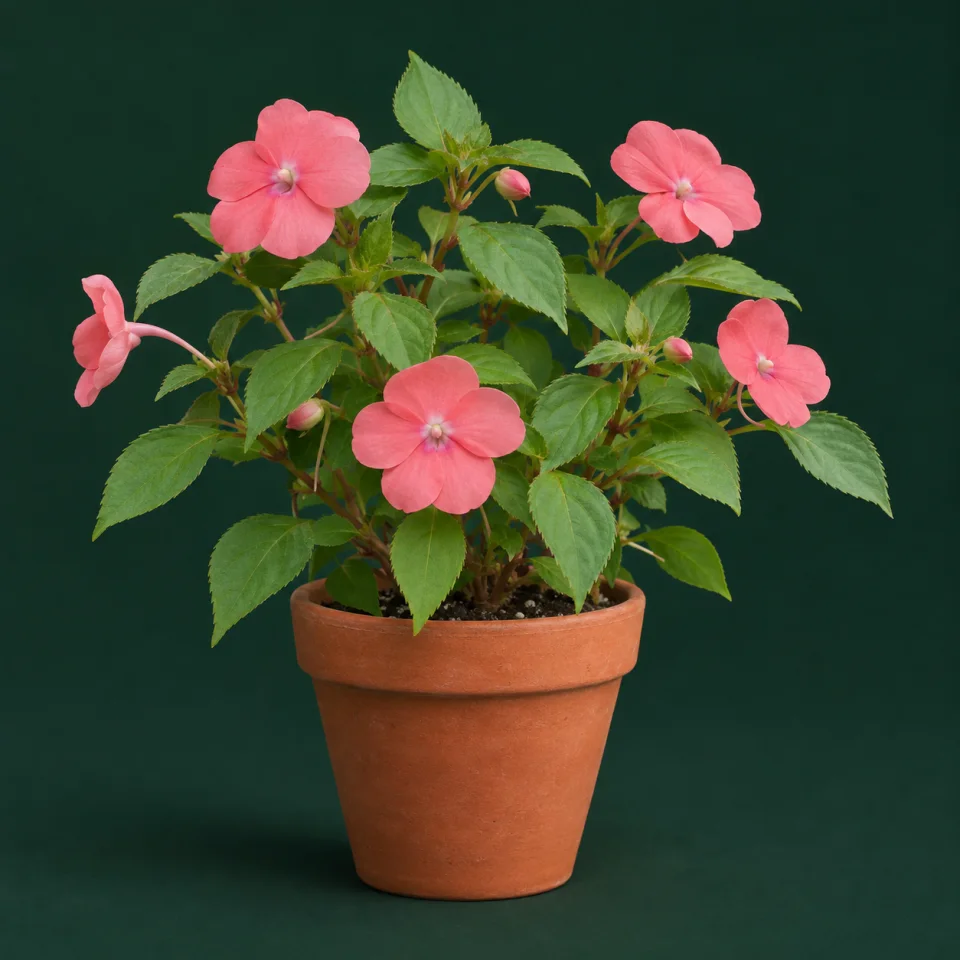
Botanical reference: Impatiens walleriana
Choose the right species for the position
Look for Impatiens walleriana on the label. This is the busy Lizzie with flat single or double flowers, fleshy stems and toothed green leaves. It differs from New Guinea impatiens or hybrids selected for sun. That changes where it can grow comfortably. Choose firm foliage without unusual leaf loss and keep the cultivar name if disease resistance is advertised.
Light shade and shelter from heat
A bright patio with partial shade, or gentle morning sun depending on climate, usually suits it. Avoid scorching afternoons and wind that rapidly dries the pot. Shade should not mean darkness. Acclimatise plants raised under cover gradually and put outside after local frost risk. If your balcony only offers hours of harsh sun, choose another plant or provide real shade.
Steady moisture with an escape for excess
Feel below the surface and check weight. When the top starts losing moisture, water slowly through the root ball, let it drain and empty the saucer. It dislikes complete drying, but roots should not stand in water either. Heat and wind mean checking more often, without a mandatory daily schedule. If it droops in wet mix, offer cooler conditions and check roots and drainage before adding another jug.
A suitable pot and airy mix
Choose container mix that holds moisture without compacting, with clear holes below. An enormous pot is unnecessary; fit it to the root ball and keep it stable. When roots fill the space or the mix deteriorates, move a modest size up during growth. Keep planting depth and support the mix, without pulling soft stems. Leave space between plants for air to circulate.
Feed and tidy without needless work
During growth and flowering, use flowering-plant feed according to the label and existing nutrients. Do not combine products or use extra feed to compensate for damaged roots. It usually does not need every spent flower removed; clear spoiled debris to keep the pot tidy. Lightly trim or pinch healthy tips during growth if stems stretch. Repeated hard pruning cannot guarantee more flowers or a fixed size.
Yellowing is not always lack of water
Inspect undersides, shoots and bases for insects, mould or soft parts. Impatiens downy mildew can cause yellowing curling leaves, flower and leaf drop, and white fuzz particularly underneath. One symptom does not confirm it. Separate the pot and seek identification. If confirmed, remove the affected plant with its roots, without composting it or taking cuttings. Do not expect more feed or a random treatment to save it.
Protected winter care if you want to keep it
In frosty places it is often grown seasonally, but you can try keeping a healthy plant. Before cold weather, find bright shelter staying at least around 10 °C and check for pests before bringing it in. Reduce watering as growth slows without drying the whole root ball. Do not confuse this tropical species with hardy outdoor Impatiens. Acclimatise it outside in mild weather again; saved cuttings are not guaranteed to succeed either.
Absences and pets
Ask anyone helping to check moisture and empty excess water. Do not submerge roots as a reservoir for days away. Correctly identified, it is considered non-toxic to dogs and cats, but is not food. Keep fertilisers, treatments and mix out of reach and collect debris. Consult a vet after symptoms or uncertain ingestion rather than assuming everything in the pot is safe.
Guides to help with your decision

Which flowers to give to someone with cats or dogs
Flowers for a home with cats or dogs: options to consider, checking the whole bouquet and precautions with lilies, holly and mistletoe at Christmas.
How to care for a fuchsia in a pot
Gentle light, watering, heat, pruning and winter care for container fuchsias. What to check when they wilt or stop flowering.
How to care for a wax begonia in a pot
Light, watering, flowers, repotting and winter care for wax begonias. Distinguish fibrous-rooted semperflorens plants from tuberous begonias.
Frequently asked questions
Can a downy-mildew-resistant cultivar still get sick?
Resistance is not immunity. It may reduce problems, but growing conditions, buying healthy plants and observation still matter. Keep the cultivar label and investigate unusual leaf loss rather than attributing every problem to watering.
Why does it wilt at midday?
Heat and water loss can make it droop. Feel the mix: if drying, water and drain; if still wet, provide shade and cooler conditions and check drainage. Adding water whenever a leaf droops can worsen already saturated roots.
Sources and what they support
- NC State Extension · Impatiens walleriana
Identity, five petals, fleshy stems, moist draining mix, shade and heat/cold sensitivity. Heat wilting does not require more water when the root ball is wet.
- RHS · Growing Impatiens
Moisture without complete drying, light pruning, spent flowers and winter shelter. Separate walleriana from sun hybrids and hardy species; no UK months or borrowed cold tolerance.
- University of Wisconsin · Impatiens downy mildew
Signs consistent with downy mildew, confirmation, removal without composting and resistance that is not immunity. No fungicide recipes or diagnosis from one yellow leaf.
- ASPCA · Buzzy Lizzie (Impatiens spp.)
Impatiens spp. listed as non-toxic to dogs/cats. Not proof of edibility or safety of mix, fertilisers or treatments; identify the plant correctly.
How we put these guides together
We review dates, care and recommendations to help you plan each gift.
Spotted something we should review? Contact Agenda Floral.