Guides
How to care for a rubber plant in a pot
Care difficulty3 out of 10
Pay attention to watering and growing conditions.
Editorial guide, with suitable light and climate. 0: very easy; 10: very delicate. More stars mean more care.
A rubber plant suits a bright window area with steady warmth and room to grow. Let the upper potting mix lose moisture before watering, then empty the excess. Thick leaves do not mean the roots need constantly wet soil. Choose a position where children and pets cannot chew it.
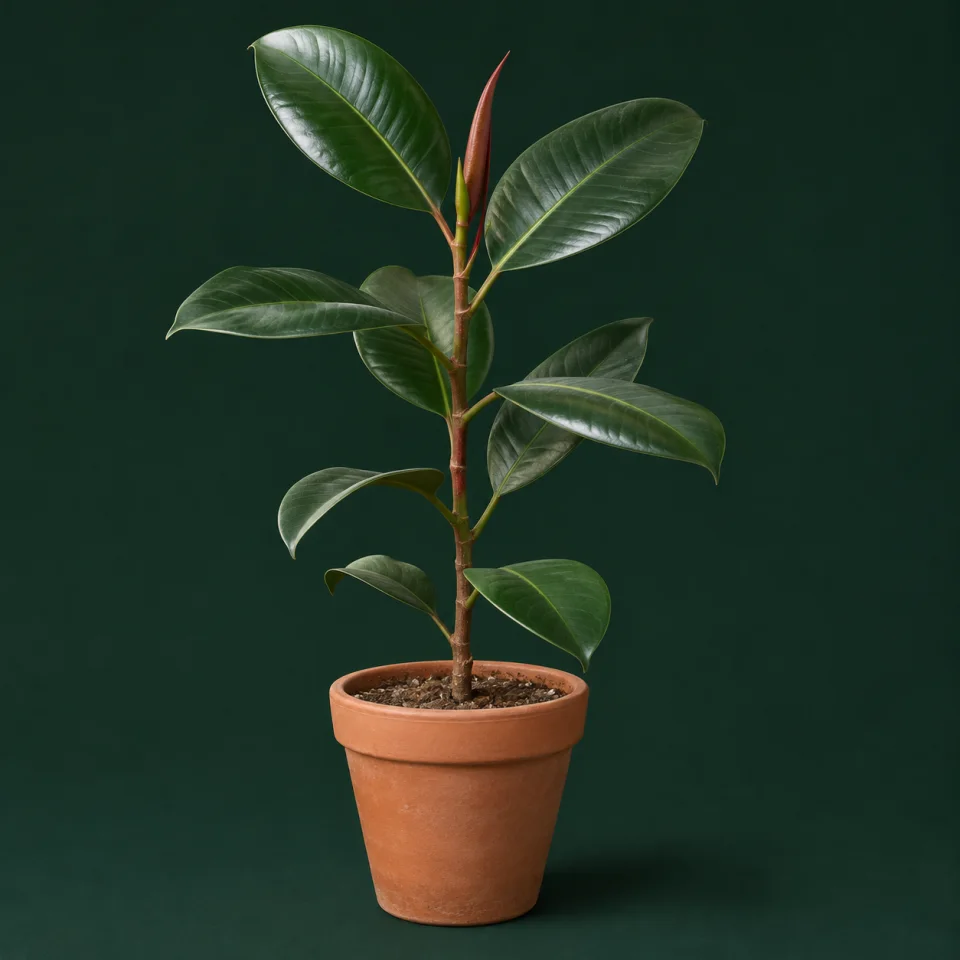
Botanical reference: Ficus elastica
Check which rubber plant you have
This guide covers Ficus elastica, with large, thick oval leaves. It is neither Ficus benjamina nor the rubber-producing tree Hevea brasiliensis. Keep the label, especially for a variegated plant. Before buying, picture its larger size: a narrow passage or dark corner may be convenient for the pot but awkward for looking after it.
Bright light without sudden changes
Choose plentiful filtered light; a sheer curtain can soften strong sun reaching the leaves. Do not move a nursery plant straight into a scorching window. Avoid cold draughts, icy glass and direct radiator air. If it leans towards light, review the position before feeding. Wipe dusty leaves with a soft damp cloth so you can inspect them without leaf-shine products.
Decide when watering is needed
Feel a few centimetres below the surface and gently lift the container to gauge its weight. When the upper mix starts drying and the pot feels lighter, water slowly to moisten the rootball and let water drain out. Empty the saucer or outer pot afterwards. If it is still moist, wait; do not dry the entire rootball or keep a water reserve as insurance against forgetting.
A stable pot and a modest size increase
Use free-draining houseplant mix and a container with open holes, stable enough for the leafy top. A decorative pot without an outlet is a cover, not a place for submerged roots. When roots fill the container and watering becomes difficult to manage, repot during active growth into a slightly larger one. Keep the planting depth and healthy roots; routine complete soil replacement is unnecessary.
Feed and prune for a purpose
While new leaves are growing, use foliage-plant fertiliser according to its label and the nutrients already in the mix. Reduce or pause feeding when growth slows; increasing the dose will not repair a yellow leaf. Leave the upright stem or shorten it to manage height and encourage branching. Use clean tools and gloves, protecting skin, eyes and flooring from sap. Do not remove healthy leaves simply to shrink the plant.
Yellowing and falling leaves
An old lower leaf can fall without the whole plant being in trouble. Several together call for a check of recent changes, moisture, drainage, light and cold. Wilting in wet mix is a reason to inspect roots, not add another glass of water. Ask for help assessing soft, dark roots. A damaged leaf may never look right again even after its cause is corrected.
Look underneath the leaves too
While cleaning, inspect veins, leaf joints and undersides: cottony clusters, scale-like bumps or webbing deserve a closer look. Separate a plant with a confirmed pest and choose a treatment labelled for that pest and plant. One mark does not justify spraying the whole collection. Change one thing at a time and watch how new growth develops.
Slow growth, time away and safety
With less light it usually uses less water: check the mix again instead of keeping the old schedule. Before going away, leave instructions to feel the soil and empty the saucer rather than water on a set day. Sap can irritate and the plant is not food; keep leaves and trimmings away from children and pets. For suspected ingestion, contact a medical professional or vet without trying home remedies.
Guides to help with your decision

Which flowers to give to someone with cats or dogs
Flowers for a home with cats or dogs: options to consider, checking the whole bouquet and precautions with lilies, holly and mistletoe at Christmas.
How to care for a Monstera deliciosa indoors
Light, watering, support, aerial roots and repotting for a Swiss cheese plant, with leaf-care checks and pet precautions.
How to care for a snake plant without keeping it wet
Light, watering, compost, repotting and leaf care for Dracaena trifasciata, with a simple routine and pet precautions.
How to care for a weeping fig and understand falling leaves
Steady light, watering, repotting and leaf drop: practical Ficus benjamina care, including precautions around pets.

How to care for a fiddle-leaf fig and assess leaf spots
Light, watering, large leaves, brown marks and repotting: practical Ficus lyrata care with clear checks for your home.
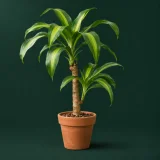
How to care for a corn plant in a pot
Light, watering, brown tips, canes and repotting: practical Dracaena fragrans care with simple checks for your home.
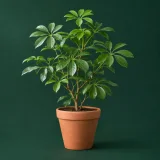
How to care for a dwarf umbrella tree in a pot
Filtered light, watering without waterlogging and care for Heptapleurum arboricola, formerly Schefflera arboricola. Understand leaf loss and sensible trimming.
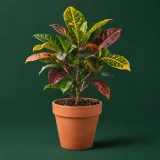
How to care for a croton in a pot
Light for colourful leaves, steady warmth and watering without extremes for Codiaeum variegatum. Avoid sudden changes and work through leaf loss.
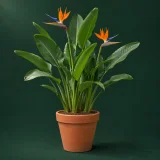
How to care for a bird of paradise in a pot indoors
Strong light, room for its leaves and watering with drainage for Strelitzia reginae. Repotting, cleaning and checks for curling or drying leaves.
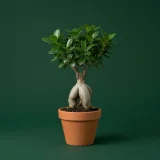
How to care for a ginseng ficus in a pot without rotting its base
Ginseng ficus (Ficus microcarpa) care: light, watering and drainage, glued stones, leaf drop, pruning and latex sap, repotting, pests and pets.
Frequently asked questions
Can it live far from a window?
Tolerating lower light does not mean thriving in a dark corner. First find a bright position without sudden strong sun. If natural light is insufficient, reconsider the location rather than compensating with water or fertiliser.
Should I mist it every day?
It need not become a daily job. It tolerates the normal air in many homes; keep it away from hot radiator air and clean the leaves. Misting does not replace checking the mix or fix waterlogged roots.
Sources and what they support
- RHS · Ficus elastica
Identity, filtered light, container culture, feeding during growth and possible pests; adapt intervals to the plant and conditions.
- Clemson Extension · Rubber plant
Partial drying between waterings, drainage, leaf cleaning and irritating sap. Its South Carolina calendar is not universal.
- NC State Extension · Ficus elastica
Thick elliptic leaves, sensitivity to draughts/cold, growth habit and possible scale/mealybugs/mites. One yellow leaf is not a diagnosis.
How we put these guides together
We review dates, care and recommendations to help you plan each gift.
Spotted something we should review? Contact Agenda Floral.