Guides
How to care for a Monstera deliciosa indoors
Care difficulty4 out of 10
Pay attention to watering and growing conditions.
Editorial guide, with suitable light and climate. 0: very easy; 10: very delicate. More stars mean more care.
A monstera needs plenty of light without scorching sun, a pot that drains and room to grow with support. Before watering, check that the upper compost has dried: a drooping leaf does not always ask for more water. This guide covers green Monstera deliciosa, the familiar Swiss cheese plant, rather than every monstera or its variegated varieties.
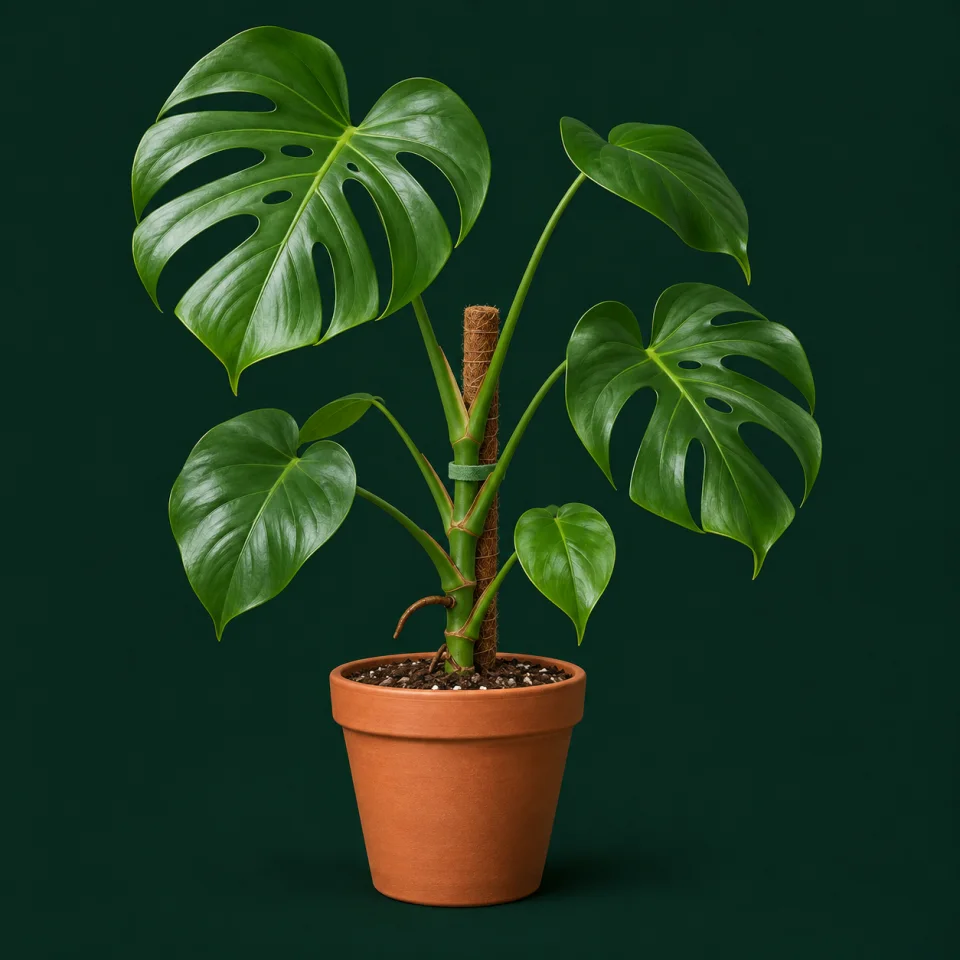
Botanical reference: Monstera deliciosa
Find light and room for the leaves
Place it near a window with filtered light, leaving room for leaves to open without crowding a narrow walkway. Stable temperatures around 18–25 °C are favourable. Keep it away from radiators and cold draughts. Do not move a plant from a sheltered corner straight into strong sun; a sheer curtain can help soften the light.
Check the compost before watering
Feel several centimetres into the compost and lift the pot if possible. When the upper part is dry and the container has become lighter, water slowly until excess drains below. If a dry crust hides very wet compost, wait. Empty the saucer or outer pot after draining. Heat, light, pot size and season change the pace; it does not need a fixed appointment with the watering can.
A stable pot and a modest move up
Use drainage holes and an airy houseplant mix that drains well. The pot must support the plant and its pole. Inspect roots when they fill the container or the mix breaks down; repotting on purchase is not compulsory. During a growing period, move up only a few centimetres and keep the previous planting depth.
The support and those roots in the air
Monstera climbs. Attach the main stem to a sturdy support with soft, loose ties, without constricting leaf stalks. Aerial roots help it grip; they are not pests. Gently guide them towards the support or compost if they reach without being forced into a bend. Do not tear them off or stand the whole pot in water to hide them.
Feed, clean and prune as needed
While new leaves are growing, use houseplant feed at its labelled strength and interval. Check whether fresh compost already contains fertiliser. Wipe dust off with a damp cloth, supporting each leaf; leaf shine is unnecessary. Remove dead leaves with clean tools. If it outgrows its space, shorten stems during growth, knowing that new shoots may start with smaller leaves.
What to check with yellow leaves or dry tips
When several leaves turn yellow, check moisture, drainage and roots first. If roots remain soaked and soft, do not automatically add water. Brown edges can also relate to dry air or nearby heat; check the position before soaking the compost. Inspect leaf undersides and joints for bumps, cottony pests or sticky deposits. Separate a plant with suspected pests and get a photo identification before treating it.
Protect pets and your hands
Monstera deliciosa is toxic to dogs and cats if eaten, and its sap can irritate. Wear gloves when pruning and keep leaves, stems and clippings away from children and animals. A large plant on the floor needs effective separation, not just a slightly raised pot. For suspected ingestion, contact a vet or appropriate medical service and keep the plant name. Do not taste fruit or other parts of an ornamental plant.
A routine that also works while you are away
Check compost, leaves and ties every few days; checking does not mean watering. With less light and growth it usually dries more slowly, so adjust feeding too. Before leaving, show the carer where to feel for moisture and how to empty the saucer. Keep it in its usual bright position, protected from strong sun and draughts, without an extra watering while still damp.
Guides to help with your decision

Which flowers to give to someone with cats or dogs
Flowers for a home with cats or dogs: options to consider, checking the whole bouquet and precautions with lilies, holly and mistletoe at Christmas.
How to care for a pothos without overwatering it
Light, watering, pots, pruning and repotting for golden pothos, with practical problem checks and pet precautions.
How to care for a rubber plant in a pot
Light, watering, yellow leaves, repotting and sap: practical rubber plant care with simple checks for your home.
How to care for a weeping fig and understand falling leaves
Steady light, watering, repotting and leaf drop: practical Ficus benjamina care, including precautions around pets.
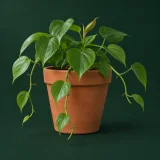
How to care for a heartleaf philodendron in a pot
Light, water, support, pruning and roots of Philodendron hederaceum: care for trailing stems without confusing it with pothos.
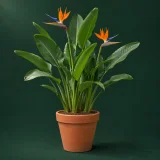
How to care for a bird of paradise in a pot indoors
Strong light, room for its leaves and watering with drainage for Strelitzia reginae. Repotting, cleaning and checks for curling or drying leaves.
Frequently asked questions
Why does my monstera have leaves without holes?
Young plants often have entire leaves. Splits develop with maturity and suitable light and growth conditions. Check its position and be patient: cutting holes in a leaf or adding more fertiliser will not make it mature immediately.
Does an aerial root outside the pot mean repotting is due?
Not by itself. It is part of how the plant climbs. Assess roots inside the container, drainage and the condition of the mix before deciding to repot. Guide the root gently and keep stems securely supported.
Sources and what they support
- RHS · Swiss cheese plants
Indirect light, 18–25 °C as favourable conditions, drainage, proportionate pot, support, juvenile leaves and feeding during growth. Months and temperatures are not a survival guarantee.
- NC State Extension · Monstera deliciosa
Identity, upper medium drying before the next watering, sturdy support, pruning and clean leaves. Fruit information is not turned into advice for household consumption.
- New York Botanical Garden · Monstera
Climbing aerial roots, leaf maturity, filtered light and drainage. No single compost recipe, daily misting or mandatory cool rest adopted.
- ASPCA · Monstera deliciosa
Monstera deliciosa listed toxic to dogs and cats through oxalate crystals; contact a vet for suspected ingestion. The page uses the common name Mother-in-Law.
How we put these guides together
We review dates, care and recommendations to help you plan each gift.
Spotted something we should review? Contact Agenda Floral.