Guides
How to care for a weeping fig and understand falling leaves
Care difficulty5 out of 10
Pay attention to changes and signs of stress and watering.
Editorial guide, with suitable light and climate. 0: very easy; 10: very delicate. More stars mean more care.
A weeping fig appreciates a bright, steady location away from cold draughts. Water as the upper mix starts drying, without drying the entire rootball or leaving water underneath. If it sheds leaves after coming home, check its conditions before moving it again or adding more water.
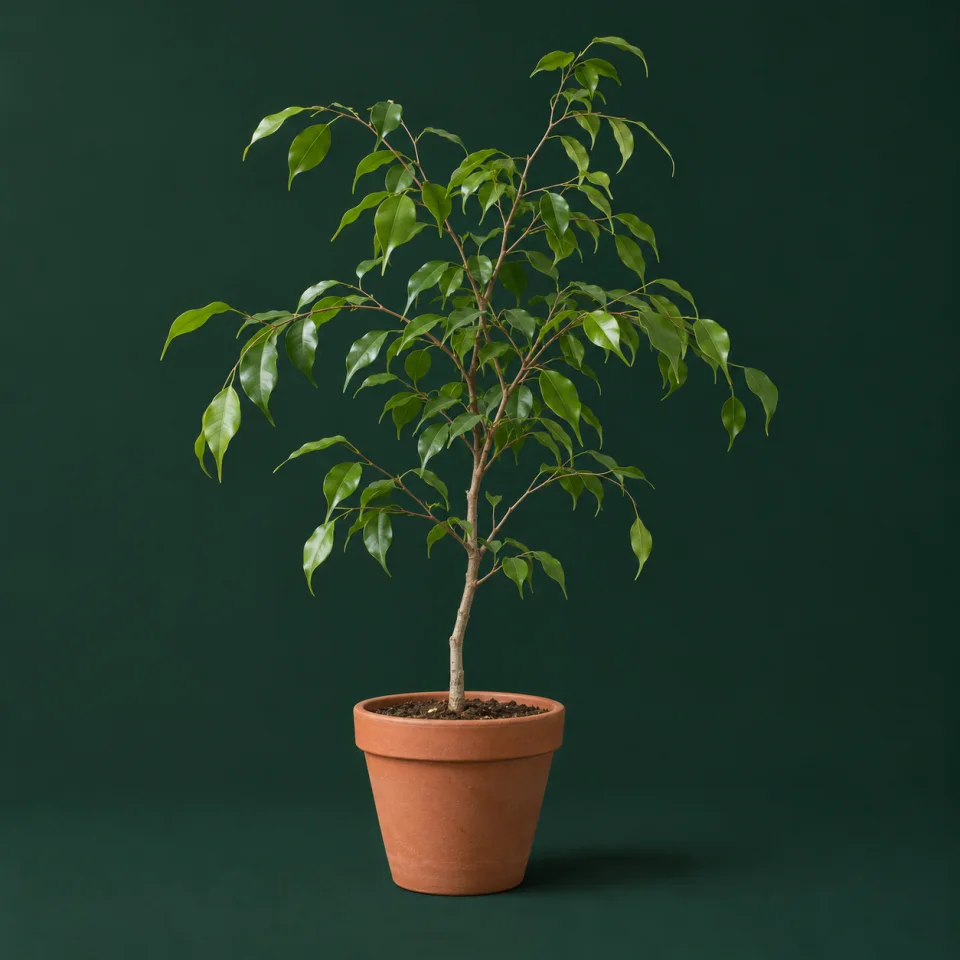
Botanical reference: Ficus benjamina
A small tree that needs growing room
This guide covers Ficus benjamina, with flexible branches and small pointed leaves. It is different from the large-leaved rubber plant and ginseng ficus. Keep its label and choose a size you can move to clean and check the saucer. If a cat or dog chews plants, choose another species: this fig can cause digestive and skin irritation.
Choose the window and limit changes
Provide plentiful daylight, filtered where strong sun reaches it. Do not suddenly expose a sheltered nursery plant to direct sun. Avoid draughty doors, heating vents and contact with very cold glass. Once a suitable position is found, keep it there. Moving it to another corner every few days in response to falling leaves can mean one light change after another.
Check the mix before reaching for water
Feel a few centimetres below the surface and judge the container’s weight. When the upper mix starts losing moisture, water slowly to wet the rootball and allow drainage through the holes. Empty the saucer or outer pot afterwards. If it remains moist, wait; if it is dry throughout, do not make that a routine. Frequency changes with light, size and how many leaves remain.
Drainage and a modest repot
Use a houseplant mix that holds some moisture while allowing drainage, in a stable container with clear outlets. When roots fill the pot and watering becomes difficult to manage, move up one modest size during active growth. Preserve planting depth and healthy roots. For a newly arrived plant without an urgent problem, observe its response to the position before adding a repot to its adjustments.
When leaves start dropping
Look for changes: transport, reduced light, cold, dry mix or standing water. It can shed leaves while adjusting to different light, but that does not explain every case. Note moisture and shoot development; a weekly photograph helps more than daily moves. Fewer leaves may mean lower water use. If the mix stays wet while the plant declines, inspect drainage and roots and seek help if damage continues.
Feeding, cleaning and a light trim
With new leaves and healthy roots, use foliage-plant fertiliser according to its label and nutrients in the mix. Do not raise doses to stop leaf fall. Dust gently and inspect branches without snapping them. Selective trimming often manages size without stripping the whole crown. Use clean tools and gloves because sap irritates; avoid touching eyes and face, and collect trimmings.
A mark is not automatically a pest
Inspect undersides, veins and leaf joints. Attached bumps, cottony clusters or webbing deserve a closer check for scale, mealybugs or mites. Separate a confirmed infestation and choose an appropriate labelled measure. A single yellow or dry leaf does not justify spraying or mixing treatments. Assess new shoots as well as leaves that were already damaged.
Winter, time away and safety
With slower growth, adjust water to the mix without abandoning checks. Before leaving, give instructions to feel moisture and empty the saucer; do not move it to a dark room to reduce water use. Keep children and pets away from leaves and trimmings, including fallen leaves. For suspected ingestion, contact the appropriate medical service or vet and keep the label; do not induce vomiting or try home remedies.
Guides to help with your decision

Which flowers to give to someone with cats or dogs
Flowers for a home with cats or dogs: options to consider, checking the whole bouquet and precautions with lilies, holly and mistletoe at Christmas.
How to care for a Monstera deliciosa indoors
Light, watering, support, aerial roots and repotting for a Swiss cheese plant, with leaf-care checks and pet precautions.
How to care for a rubber plant in a pot
Light, watering, yellow leaves, repotting and sap: practical rubber plant care with simple checks for your home.

How to care for a fiddle-leaf fig and assess leaf spots
Light, watering, large leaves, brown marks and repotting: practical Ficus lyrata care with clear checks for your home.
How to care for a dwarf umbrella tree in a pot
Filtered light, watering without waterlogging and care for Heptapleurum arboricola, formerly Schefflera arboricola. Understand leaf loss and sensible trimming.

How to care for a Norfolk Island pine indoors
Norfolk Island pine care: bright light, thorough watering with drainage, heating, Christmas decorations, dropping branches and why you should not cut the top.

How to care for a ginseng ficus in a pot without rotting its base
Ginseng ficus (Ficus microcarpa) care: light, watering and drainage, glued stones, leaf drop, pruning and latex sap, repotting, pests and pets.
Frequently asked questions
Should I prune it when few leaves remain?
Not as a first response. Check the cause and whether stems are alive; extra water, strong feeding and pruning together make the problem harder to assess. In suitable conditions it may reshoot, without a guaranteed deadline. Seek advice for dead branches or continuing decline.
Can I put it on a balcony?
Its indoor category reflects usual household use, not every climate. Only consider outdoors with mild frost-free temperatures, wind shelter and gradual adjustment to light. If those conditions cannot be maintained, keep a suitable position inside.
Sources and what they support
- RHS · Ficus benjamina
Identity, draining mix, filtered light, cold sensitivity and possible pests; outdoor tropical culture does not apply to every balcony.
- RHS · Growing ornamental figs
Includes weeping fig: steady location, slight drying, container mix, repotting and gloves for sap. No universal months or calendar-led feeding.
- NC State Extension · Ficus benjamina
Drooping twigs, pointed leaves and leaf drop following light changes. Distinguish adjustment from water/cold/pest problems; no recovery guarantee.
- ASPCA · Fig — Ficus benjamina
Exact species entry: toxic to dogs and cats, digestive and skin irritation. Do not extrapolate by common name or recommend home remedies.
How we put these guides together
We review dates, care and recommendations to help you plan each gift.
Spotted something we should review? Contact Agenda Floral.