Guides
How to care for a corn plant in a pot
Care difficulty3 out of 10
Pay attention to watering and growing conditions.
Editorial guide, with suitable light and climate. 0: very easy; 10: very delicate. More stars mean more care.
A corn plant needs indirect light, steady warmth and some drying in the upper mix before watering again. Wet the rootball when needed and empty the drainage water. For brown tips, check soil, surroundings and water first; adding more water without checking can make root problems worse.
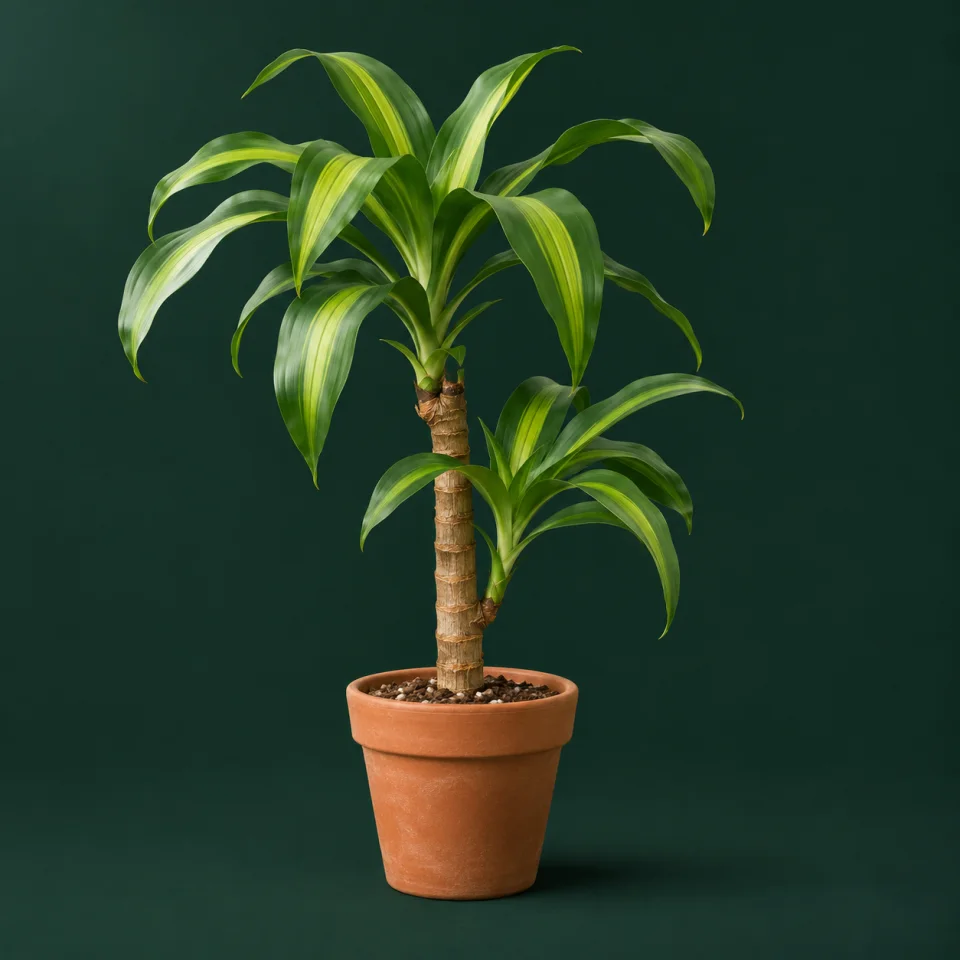
Botanical reference: Dracaena fragrans
Check which dracaena you have
This guide covers Dracaena fragrans, with canes and broad strap-like leaves, green or striped according to variety. It is different from narrow, red-edged dracaenas. Keep the label and choose a size you can inspect and move to empty the saucer. If pets chew plants, choose another species: this one is toxic to dogs and cats.
Light for the rosettes and a steady position
Place it near a bright window, filtering strong sun where necessary. Tolerating lower light does not make it suitable for a windowless bathroom. Leave room so leaves do not constantly rub a wall. Avoid cold draughts and direct radiator or air-conditioning airflow. Adjust exposure gradually rather than scorching foliage raised under shelter.
Feel the mix before watering
Check several centimetres below the surface and assess the pot’s weight. Allow the upper mix to dry before adding water, without turning the entire rootball into a dry block. Water slowly to moisten it and let excess escape through the holes. Empty the saucer or outer pot afterwards. If still moist, wait. Less light or slower growth usually means longer between waterings, not an automatic weekly dose.
A draining pot and airy mix
Use well-draining, slightly acidic houseplant mix and a stable pot with clear holes. A decorative cover can hide standing water: remove the inner pot to inspect. When roots fill the container and watering becomes difficult to manage, repot during growth into a modestly larger one. Preserve depth and healthy roots. Do not bury more cane for support or choose an enormous pot to fix mix that stays wet.
Feeding and shortening an overgrown cane
During growth, use foliage-plant fertiliser according to the label and nutrients already present. It grows slowly; extra fertiliser will not make it produce leaves on demand. A healthy over-tall plant can be cut with clean tools to encourage shoots below the cut. Plan the height and keep healthy parts, without promising when shoots will appear. A soft cane or plant in saturated mix needs root checks, not cosmetic pruning.
What to check for brown tips
Overly wet or dry mix, very dry air, cold, strong sun and water quality can cause similar symptoms. Check conditions before choosing a cause. Fluoride in some water can damage foliage; if problems persist with very hard water, try clean rainwater at room temperature. Do not acidify with vinegar. A dry tip will not become green again: watch whether damage spreads and how new leaves develop.
Cleaning and checking for pests
Wipe leaves gently with a damp cloth and inspect undersides and joints. Cottony clusters, attached scale-like bumps or webbing deserve identification before treating mealybugs, scale or mites. Separate a confirmed infestation and use a measure labelled for that pest and plant. A dry tip does not justify spraying. Move away from heating airflow to improve very dry conditions; any humidity tray must keep the pot base out of water.
Time away, cold and safety
Before leaving, give instructions to check soil and empty the saucer without moving it to a dark room or leaving a water reserve. Check that nights are not cold in its position too. Keep leaves and trimmings away from children and pets. If an animal chews or ingests it, contact a vet with the label rather than diagnosing it yourself or trying home remedies; seek medical advice for ingestion by a person.
Guides to help with your decision

Which flowers to give to someone with cats or dogs
Flowers for a home with cats or dogs: options to consider, checking the whole bouquet and precautions with lilies, holly and mistletoe at Christmas.
How to care for a spider plant and understand brown tips
Light, watering, roots, plantlets and dry leaf tips: what to check when caring for a spider plant at home without overdoing water or feed.
How to care for a rubber plant in a pot
Light, watering, yellow leaves, repotting and sap: practical rubber plant care with simple checks for your home.

How to care for an areca palm in a pot
Light, watering, dry tips, repotting and fronds: areca care that distinguishes dead-leaf removal from cutting a growing point.
How to care for a Madagascar dragon tree indoors
Light, watering, water quality and repotting for Dracaena marginata, with practical checks for brown tips, falling leaves and healthy leafy crowns.

How to care for lucky bamboo in water or soil
Lucky bamboo care for Dracaena sanderiana: light without direct sun, water level and changes, free-draining soil, dilute feeding, yellow stems, spirals and pets.
Frequently asked questions
Must it flower indoors?
No. Indoor flowering is infrequent and is not a test of your care. If it occurs, the scent can be strong, especially at night. Assess light, roots and healthy leaves before trying to force blooms with extra water or fertiliser.
Should I cut off every brown tip?
It is not essential for plant health. For appearance, trim only dry tissue with clean scissors, sparing green leaf. Correcting an ongoing cause matters more; cutting tips without checking care will not prevent new damage.
Sources and what they support
- RHS · Growing dracaena
Includes D. fragrans: indirect light, upper drying, drainage, water and pruning. No copied months or certain diagnosis of brown tips.
- NC State Extension · Dracaena fragrans
Identity, strap leaves, varieties, slow growth and infrequent indoor flowering. Lower-light tolerance does not mean no light.
- ASPCA · Corn Plant — Dracaena fragrans
D. fragrans entry: toxic to dogs and cats. Exposure-led advice, without remedies or severity guarantees.
How we put these guides together
We review dates, care and recommendations to help you plan each gift.
Spotted something we should review? Contact Agenda Floral.