Guides
How to care for a Madagascar dragon tree indoors
Care difficulty3 out of 10
Pay attention to watering and growing conditions.
Editorial guide, with suitable light and climate. 0: very easy; 10: very delicate. More stars mean more care.
A Madagascar dragon tree needs a bright position away from scorching sun, a pot with drainage and time for the upper potting mix to dry between waterings. A cautious wait is better than permanently wet roots, but leaving the whole root ball parched for long periods is unhelpful too. Brown leaf tips do not always mean it needs more water.
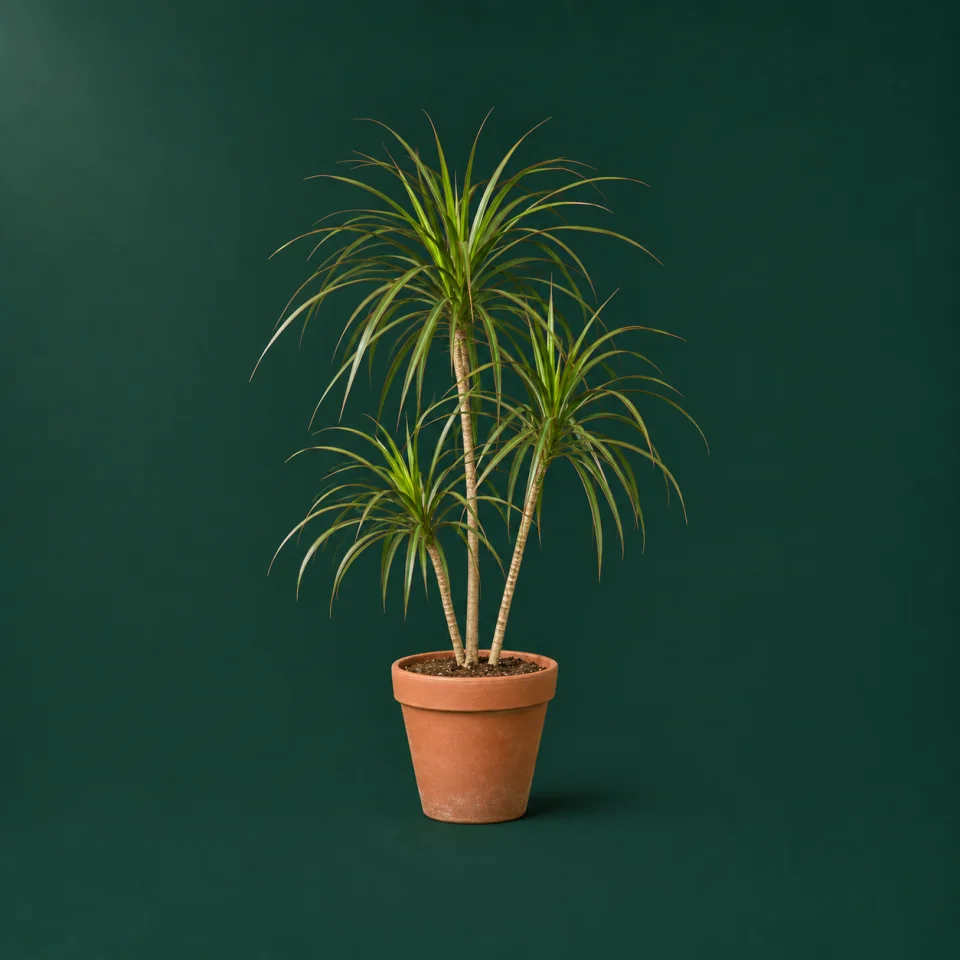
Botanical reference: Dracaena reflexa var. angustifolia (Dracaena marginata)
Recognise your plant and choose its place
Slender woody stems carry tufts of very narrow green leaves with reddish edges. Labels may say Dracaena marginata or Dracaena reflexa var. angustifolia: these refer to the same plant. The corn plant, Dracaena fragrans, has much broader leaves. Allow enough room that the leaf tips do not constantly brush against a wall. A bright window with filtered light is better than the back of a room. If strong direct sun bleaches or scorches the foliage, soften that light rather than moving it into darkness.
Use the soil and pot weight to judge watering
Feel several centimetres into the upper mix and lift the pot slightly. When the top is dry and the pot feels lighter, check that the inside is not still sodden before watering. Wet the root ball slowly, let water run through the holes and empty the decorative outer pot. Daily little sips will not solve a dry leaf tip. Low light or slow growth lengthens the gap between waterings; warmth and active growth may shorten it. Avoid both constantly muddy soil and drought that leaves the foliage limp.
Water quality, warmth and dry air
Choose steady indoor warmth, away from cold draughts, radiators and heating or cooling outlets. Dry tips can follow dry air, uneven watering or water quality, so they do not identify a single cause. This dracaena is sensitive to fluoride. If damage keeps recurring and your water contains it, consider distilled water suitable for plants or an alternative with a known composition. If you use a filter, check that it reduces fluoride. Bring water to room temperature. Misting leaves replaces neither root watering nor a suitable location.
A sensible pot size and an airy mix
Use a container with drainage holes and an indoor-plant mix that holds some moisture while allowing excess water to escape, preferably slightly acidic. Avoid compact garden soil and do not add acidifying products blindly. A healthy new plant does not need an immediate repot. Move it up just one pot size when the roots are genuinely crowded and the plant is actively growing. A huge pot leaves too much wet mix around a small root system. Keep the stem at its previous depth and do not routinely dismantle the root ball.
Light feeding and gentle cleaning
Its fertiliser needs are modest. While it is actively growing, you can use a houseplant feed according to the label; extra fertiliser will not safely speed up the stems. Reduce or stop feeding when growth slows, and do not feed a plant with troubled roots. Wipe dust off with a soft damp cloth, supporting the narrow leaves so they do not crease. This also gives you a chance to check their bases and undersides. Leaf-shine products are unnecessary: clean foliage makes developing damage easier to spot.
Older leaves and over-tall stems
Losing an occasional lower leaf as it ages exposes the stem and is part of its growth. Remove fully dry leaves without pulling on green ones. If a healthy stem has become too tall, you can shorten it during active growth with a clean tool, protecting your hands from sap. New shoots often form below the cut, though the outcome varies. Cutting every stem back is not a way to rescue a weakened plant. Stem cuttings are used for propagation; detached individual leaves are not the equivalent.
Brown tips, yellowing and pests
Start with the potting mix when several leaves turn yellow. If it remains wet and the stem base is soft, stop adding water and investigate drainage and roots. If the mix is very dry and the leaves lose firmness, water and drain it. Brown tissue will not turn green again; watch new foliage after correcting the cause. Speckling, fine webs, raised bumps or sticky areas call for separating the pot and checking for mites, thrips or scale insects. Identify the pest before choosing a suitable treatment instead of mixing household remedies.
Going away and living with pets
Before leaving, find out how quickly the pot dries in its usual position. Water only if needed, then let it drain completely without leaving a reservoir under the roots. Keep filtered light and do not put it in strong sun to compensate for your absence. For a longer trip, ask someone to check moisture and pot weight rather than follow a fixed watering date. This plant is toxic to dogs and cats; keep fallen leaves out of reach too. If chewing or ingestion is suspected, contact a vet and keep the plant name handy.
Guides to help with your decision
How to care for a snake plant without keeping it wet
Light, watering, compost, repotting and leaf care for Dracaena trifasciata, with a simple routine and pet precautions.
How to care for a corn plant in a pot
Light, watering, brown tips, canes and repotting: practical Dracaena fragrans care with simple checks for your home.
How to care for a ponytail palm in a pot
Bright light, watering after drying and the right pot for Beaucarnea recurvata. Deal with brown tips and prepare the plant for time away.
How to care for a spineless yucca indoors
Strong light, drying between waterings and a stable pot for Yucca gigantea, also sold as elephantipes. Practical care for leaves, stems and roots.
How to care for lucky bamboo in water or soil
Lucky bamboo care for Dracaena sanderiana: light without direct sun, water level and changes, free-draining soil, dilute feeding, yellow stems, spirals and pets.
Frequently asked questions
Can it live in a room with little light?
It can tolerate less light than some plants, but a dark room is still a poor location. If growth becomes weak or the mix stays wet for a long time, gradually bring it closer to a bright window protected from strong sun and adjust watering.
Should I cut off every brown leaf tip?
You do not need to for the plant to keep growing. If the tips bother you, trim only the dry part with clean scissors, following the leaf shape and leaving green tissue intact. Check watering, air conditions and water quality to limit further damage.
Sources and what they support
- Kew · Dracaena reflexa var. angustifolia Baker
Accepted name and synonymy with Dracaena marginata Lam.; distinct identity from Dracaena fragrans. Does not certify a cultivar from appearance or prescribe household care.
- RHS · How to grow dracaena
Woody-dracaena guide: indirect light, steady warmth, upper-layer drying, drainage, light feeding, restrained repotting and optional pruning. UK months, mix recipes and misting are not universal duties; a generic filter does not guarantee fluoride removal.
- NC State Extension · Dracaena reflexa var. angustifolia
Specific profile: narrow red-edged leaves, lower-leaf ageing, bright indirect light, drying without severe drought, low feeding, fluoride sensitivity and pests. Broad shade/pH fields do not make a dark room ideal; toxic mechanism omitted because it differs from ASPCA.
- ASPCA · Red-Marginated Dracaena
Profile identified as Dracaena marginata: toxic to dogs and cats. Lists the toxic principle as unknown; no mechanism added or extrapolation to other species or people. Suspected ingestion calls for veterinary advice, without home remedies.
How we put these guides together
We review dates, care and recommendations to help you plan each gift.
Spotted something we should review? Contact Agenda Floral.