Guides
How to care for a spineless yucca indoors
Care difficulty3 out of 10
Pay attention to watering and growing conditions.
Editorial guide, with suitable light and climate. 0: very easy; 10: very delicate. More stars mean more care.
An indoor yucca needs plenty of light and potting mix that dries considerably between waterings. When it needs water, wet the root ball and let every excess drop drain away. Water trapped in an outer pot is much riskier than a slight delay in watering. Choose a stable container and do not put it in a dark corner just because it looks tough.
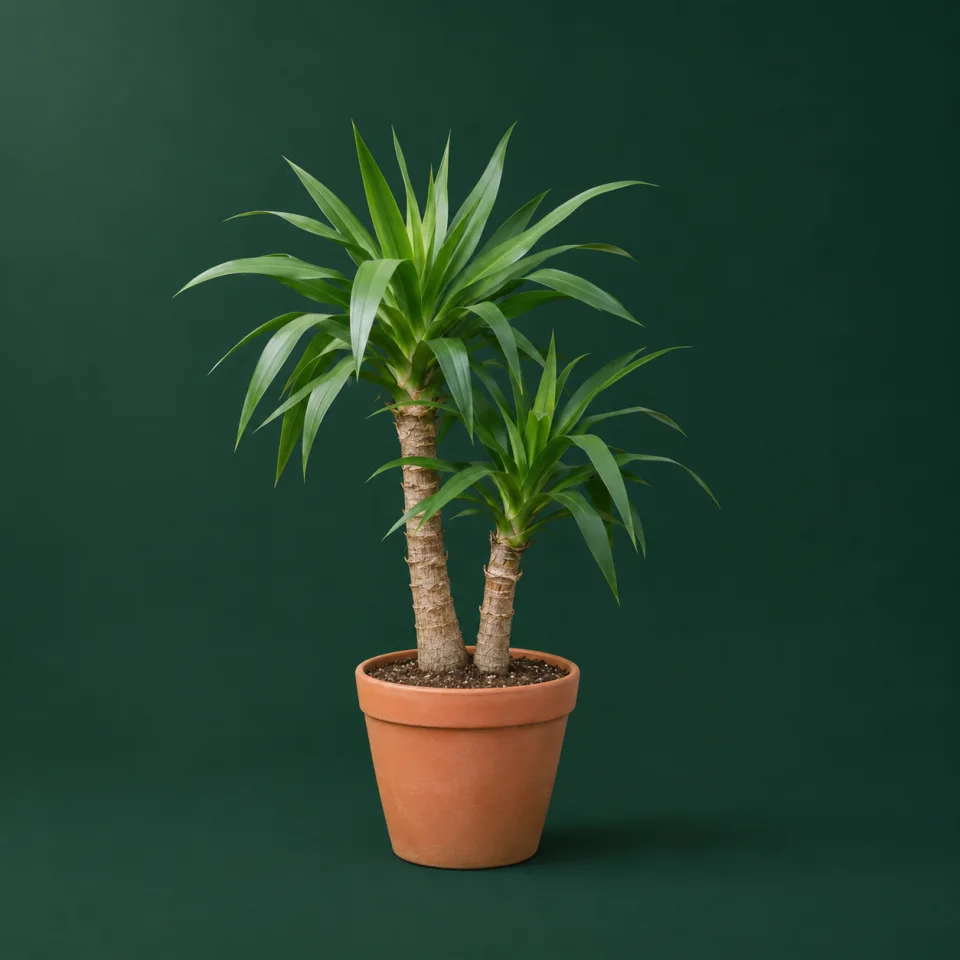
Botanical reference: Yucca gigantea (Yucca elephantipes)
Identify your yucca and give it room
Yucca gigantea is also sold as Yucca elephantipes. Thick woody stems support tufts of long, sword-shaped leaves without the sharp terminal spine found on some other yuccas. It is neither a dracaena nor a Beaucarnea, despite sharing their small-tree appearance. Put it near the brightest window you can offer. Leave space around it: the leaves are firm, so avoid a position where people brush past them or where they sit at eye level. Its broad, substantial crowns need more clearance than a narrow-leaved dragon tree.
Increase the light without scorching the leaves
It appreciates strong light and can take sun, but a plant raised in gentle light should not suddenly meet the hottest window. Move it closer and increase exposure gradually, watching the leaves; filter intense sun if damage or excessive heat develops. Turn the pot slightly to prevent one-sided growth towards the light. If only a dim corner is available, another plant is a better fit: extra water or fertiliser cannot replace light. Flowering indoors is uncommon, so choose this yucca for its foliage rather than expecting a flower spike.
Water thoroughly, then let it dry
Check several centimetres down into the upper mix and feel the pot’s weight. Let that layer dry well; with a large container, also check that the inside is not still sodden. Then water slowly to moisten the root ball and let it drain. Empty the saucer or decorative outer pot before returning it to its place. Active growth and stronger light may shorten the wait; slow growth or cooler conditions lengthen it. Do not choose a fixed watering day or keep the mix damp with constant little sips.
A draining mix and a base that stays upright
Use an airy, freely draining mix, such as one suitable for succulents, in a pot with holes. Dense garden soil makes indoor moisture harder to manage. The container must support the stems without wobbling at every touch; a heavy outer pot can help if it never traps water. Do not bury the stem base deeper to hold it up or buy an enormous pot simply because the plant is tall. If the canopy needs more stability than the roots need space, support the outside rather than surrounding the roots with a huge volume of wet mix.
Temperature, feeding and cleaning
Normal household temperatures and humidity can suit it. Protect it from frost, cold draughts and sudden changes, and do not squeeze it beside a heat source. Routine misting is unnecessary. During active growth, you can give a balanced container-plant feed according to its label; reduce or pause when growth is minimal. Do not feed a yucca with damaged roots. Wipe dust away with a damp cloth, supporting each leaf to avoid creases. This is also a useful moment to check leaf undersides and where the foliage meets the stem.
Repot and prune for a clear reason
Repot when roots have genuinely filled the container and the plant is growing. Choose a pot only slightly larger and keep the original planting depth. Annual repotting is unnecessary. Remove fully dry leaves without pulling off green ones. Cutting a stem is an option for a healthy yucca that has outgrown its space, not first aid for a soft base. Use a clean tool and gloves during active growth. It may reshoot, but the resulting shape varies. Propagation uses stem material or offsets, not a detached single leaf.
Read the leaves and check the roots
An occasional yellow or dry lower leaf may simply be ageing; many changing together call for checking the mix and stems. Limp leaves with wet soil or a yielding stem base suggest excess water: stop watering and inspect drainage and roots. Rotten roots may require removing damaged tissue and using a container matched to the healthy root ball; seek help if you cannot distinguish them. Dry tips alone do not diagnose thirst. Raised bumps, cottony deposits or spreading marks call for separating the plant and identifying the pest or problem before treatment.
Going away and keeping the household safe
Before travelling, observe its drying pattern. Water only when needed, drain completely and keep a bright position without suddenly increasing sun exposure. Do not leave a water reservoir under the pot. For a longer absence, ask someone to check the soil and pot weight. The name spineless does not make every part harmless: handle leaves carefully and protect your hands from potentially irritating sap when cutting. Keep it away from chewing dogs, cats and young children. If a pet may have eaten it, contact a vet with the plant’s name.
Guides to help with your decision
How to care for aloe vera in a pot
Light, watering, potting mix and aloe offsets. Learn when the plant needs water and how to tell dry leaves from a damaged base.
How to care for a ponytail palm in a pot
Bright light, watering after drying and the right pot for Beaucarnea recurvata. Deal with brown tips and prepare the plant for time away.
How to care for a Madagascar dragon tree indoors
Light, watering, water quality and repotting for Dracaena marginata, with practical checks for brown tips, falling leaves and healthy leafy crowns.
Frequently asked questions
Can I put it on a terrace?
Only if conditions suit this cold-sensitive species. Introduce outdoor light gradually, choose shelter from wind and make sure the pot cannot topple. Protect it before cold weather arrives; hardy garden yuccas are not a reliable comparison.
Does a wrinkled trunk mean it needs more water?
Not necessarily. Check the mix, firmness of the stem base and root condition first. Both a dry root ball and roots damaged by wetness can produce drooping leaves. If the base is soft and the mix wet, adding water makes matters worse.
Sources and what they support
- Kew · Yucca gigantea Lem.
Accepted species and synonymy with Yucca elephantipes; distinct from other yuccas, dracaenas and Beaucarnea. Food uses are not transferred to a houseplant and photographs do not certify a cultivar.
- NC State Extension · Yucca gigantea
Specific profile: thick trunk, no sharp terminal leaf spine, strong light, drainage, drought tolerance and overwatering damage; ordinary indoor conditions and cold protection. Sap and ingestion call for caution. Zones, a fixed mix ratio and flowering calendar are not universalised.
- RHS · Yucca growing guide
Multi-species yucca guide; indoor Y. elephantipes advice used for strong light, upper-layer drying, drainage, reduced demand in slow growth, turning and optional pruning. Other species’ hardiness, UK months, differing thresholds and fortnightly feeding are not made global rules.
- RHS · Yucca gigantea, Plant Profile
Container drainage, balanced feed during growth and no routine pruning; possible skin irritation and harm to dogs/cats if eaten. Inconsistent taxonomic metadata resolved through Kew; UK size, months and hardiness are not universalised.
- ASPCA · Yucca
Veterinary warning for Yucca spp. at genus level: toxic to dogs and cats. Not a Yucca gigantea-specific profile and no basis for doses or treatments; complemented by specific RHS/NC profiles.
- Illinois Extension · Repotting houseplants
General crowded-root indicators and repotting during active growth at the same depth. Used alongside yucca-specific drainage; no annual timetable or compulsory root pruning.
How we put these guides together
We review dates, care and recommendations to help you plan each gift.
Spotted something we should review? Contact Agenda Floral.