Guides
How to care for a ponytail palm in a pot
Care difficulty3 out of 10
Pay attention to watering and growing conditions.
Editorial guide, with suitable light and climate. 0: very easy; 10: very delicate. More stars mean more care.
A ponytail palm needs plenty of light and a free-draining growing medium that becomes almost dry before you water again. Its swollen base stores water, so watering from habit can cause more trouble than waiting and checking. When it needs a drink, water the soil thoroughly with tepid water and let it drain. It needs neither misting nor an oversized pot to grow well.
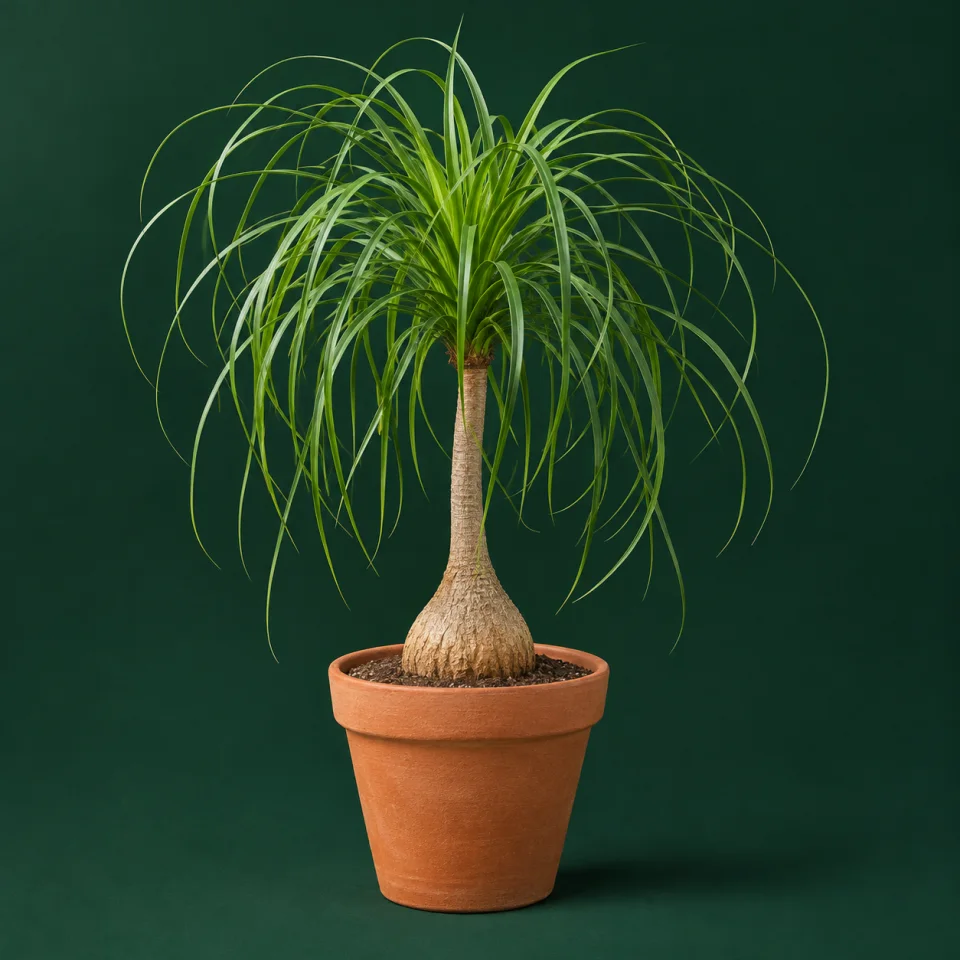
Botanical reference: Beaucarnea recurvata
Know the plant and leave room for its leaves
Beaucarnea recurvata is also sold as nolina or elephant-foot tree. It is not a true palm. Narrow leaves curve down from the crown above its swollen base. Keep the label because other species share its common names. Growth is slow and indoor flowering unusual. Leave room for the leaves to hang freely without brushing against people in a walkway or being squeezed behind furniture.
Give it strong light and shelter from cold
Choose a very bright window. It can take sun after gradual acclimatisation. If you move it to a patio during mild weather, start in a sheltered position and increase exposure slowly to avoid scorching. Protect it before cold weather and frost. Indoors, avoid cold draughts and direct blasts from heating or air conditioning. A steady position makes its care simpler.
Check below the surface before watering again
Check moisture below the surface and compare the pot’s weight with how it feels after watering. Once the medium is almost dry, pour tepid water over the soil to moisten the root ball, then let excess water drain. Empty the saucer or outer pot. Keep water out of the leaves and off the swollen base. If still damp and heavy, wait; repeated tiny sips are no substitute for properly drained watering.
Use a close-fitting pot with clear drainage holes
Choose porous cactus and succulent mix and a pot with drainage. An ornamental outer pot works if you can remove the inner one and empty it. Repot when the swollen base becomes cramped, moving only to the next size up, preferably as growth resumes. Extra wet soil raises the risk of rot. Handle roots gently and keep the previous planting depth rather than burying the swollen base for support.
Feed lightly while it is growing
During active growth, use cactus or houseplant fertiliser lightly according to its label, allowing for nutrients already in the mix. Do not combine products to hurry a naturally slow plant. With less light or a rest period, reduce or pause feeding. If it looks unhappy in wet soil, check roots, drainage and position first. Fertiliser will not fix these problems.
Adapt watering to the season and time away
Less light and activity usually mean less water, but do not impose a long drought. Before going away, check the pot and water only if needed, letting it drain. Keep its bright position instead of moving it suddenly into sun or a dark room. Avoid a reservoir of water beneath it. Show a helper how to check dryness: a still-heavy pot should wait even on their visiting day.
Clean leaves without turning care into a haircut
Wipe dust off with a soft, slightly damp cloth, supporting the leaves rather than pulling them. Misting is unnecessary. Remove fully dry lower leaves and trim only the dead part of an unwanted brown tip with a clean tool. Do not shorten the whole crown for appearance. Separating offsets has variable success and is not required to keep the parent healthy.
Read symptoms alongside the condition of the pot
Brown tips can accompany irregular watering, salts, low light or direct air flow; they do not prove that room humidity is too low. A few old leaves drying is normal. A newly soft, mushy base with wet soil suggests rot: stop adding water and seek a diagnosis. Wrinkles alone are not enough to decide. Also check leaves and their bases for marks and pests; if you find scale, mealybugs or mites, separate the plant and seek a treatment approved for that problem.
Guides to help with your decision
How to care for a snake plant without keeping it wet
Light, watering, compost, repotting and leaf care for Dracaena trifasciata, with a simple routine and pet precautions.
How to care for aloe vera in a pot
Light, watering, potting mix and aloe offsets. Learn when the plant needs water and how to tell dry leaves from a damaged base.
How to care for a jade plant in a pot
Light, watering, a stable pot and Crassula ovata cuttings. Tell a thirsty plant from roots that have stayed too wet.
How to care for a Madagascar dragon tree indoors
Light, watering, water quality and repotting for Dracaena marginata, with practical checks for brown tips, falling leaves and healthy leafy crowns.
How to care for a spineless yucca indoors
Strong light, drying between waterings and a stable pot for Yucca gigantea, also sold as elephantipes. Practical care for leaves, stems and roots.
Frequently asked questions
Is it suitable for a home with dogs or cats?
Beaucarnea recurvata is listed as non-toxic to dogs and cats. Check its identity because a common name is not enough. This does not make its leaves food or make fertilisers and treatments safe. Keep the pot stable and away from chewing; consult a vet if an animal eats plant material and becomes unwell.
Should I cut the trunk to make it branch?
Not as routine care. This is a drastic intervention and regrowth is not guaranteed. If the plant truly outgrows its space, consider moving it first or seek advice before cutting. Trunk pruning is not a treatment for dry leaf tips or the normal slow growth of this species.
Sources and what they support
- New York Botanical Garden · Ponytail Palm (Beaucarnea recurvata)
Strong light, water-storing base, nearly dry soil, drained watering without wetting foliage, light feed, next-size pot without burying base, cleaning and symptoms. No fixed months, universal lethal threshold, imposed long drought or routine drastic pruning; offsets have variable success.
- NC State Extension · Beaucarnea recurvata
Identity, slow growth, sunny window, gradual outdoor adjustment, cold protection, rare indoor flowering and possible pests/rot. Local hardiness is not transferred to every container or climate.
- Iowa State University Extension · How do I care for a ponytail palm?
Bright position, drying between waterings and dilute fertiliser. Feeding frequency compared with NYBG and adapted to growth/label; no watering calendar or universal window direction.
- ASPCA · Pony Tail
Beaucarnea recurvata identified as non-toxic to dogs and cats. Does not establish food suitability, safety of applied products or absence of symptoms after eating plant material.
How we put these guides together
We review dates, care and recommendations to help you plan each gift.
Spotted something we should review? Contact Agenda Floral.