Guides
How to care for lucky bamboo in water or soil
Care difficulty4 out of 10
Pay attention to watering and growing conditions.
Editorial guide, with suitable light and climate. 0: very easy; 10: very delicate. More stars mean more care.
Lucky bamboo is a dracaena, Dracaena sanderiana, and it can live in water or in soil. Give it bright light without direct sun, away from draughts and heat sources. In water, keep the roots and about 2.5 centimetres of stem covered, use chlorine-free water and change it every week or, at most, every two weeks. In soil, water when the top layer is dry and do not leave water in the saucer. Feed very little. Spirals and braids are formed at the nursery: the shape it already has will stay, but new shoots will grow straight.
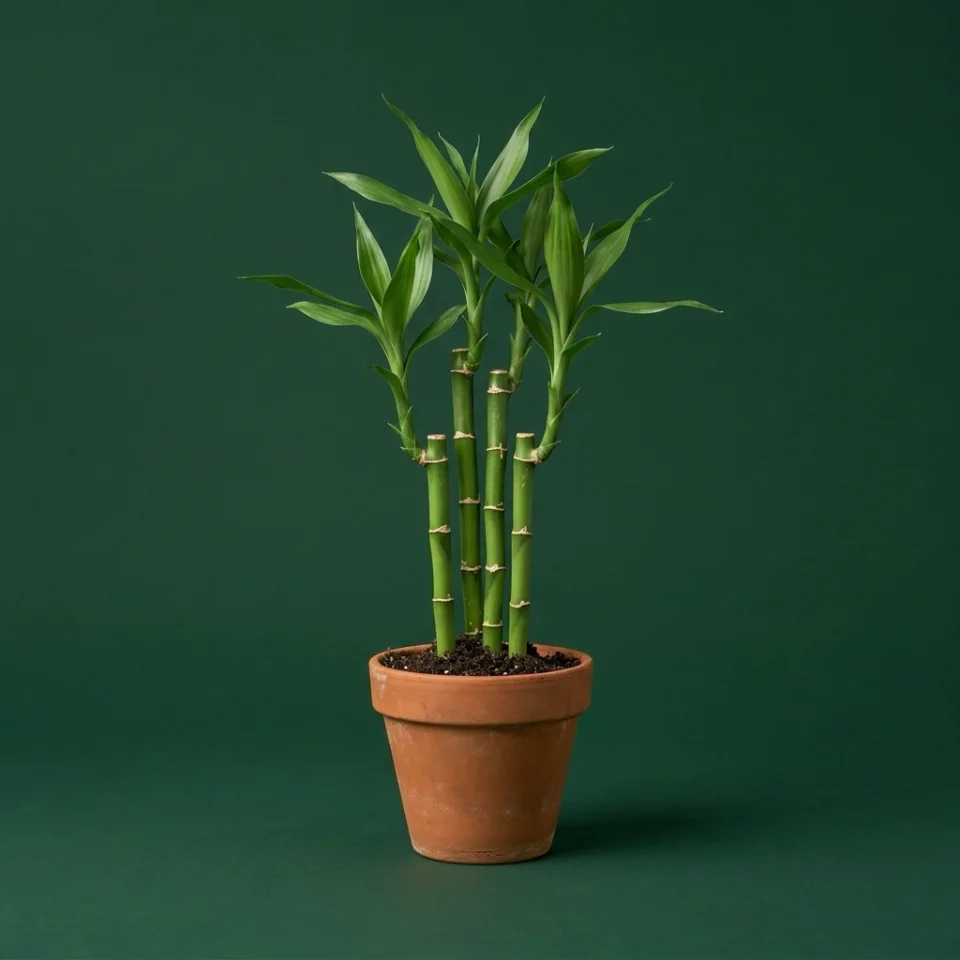
Botanical reference: Dracaena sanderiana
A dracaena that looks like bamboo
Dracaena sanderiana is not a bamboo. It is a tropical plant in the Asparagaceae family, native to west-central Africa and in the same genus as the corn plant and the Madagascar dragon tree. Its green, fleshy stems have marked nodes, which is why they look like canes, especially once the lower leaves are removed. Some plant profiles list it under older names, such as Dracaena braunii or Pleomele sanderiana. Each stem in an arrangement is a separate plant. It grows slowly and rarely flowers indoors.
Spirals, braids and gift arrangements
It is a popular gift, especially for Lunar New Year. In Chinese tradition, the number of stems carries a meaning, and four is not considered lucky. Its stems naturally grow straight. Spirals are made at the nursery by changing the plant’s position in relation to the light and turning it regularly as it grows. Braids, hearts and loops are also formed during cultivation. Stripping most of the leaves, bending the stems and keeping them in water stresses the plant, and many arrangements wear out within two years or less. If a ribbon or wire is pressing into a stem, loosen it without undoing the shape.
Bright light, no direct sun
Place it in a bright room, near a window but out of direct sun. Sun through the glass scorches the leaves and turns them brown. With very little light, on the other hand, it grows weak, stretches and loses colour. The stems grow towards the light, so strong light from one side can bend new shoots. If that happens, turn the container a little.
In water: a steady level and pebbles at the bottom
In water, always keep the roots covered plus about 2.5 more centimetres of stem, and top up when the level drops. A layer of pebbles or marbles at the bottom holds the stems in place, weighs the container down so it does not tip over and gives the roots somewhere to grow. Although it copes this way, it is not an aquatic plant. Healthy roots look firm. If one is soft or smells bad, cut it off.
Chlorine-free water and frequent changes
Change the water completely every week, or every two weeks at most, and take the chance to wash the container and rinse the pebbles. Use chlorine-free water at room temperature: rainwater, distilled or filtered. Dracaenas are sensitive to fluoride and to excess salts in tap water, which burn the leaf tips, and those tips do not recover. If the water turns green or cloudy, change it and wash the vase. Algae grow with light, so they appear sooner in clear glass than in an opaque container.
In soil: a pot with a hole and measured watering
Soil is its natural medium. Use a pot with a drainage hole and a free-draining mix for houseplants or tropical plants. Water when the top 2.5 centimetres are dry, let it drain and do not leave water in the saucer. Overwatering yellows the leaves and rots the stems. The stems do not hold themselves up well once they pass about 60 to 90 centimetres, so stake them until the roots take hold. If you move a stem rooted in water into soil, watch the watering for the first few weeks.
Feed little and very dilute
With water alone, it eventually runs short of nutrients. In water, add a liquid houseplant fertiliser at a quarter of the label dose, or less, once every one or two months, just after changing the water. In soil, feed it once a month while it is growing, following the label. More fertiliser does not help: it can burn the plant and make it yellow from the bottom up. If that happens, change the water or flush the soil thoroughly and stop feeding for a while.
Temperature, draughts and summer outdoors
Normal room temperatures suit it. Avoid long spells below about 13 °C or above about 29 °C, and keep it away from radiators, heating or air-conditioning vents and doors with cold draughts. If you want to put it outside in summer, place it in shade once there is no risk of frost and bring it back in before nights drop below about 18 °C. In cold weather, protect it well when you carry it.
Yellow leaves, yellow stems and roots
A yellow leaf and a yellow stem are not the same thing. Brown tips usually come from water quality, direct sun, dry air, a draught or unsuitable watering. A stem that turns yellow all over, on the other hand, is usually exhausted and rarely recovers. If only one stem in an arrangement turns yellow, take it out and change the water to protect the others. If its top is still green and firm, cut it off and root it. A soft or bad-smelling stem is rotting: remove it.
Trimming and making new plants
Over time, the shoots that grow from the nodes get longer and the arrangement loses its outline: cut them off close to the main stem and root them. For a cutting, take about 10 centimetres from the tip with at least one node, leave just a few leaves at the top and stand the base in distilled water or rainwater. Roots usually appear in two to three weeks. Do it while the plant is growing. If an old stem has become long and weak, you can cut it back: dracaenas usually reshoot just below the cut. The new growth will not repeat the spiral or braid; it will grow straight.
Pests and pets
Check the undersides of the leaves often. It can get mealybugs, scale insects, spider mites, which can spin fine webs, thrips or aphids. Remove them by hand or rinse the leaves, and if they persist use insecticidal soap. It is toxic to dogs and cats if eaten: it contains saponins and can cause vomiting, sometimes with blood, depression, loss of appetite, drooling and, in cats, dilated pupils. Do not confuse it with the true bamboos on non-toxic plant lists. Keep it, with its water and pebbles, out of reach of animals and young children, and call your vet if they have chewed it. Its sap can also irritate the skin.
Guides to help with your decision
How to care for a snake plant without keeping it wet
Light, watering, compost, repotting and leaf care for Dracaena trifasciata, with a simple routine and pet precautions.
How to care for a corn plant in a pot
Light, watering, brown tips, canes and repotting: practical Dracaena fragrans care with simple checks for your home.
How to care for a Madagascar dragon tree indoors
Light, watering, water quality and repotting for Dracaena marginata, with practical checks for brown tips, falling leaves and healthy leafy crowns.
Lunar New Year flowers: plants, bouquets and delivery
Lunar New Year 2027 falls on Saturday 6 February. Choose a plant or bouquet, decide how many lucky bamboo stalks to order and plan the delivery.
Frequently asked questions
Is it better in water or in soil?
Both work. In water it looks striking, but you have to change the water often and use chlorine-free water. Soil is its natural medium and needs fewer tasks: water when the top layer is dry and use a pot with drainage.
Can I use tap water?
Better not. Chlorine, fluoride and excess salts in tap water can burn the leaf tips, and those tips do not turn green again. Use rainwater, distilled or filtered water at room temperature.
Why is one stem turning yellow?
It is usually exhausted or rotting. Too much fertiliser and, in soil, overwatering are common causes. A yellow stem rarely recovers: separate it from the others, change the water and, if the tip is still green and firm, root it.
Will it keep growing in a spiral?
Not on its own. Its stems grow straight, and the spiral is formed at the nursery by positioning them in relation to the light and turning them over a long period. The curve it already has will stay, but new shoots will grow upwards. You can trim them to keep the arrangement’s outline.
How long does a lucky bamboo arrangement last?
It depends on how it was made and how it is cared for. Leafless, bent stems in water are under a lot of stress, and many arrangements wear out within two years or less. With good light, clean water and little fertiliser they last longer, and you can always root the healthy tips to start again.
Is it dangerous for my cat or dog?
Yes, it is toxic if eaten. It contains saponins, which can cause vomiting, drooling, depression and loss of appetite. Keep it out of reach, including the water in the container, and call your vet if you think they have chewed it.
Sources and what they support
- NC State Extension · Dracaena sanderiana
Species profile: not a bamboo but a tropical West African shrub in the Asparagaceae, formerly Dracaena braunii, Pleomele braunii or Pleomele sanderiana. Indoors it needs bright indirect light and a moist mix, or chlorine-free water changed weekly, with pebbles at the bottom and weak liquid feed. Stems trained into braids or spirals; slow growth. Overwatering yellows leaves and rots stems; low humidity browns tips. Lists pests and low-severity saponin toxicity. Its USDA zones and deep-shade tags are not transferred as rules.
- Missouri Botanical Garden · Dracaena sanderiana
Species profile: slow-growing perennial from tropical West Africa; its jointed stems look like bamboo although the plants are not closely related. Grows in moist soil, or in water if the roots have a substrate such as pebbles; bright indirect light, as direct sun scorches. Recommends cutting back older, lanky stems. Stems trained into spirals, braids, hearts and loops. Brown tips from low humidity, wrong light or additives such as chlorine; filtered or rainwater. Its in-ground height and zones are not transferred.
- Clemson Cooperative Extension HGIC · Lucky bamboo
2026 growing guide: not a bamboo; lives in water or soil; a common Chinese New Year gift, with meanings by number of stems and four left out as unlucky. Bright indirect light; in water, roots and at least an inch of stem covered, pebbles, weekly changes and feed at a quarter strength every other month; in soil, free-draining mix, water when the top inch is dry, empty saucer, staking and monthly feed in growth. Water cuttings rooting in 2–3 weeks, pests, summer in shade until nights reach 65 °F, toxic to pets. The symbolism is not presented as a real effect; window orientations and zones are not used.
- NYBG Plant Information · Lucky bamboo that is yellowing
Plant information answer, updated in 2026: it is Dracaena sanderiana and each stem is a plant. Stripping leaves, twisting stems and growing them in water stresses them, and a display usually wears out within two years or less. Indirect light not far from a window; distilled or rainwater; roots plus an inch covered; full change every one to two weeks while cleaning the vase; avoid below 55 °F, above 85 °F and air vents; feed at a quarter strength or weaker, no more than monthly; remove a yellow stalk; 4-inch cutting with a node. The specific distance from a New York window and the seasons are not used.
- RHS · Dracaena sanderiana (v)
Profile of the variegated form of Dracaena sanderiana: name status Correct, Asparagaceae, range Congo, hardiness H1B. Pots of peat-free, loam-based compost in a bright spot protected from hot direct sun; semi-ripe or hardwood cuttings; hard pruning only if growth is weak; mealybugs and scale insects; harmful to pets if eaten. It describes the leafy plant, not leafless canes or water culture; the British H1B temperature range is not used.
- RHS · How to grow dracaena
Guide to woody dracaenas, mainly D. fragrans and D. marginata: bright indirect light, no direct summer sun; steady warmth without draughts or radiators; fluoride in tap water damages leaves and browns the tips, so rainwater or filtered water at room temperature is better; too much water rots roots; overfeeding harms; they reshoot just below a cut; toxic to dogs and cats. It does not name Dracaena sanderiana or water culture: used only as guidance for the genus. Months and temperatures are not transferred.
- UF/IFAS EDIS · Cultural Guidelines for Commercial Production of Interiorscape Dracaena (ENH892)
Commercial production guide for dracaenas: in D. sanderiana the stems never become strong enough to stay upright beyond 2–3 feet, and ‘Lucky Bamboo’ is typically sold as leafless stems, singly or in clusters. Dry tips or margins come from high boron, fluoride or salts, and damaged leaves do not recover; leaching the medium lowers salts; draughts should be avoided. It is a nursery guide: its fertiliser rates, shade levels, pH and production temperatures are not transferred to the home.
- Acta Horticulturae 1278 · Spiral production of Dracaena sanderiana (Sewwandi et al., 2020)
Abstract of a trial published in Acta Horticulturae: D. sanderiana canes are naturally straight and form spirals when their position relative to the light is changed; it tests 45° rotations twice a week combined with auxin and gibberellic acid to speed up the process. Supports how spirals are formed in production. Only the abstract was read; the growth-regulator doses are experimental and not recommended at home. It does not cover braids or home care.
- University of Arkansas Cooperative Extension · Plant of the Week: Lucky Bamboo
2004 extension horticulturist column: ‘lucky bamboo’ is cane cuttings of Dracaena sanderiana, native to Cameroon. It lasts a year or more in plain water but eventually declines unless it occasionally gets diluted liquid fertiliser. Spider mites can build up to webbing and are controlled by washing the leaves; tips burn from salts or fluoride in the water, which rainwater avoids. Cut canes back when they get leggy. Its views on feng shui, trade and wages are not used.
- ASPCA · Ribbon Plant (Dracaena spp.)
‘Ribbon Plant’ entry for Dracaena spp., also listed as Corn Plant, Cornstalk Plant, Dracaena and Dragon Tree: toxic to dogs and cats because of saponins; vomiting, sometimes with blood, depression, anorexia, hypersalivation and dilated pupils in cats. It is a genus-level entry: it does not name D. sanderiana or ‘lucky bamboo’, whose link to ‘ribbon plant’ comes from NC State, Missouri and UF/IFAS. The non-toxic ‘Bamboo’ entry refers to Phyllostachys aurea, a different plant.
How we put these guides together
We review dates, care and recommendations to help you plan each gift.
Spotted something we should review? Contact Agenda Floral.