Guides
How to care for an areca palm in a pot
Care difficulty6 out of 10
Pay attention to watering and growing conditions.
Editorial guide, with suitable light and climate. 0: very easy; 10: very delicate. More stars mean more care.
An areca needs bright indirect light, a warm room and moisture around its roots without standing water. Check the mix and let the surface start losing moisture before watering, without drying the whole rootball. Allow room for arching fronds and do not cut stem tops to make it shorter.
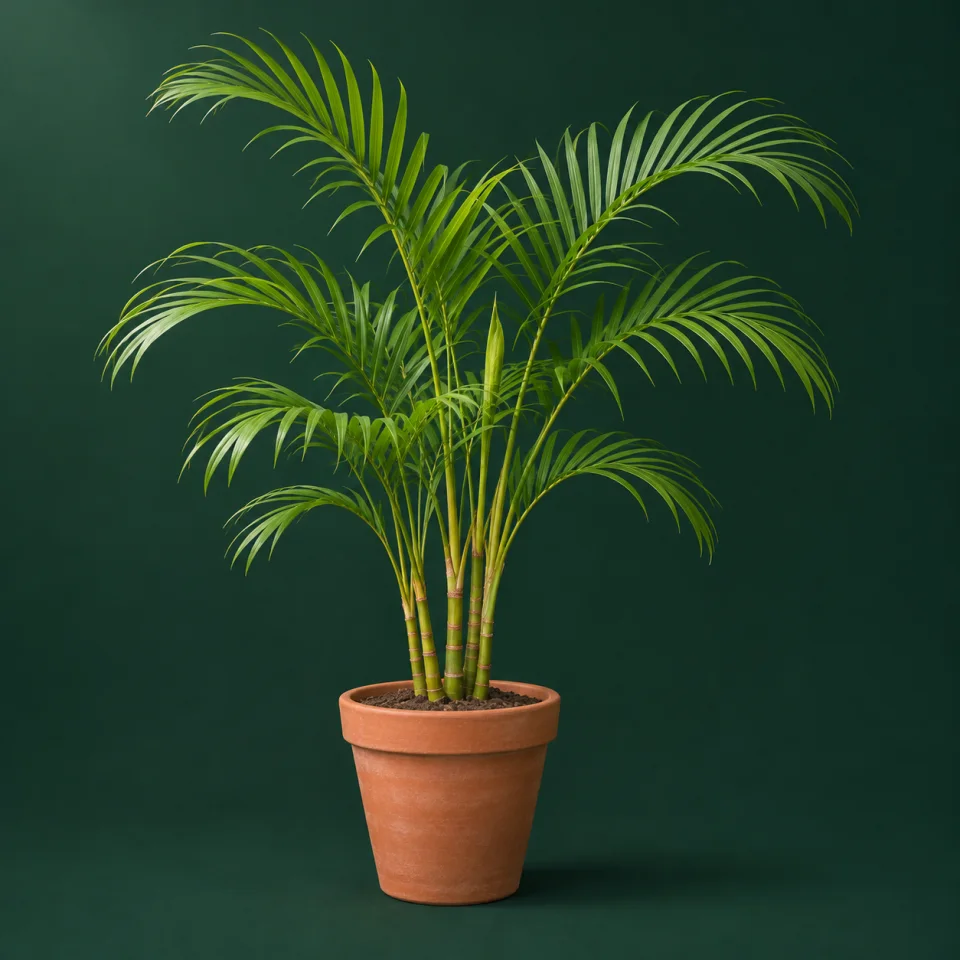
Botanical reference: Chrysalidocarpus lutescens (sin. Dypsis lutescens)
Identify the palm before choosing it
Look for Chrysalidocarpus lutescens, also labelled Dypsis lutescens. It forms clusters of yellow-green canes and fronds divided into many narrow leaflets. The word palm alone establishes neither identity nor safety. Choose one that fits with its fronds spread rather than brushing every passer-by: a large specimen in a narrow passage is awkward and may suffer tip damage.
Plentiful light away from heating
Place it near a bright window, filtering strong sun that reaches foliage. Areca needs better light than some shade-tolerant indoor palms; a dark corner is not ideal. Avoid cold draughts and direct heating or air-conditioning airflow. Adjust gradually to changed exposure. Leave space to inspect and clean fronds without bending them.
Steady moisture without a full saucer
Feel below the surface and assess container weight. As the top starts drying, water slowly to moisten the rootball and allow drainage below. Empty the saucer or outer pot. During growth, keep some moisture within, without drying everything or leaving it saturated. Lower light usually means slower water use. If it wilts in wet mix, check roots and drainage before watering again.
Repot with care for the roots
Use indoor palm mix or an airy potting mix that holds some moisture while draining well. Choose a stable container with clear holes. When roots fill it and water becomes difficult to manage, move to a modestly larger pot during active growth. Preserve planting depth and healthy roots. Do not routinely dismantle the clump or separate every cane: useful roots can be damaged.
Feed and reduce excessive dryness
While growing, use indoor palm fertiliser according to the label and nutrients already present. Do not combine products or increase doses for every yellow leaf. Move away from heating airflow; grouping plants with space between fronds may help the surroundings. If using a humidity tray, keep the pot base above water. Humid air does not require submerged roots.
What to cut and what to keep
Remove fully dead fronds with clean tools, cutting without pulling or injuring the cane. Keep green foliage. Each stem grows from a point at its top: cutting that tip to reduce height can mean losing that stem. It is not pruned like a corn plant. If a dry leaf tip bothers you, trim brown tissue without cutting into green; this does not correct its cause.
Brown tips, yellowing or webbing
Dry air, insufficient water, wet roots, cold or rubbing can leave similar damage. Review changes before choosing an explanation. An old lower frond may yellow naturally, but several together call for checking the whole plant. Wipe gently and inspect undersides and joints for mites or scale. Separate a confirmed infestation and choose an appropriate labelled measure rather than spraying for a dry tip.
Time away and animals
Before leaving, give instructions to check moisture and empty the saucer rather than water on a fixed day. Keep a bright position without cold nights. This species is listed as non-toxic to dogs and cats, but remains ornamental: do not offer leaves or shoots as food and keep fertilisers and treatments out of reach. The classification does not cover every similar palm; contact your vet with the label if ingestion causes discomfort or identity is uncertain.
Guides to help with your decision

Which flowers to give to someone with cats or dogs
Flowers for a home with cats or dogs: options to consider, checking the whole bouquet and precautions with lilies, holly and mistletoe at Christmas.
How to care for a spider plant and understand brown tips
Light, watering, roots, plantlets and dry leaf tips: what to check when caring for a spider plant at home without overdoing water or feed.
How to care for a corn plant in a pot
Light, watering, brown tips, canes and repotting: practical Dracaena fragrans care with simple checks for your home.
How to care for a parlour palm in a pot
Light, watering, roots and brown tips: care for Chamaedorea elegans without overwatering or mistaking slow growth for trouble.

How to care for a kentia palm in a pot
Light, water, fronds and roots of Howea forsteriana: choose a suitable place, repot when needed and understand changes before acting.
Frequently asked questions
Must I repot immediately after buying it?
Not necessarily. Check stability, drainage and roots before adding another change to its arrival home. If useful mix remains and watering is manageable, it can wait. Repot when roots really fill the pot or a mix problem justifies it.
Can it spend some time on the terrace?
Only in mild frost-free conditions, sheltered from wind and gradually adjusted to stronger light. Avoid moving a protected indoor plant straight into intense sun. If nights will be cold or exposure difficult to control, keep a suitable position inside.
Sources and what they support
- NC State Extension · Chrysalidocarpus lutescens
Identity and Dypsis synonym, clustered canes, light and drainage. No tropical size or air-cleaning claim applied to a room.
- RHS · Indoor palms
Includes Chrysalidocarpus: good light, no standing water, repotting and dead leaves. No copied months, doses or shade-species care.
- New York Botanical Garden · Palm plants indoors
Growing point on each stem, delicate roots and indoor care. No universal potting recipes or palm calendars.
- ASPCA · Areca Palm — Dypsis lutescens
Exact species listed as non-toxic to dogs and cats. Not food, a guarantee against upset or safety for every palm.
How we put these guides together
We review dates, care and recommendations to help you plan each gift.
Spotted something we should review? Contact Agenda Floral.