Guides
How to care for a kentia palm in a pot
Care difficulty4 out of 10
Pay attention to watering and growing conditions.
Editorial guide, with suitable light and climate. 0: very easy; 10: very delicate. More stars mean more care.
A kentia needs indirect light, stable temperatures and a mix that holds some moisture without waterlogging. Check before watering and empty the outer pot. Allow room for arching fronds and do not cut stem tops to reduce height: it grows slowly and depends on its healthy foliage.
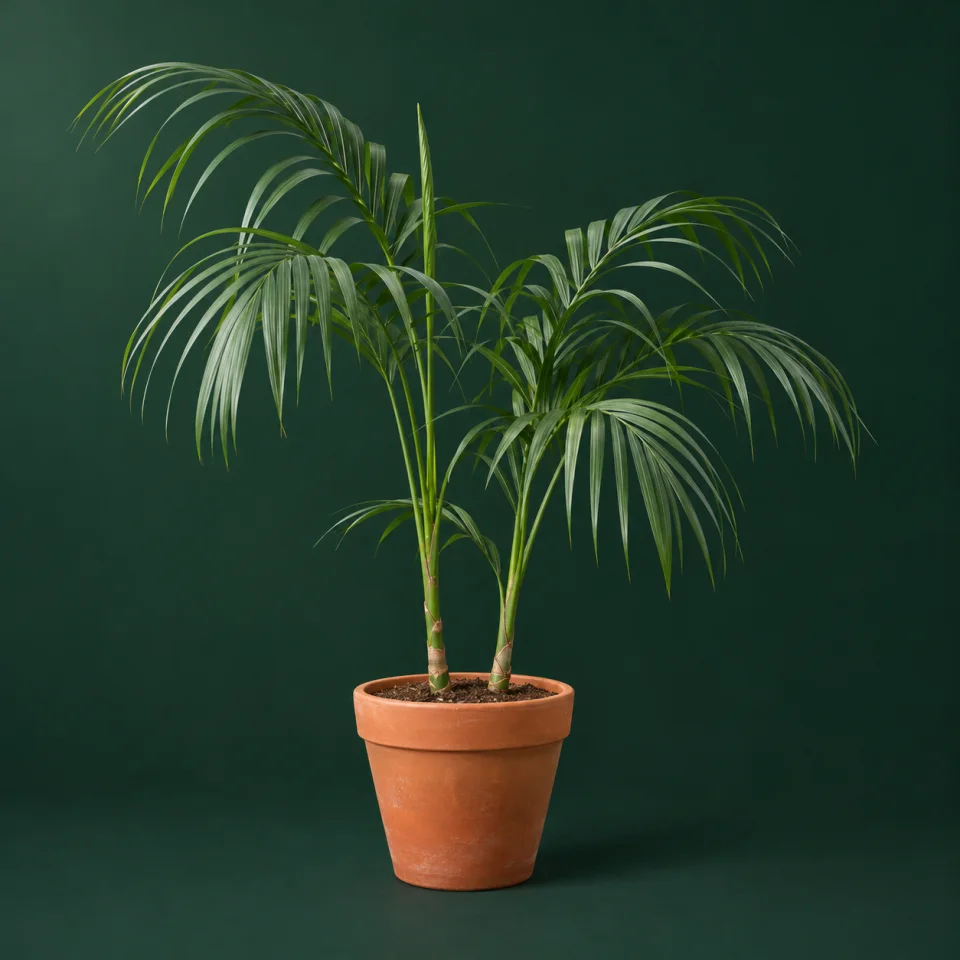
Botanical reference: Howea forsteriana
Choose a kentia that really fits
Look for Howea forsteriana on the label. Its long fronds arch, with naturally hanging leaflets. Each plant has one stem; several usually mean grouped plants in the same pot, not offsets needing separation. Check width with fronds spread as well as height. A narrow passage would leave tips brushing against you whenever you pass.
Indirect light and a settled position
A bright place without harsh sun through glass usually suits it. It tolerates lower light than some palms, not a windowless room. Avoid radiators, air vents and cold draughts. Adjust gradually to stronger light. Check that fronds do not rest against hot or cold glass.
Water the rootball, not the calendar
Feel beneath the surface and assess pot weight. As the upper few centimetres start drying, water slowly through the rootball and allow excess to drain. Empty the saucer or outer pot. Avoid both drying everything and keeping it constantly wet. Growth may increase use; lower light slows it. If it droops in moist mix, inspect drainage and roots before watering again.
Repot only when it is needed
Use quality houseplant or palm mix retaining some moisture while allowing air and water through. The pot needs holes and stability. When roots fill the space and watering becomes awkward, move up a modest size during active growth. Preserve depth and healthy roots; do not routinely dismantle the rootball or divide grouped plants. A huge pot adds wet soil the plant may not use.
Feed sparingly and with a purpose
Feed during growth according to the label and existing nutrients. Do not routinely combine slow-release and liquid fertilisers or increase doses to hurry a new frond. Palms can have deficiencies, but a brown tip does not identify which one. Check water, light and roots first. For distorted new leaves or continued decline, seek advice with photographs and care history before correcting minerals.
Keep the green fronds
Wipe dust gently with a damp soft cloth, supporting leaflets without pulling. Cut fully dead fronds with clean tools instead of tearing bases away. Each stem grows at its top; removing that point may lose the stem. If brown tips bother you, trim only dead tissue without cutting into green. Damaged tissue does not turn green again, and cutting does not fix its cause.
Spots, webbing or yellowing
Dryness, water-damaged roots, cold, rubbing and nutrient trouble may look alike. One old lower frond can yellow naturally; several together need a wider check. Inspect undersides and joints for mites or scale. Isolate confirmed pests and choose an appropriate measure, without spraying for one isolated spot. Make a reasoned change and observe rather than adding water and feed together.
Time away, outdoors and pets
Leave instructions to check moisture and empty the saucer. Do not hide it in darkness to reduce water use. Time outdoors needs mild frost-free weather, shelter and gradual adjustment; it is optional. Howea forsteriana is listed as non-toxic to dogs and cats, but is not food. Keep fertilisers out of reach and contact your vet for discomfort after chewing or uncertain identification.
Guides to help with your decision
Which flowers to give to someone with cats or dogs
Flowers for a home with cats or dogs: options to consider, checking the whole bouquet and precautions with lilies, holly and mistletoe at Christmas.
How to care for an areca palm in a pot
Light, watering, dry tips, repotting and fronds: areca care that distinguishes dead-leaf removal from cutting a growing point.
How to care for a parlour palm in a pot
Light, watering, roots and brown tips: care for Chamaedorea elegans without overwatering or mistaking slow growth for trouble.
Frequently asked questions
Do arching fronds mean it is wilting?
Not alone: that shape is normal for a kentia. Compare with its usual appearance and check moisture, firmness and new growth. Sudden drooping with very dry or soaked mix does call for checking conditions.
How can I keep it small without topping it?
Choose a suitable size and allow for slow growth. Do not reduce it by removing green fronds or damaging its living tip. If it outgrows the space, find another bright position with room; shrub pruning is not a way to control kentia height.
Sources and what they support
- NC State Extension · Howea forsteriana
Identity, single stems even when plants are grouped, indoor light, drainage and slow growth. Tolerance of neglect and listed deficiencies are not care recipes.
- RHS · Palms indoors
Howea tolerates lower light than some palms; watering, drainage and cutting dead fronds rather than pulling. No UK months, fortnightly dose or single temperature imposed.
- NYBG · Palm plants indoors
Growth point on each stem, sensitive roots and avoiding unnecessary kentia repotting. No stone layer, universal rest period or recovery promise.
- ASPCA · Forster sentry palm
Howea forsteriana listed as non-toxic to cats and dogs. Not an edible designation or safety rating for all palms or cultivation products.
How we put these guides together
We review dates, care and recommendations to help you plan each gift.
Spotted something we should review? Contact Agenda Floral.