Guides
How to care for a croton in a pot
Care difficulty6 out of 10
Pay attention to growing conditions and watering.
Editorial guide, with suitable light and climate. 0: very easy; 10: very delicate. More stars mean more care.
A croton suits a bright, warm home with humid air. It needs plenty of filtered light and a mix that retains moisture without becoming waterlogged. Water after the top layer dries, then let the pot drain; do not wait until all the soil is parched. Sudden changes in conditions make its care harder. If your room is cold or very dry, choosing another plant is simpler than trying to make up for it with more water.
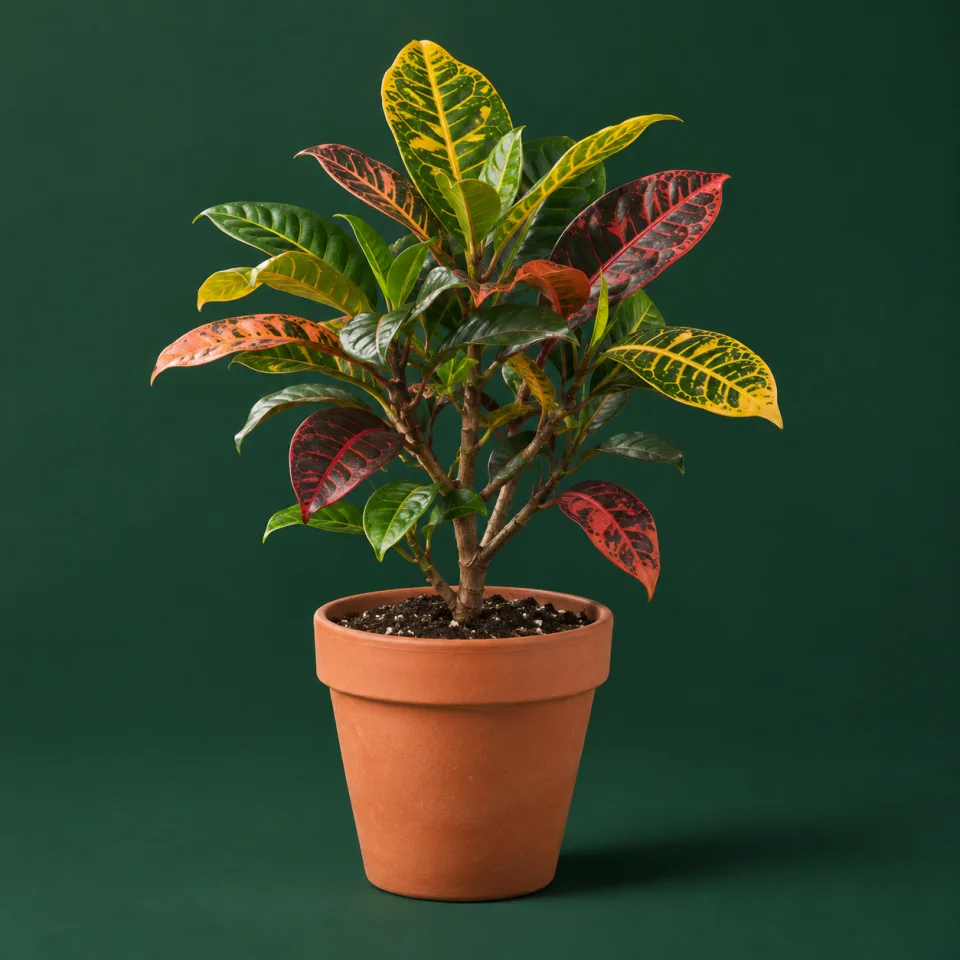
Botanical reference: Codiaeum variegatum
Recognise the croton sold as a houseplant
This guide covers Codiaeum variegatum, also called garden croton or codiaeum. The botanical genus Croton is different, despite the shared common name. Its leaves are thick and leathery, with size, shape and markings varying between cultivars. Some combine green, yellow, orange and red on one plant. Keep the label rather than identifying a cultivar from a photograph alone. Colours may also change as leaves mature, without indicating a problem.
Offer bright light and filter scorching sun
Place it near a bright window, using a light curtain against intense sun. Low light can cause loss of colour and leaves; suddenly moving it into strong sun is not the answer. Make a move to a brighter position gradually. A stand near a filtered window generally works better than a distant corner. If it spends time outdoors in suitable weather, acclimatise it and protect it before cold arrives rather than copying the exposure of a tropical hedge.
Keep warmth and humidity steady, away from radiators
Choose a warm room that does not cool sharply at night or when a door opens. Keep the plant away from radiators, air conditioning and cold draughts. A bright, warm bathroom may suit it; a windowless one cannot provide the light it needs. In very dry air, review the position and room humidity. A brief misting cannot replace stable conditions or repair damaged roots. Do not soak the soil more often to compensate for dry air.
Check the top layer and the pot’s weight
Feel the top layer and lift the pot. Once the top is dry and the pot lighter, water the soil slowly to moisten the root ball and let excess drain. Empty the saucer or outer pot. If still damp and heavy, wait. Both prolonged dryness and excess water can cause leaf loss. Use room-temperature water, preferably clean rainwater or low-mineral water if your tap water is very hard, rather than water from a domestic sodium-based softener.
Light mix and a modest move to a new pot
Choose a slightly acidic, airy, free-draining mix suitable for indoor acid-loving plants. The pot needs clear drainage holes. Repot when roots have filled it, preferably as a new growth period begins, moving only to the next size up. Lots of wet soil around few roots encourages rot. Keep the planting depth unchanged and handle the root ball gently. A new pot is not the first response to every fallen leaf.
Feed modestly and trim for a reason
During active growth, use a suitable fertiliser according to the label, allowing for nutrients already in the mix. Reduce or pause when growth slows; do not force a stressed plant with feed. Wipe dust off with a soft damp cloth. If a healthy branch becomes too long, trim above a node with a clean tool during growth. Hard routine pruning is unnecessary and regrowth is not guaranteed. Wear gloves and keep sap off skin and out of eyes.
Check what has changed before treating
Leaf loss may follow a move, cold, dry air or poorly adjusted watering. Check these conditions before adding water or fertiliser. If it droops in soggy soil, investigate drainage and roots rather than treating it as thirst. Look under leaves and along stems for mites, fine webs, scale or mealybugs. Separate a plant with pests and seek a treatment approved for that specific problem. Changing several things and mixing remedies makes the cause harder to identify.
Arrange care without leaving it soaking
Check moisture before going away and water only if needed, letting it drain. Keep its bright, warm position with strong sun filtered. Do not shut it in a dark room or leave standing water as a reserve. If someone will visit, show them how to check soil and weight. For example, a still-damp pot should wait even on the agreed visiting day. Adapt checking to heat and growth, without relying on a promised number of unattended days.
Guides to help with your decision
How to care for a rubber plant in a pot
Light, watering, yellow leaves, repotting and sap: practical rubber plant care with simple checks for your home.
How to care for a fiddle-leaf fig and assess leaf spots
Light, watering, large leaves, brown marks and repotting: practical Ficus lyrata care with clear checks for your home.
How to care for a cast-iron plant in a pot
Aspidistra elatior light, watering, repotting and division. Care for its leaves without confusing resilience with darkness or constantly wet mix.
Frequently asked questions
Is it safe around dogs, cats and children?
This is not a plant to eat or chew. Ingestion may irritate pets’ mouths and digestive systems, and sap can irritate skin and eyes. Keep the plant and pruning waste inaccessible. Choose another species if you cannot prevent access. After ingestion or exposure causing discomfort, contact a vet or medical service rather than trying home remedies.
Can I grow a new croton from a loose leaf?
Stem cuttings or air layering are used for propagation; a detached leaf should not be treated as an established new plant. To try it, select a healthy stem with nodes and prepare a moist, free-draining rooting medium with warmth and filtered light. Wear gloves when cutting. Avoid taking material from an unhealthy plant, and expect neither a guaranteed result nor a fixed timetable.
Sources and what they support
- RHS · How to grow codiaeum
Indoor Codiaeum variegatum: filtered light, high humidity/steady warmth, water after surface drying, acidic draining mix, modest repotting, pruning above a node and irritating sap. No universal months, misting as a cure, sodium softener or routine drastic pruning.
- Wisconsin Extension · Croton, Codiaeum variegatum
Variable foliage and colours with age, indirect indoor light, moderate water after surface drying, moderate/high humidity, changes and extremes cause leaf loss, moderate feed, slightly larger pot and pests. No guaranteed recovery, specific colour, cutting success or hemispheric schedule.
- NC State Extension · Codiaeum variegatum
Identity, leathery leaves of different shapes/colours, mites and irritating sap. Its sun/low-to-medium humidity advice is compared with RHS/Wisconsin for indoors; no universal outdoor climate, toxicity dose or cold tolerance.
- Pet Poison Helpline · Croton (Codiaeum variegatum)
Identifies Codiaeum variegatum and risk of oral/digestive irritation after ingestion and skin irritation from sap in pets. No safe dose, guaranteed mild symptoms, other Croton species or home-treatment instructions.
- Kew · Plants of the World Online · Codiaeum variegatum
Accepted Codiaeum variegatum name and Codiaeum genus. Identity distinguished from the Croton genus; no transfer of ethnobotanical uses to food, medicine or household safety.
How we put these guides together
We review dates, care and recommendations to help you plan each gift.
Spotted something we should review? Contact Agenda Floral.