Occasions
Wszystkich Świętych in Poland: chrysanthemums, znicze and when to buy
Poland · Nationwide
Wszystkich Świętych, All Saints’ Day, is on 1 November and is a public holiday in Poland; in 2027 it falls on a Monday. Families visit graves, light znicze, the cemetery candles, and leave chrysanthemums, nearly always potted. Zaduszki, All Souls’ Day, is Tuesday 2 November and a working day. On Sunday 31 and Monday 1 most shops are closed, but florists and the stalls selling flowers, wreaths and candles by cemeteries may open. The calmest option is to buy on Saturday 30.
Upcoming calendar dates
Poland
Agenda Floral, with you
Add it to your calendar
Subscribe to receive our updates, or download the .ics file to import a copy. The copy will not receive later changes.
Use in Google Calendar or another calendar
Open Google Calendar on a computer. Beside “Other calendars”, click “+” and choose “From URL”. Paste the address below to add the subscription. You can then view that calendar on devices using your account.
Guide to adding Agenda Floral to Apple and Google Calendar
Your calendar app decides when to refresh a subscription. Importing the file again may duplicate events. Agenda Floral adds no alarms; you can check alerts in your calendar settings.
A holiday on the 1st, a working day on the 2nd
Poland’s act on days free from work includes 1 November, Wszystkich Świętych, and 11 November, Independence Day; the 2nd is not on the list. Zaduszki, or Dzień Zaduszny, is the day for praying for the dead, visiting the cemetery and lighting lights on graves. But because the day off is the 1st, most people go to the graves then. In 2027 the 1st is a Monday, the 2nd a Tuesday and the 11th a Thursday.
Mass cemetery visiting is more recent than it seems: it became widespread in the 19th century, and decorating graves with green branches, pine-cone crosses and a lit light arrived between the wars. Before that, the dead were remembered mainly at home, with the Dziady, and fires were lit so that returning souls could warm themselves. That is where today’s znicze come from.
Potted chrysanthemums: large or small flowers
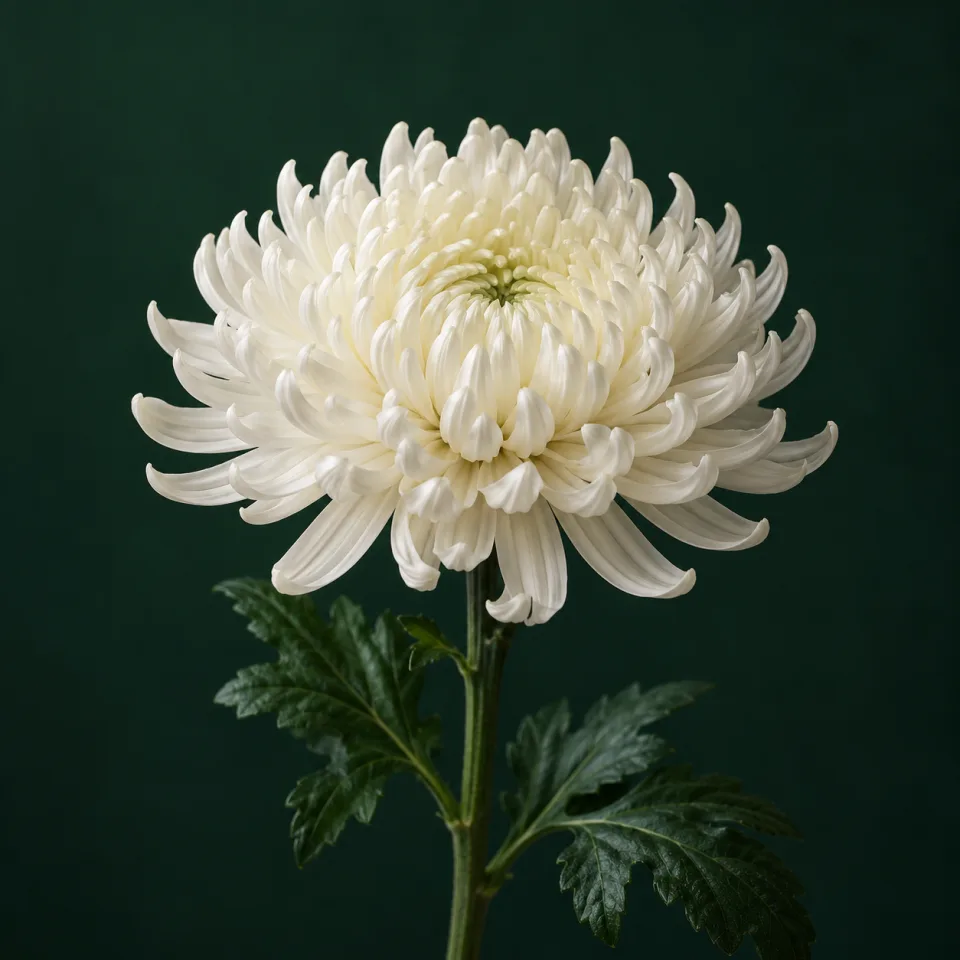
Chrysanthemums have been on Polish graves for decades because they flower late, just in time for these days, and almost all are sold in pots: in a study from 2009 and 2010, pots made up 83% of what was grown for 1 and 2 November. Among the large-flowered types, white was the most common colour, followed by yellow.
Small-flowered types, drobnokwiatowe, were gaining ground in those years and, according to growers, cope better with the cold. If the grave will stay decorated for several weeks, choose one of these in a stable pot or a heavy outer pot. A large-flowered chrysanthemum looks spectacular on the day of the visit but suffers more from frost.
Less waste on the grave
In Kraków, the city reminded residents in 2024 that cemetery waste multiplies after All Saints’ Day and that it is mostly spent znicze, artificial flowers, ribbons and other decorations. It asked people to decorate graves more simply: what matters is being there and remembering.
That year there were 11 zniczodzielnie in its municipal cemeteries: shelves where you leave complete, undamaged znicze so someone else can use them by buying only a new insert. A living pot instead of plastic flowers, without synthetic ribbons, also leaves less rubbish. And when the chrysanthemum dries out, remove it with its pot so the grave does not look neglected until spring.
When to buy in 2027
The law bans trading on Sundays and public holidays, and in 2027 that puts two days together: Sunday 31 October, which is not one of the year’s trading Sundays, and Monday 1 November. The ban does not apply to shops that mainly sell flowers, with at least 40% of their revenue, to online sales or to the sale of flowers, wiązanki, wreaths and znicze by cemeteries. They may open, but none has to.
The calmest plan is to buy on Friday 29 or Saturday 30 and keep the pot somewhere cool and bright, away from the heating, until the visit. If you go on Tuesday 2, a working day, you can also buy that day.
A sample order and a note
You could order it like this: “Two small-flowered chrysanthemums in pots, one white and one burgundy, with fairly heavy terracotta outer pots, for a grave. No ribbons. I’ll pick them up on Friday 29 in the afternoon.” If you prefer cut flowers, ask for a low wiązanka, the flat bouquet laid on the slab; carnations are our suggestion to go with the family’s chrysanthemums.
If you cannot travel this year and another family member is taking the flowers, add a short note: “I can’t make it this year, but I want Grandpa to have flowers from me. Please light a znicz for me too.” If you are travelling with them yourself, the guide to transporting flowers shows how to wedge the pots in the boot.
Which flowers to choose
Compare flowers to choose the format, colours and care that suit the occasion.
Chrysanthemum
Main flower in our selectionIn Poland, graves are decorated for All Saints’ Day with chrysanthemums, nearly always potted, next to znicze, the cemetery candles. If the grave will stay decorated for several weeks, choose a small-flowered one: growers say it copes better with the cold.
Carnation
If you prefer cut flowers, a low wiązanka of carnations is our suggestion: it sits alongside the chrysanthemums the family brings without adding another pot. It is not a flower tied to these days in Poland, just an alternative.
Guides to help with your decision
Flowers for All Saints’ and All Souls’ Days in Germany
Allerheiligen is 1 November and Allerseelen is 2 November in Germany. Choose grave flowers and agree on the visit, container and placement.
Flowers for All Saints’ Day and Vėlinės in Lithuania
All Saints’ Day is 1 November and Vėlinės is the 2nd in Lithuania. Plan the visit and choose flowers around the memory and grave space.
Todos os Santos in Portugal: chrysanthemums for the grave and Pão-por-Deus
1 November is a public holiday in Portugal and falls on a Monday in 2027; the 2nd, Finados, is a working day. Chrysanthemums, carnations, timing, Pão-por-Deus.

Dzień Edukacji Narodowej: flowers for teachers in Poland on 14 October
14 October 2027 is a Thursday with no lessons in Poland. When to give the flowers, one per pupil or a class bouquet, and what to write on the card.
All Saints’ Day in Belgium
Toussaint or Allerheiligen, 1 November, is a legal public holiday in Belgium and falls on a Monday in 2027. Chrysanthemums, cemetery visits and when to buy.
All Saints’ Day in Austria: grave flowers and when to buy them
All Saints’ Day, 1 November, is a national public holiday in Austria; All Souls’ Day, the 2nd, is not. What goes on the grave, plants that cope with November and when to buy in 2027.
How to transport a bouquet by car or plane
How to carry a bouquet, a potted plant or dried flowers without crushing them. Packing, water and checks for flights and bringing plants into your destination.
Which flowers to give in autumn and winter
Bouquets and plants for autumn, winter, Erntedank and Advent visits in Germany. Choose the format and plan the handover for the celebration.
Chrysanthemums or carnations for All Saints’ Day
Chrysanthemums or carnations for All Saints’ Day in Spain: compare cut stems and potted plants by space, care and ordering arrangements.
Frequently asked questions
Is 2 November a public holiday in Poland?
No. Zaduszki, All Souls’ Day, is a working day; the holiday is the 1st. In 2027 the 2nd is a Tuesday, and Thursday 11 November, Independence Day, is also a public holiday.
Are florists open on 1 November?
They may be. Shops that mainly sell flowers and the stalls selling flowers, wreaths and znicze by cemeteries are exempt from the trading ban, but none has to open. In 2027 Sunday 31 is not a trading Sunday either, so buy on Saturday 30.
Large-flowered or small-flowered chrysanthemum?
The large-flowered one looks best on the day of the visit; the small-flowered one copes better with the cold, according to growers, and suits a grave that will stay decorated for a few weeks. You can combine both on the same grave.
What is a znicz?
A cemetery candle inside a container that shields it from the wind. Lighting them on graves is the central custom of these days. Many are reused by changing only the insert.
Sources and what they support
- Dziennik Ustaw 2025 poz. 296 · Ustawa o dniach wolnych od pracy
Consolidated text of the act on days free from work (notice of 6 March 2025). Art. 1 lists “1 listopada – Wszystkich Świętych” and “11 listopada – Narodowe Święto Niepodległości”, as well as Sundays. 2 November is not listed. It does not regulate shop or cemetery hours.
- Dziennik Ustaw 2025 poz. 301 · Ustawa o ograniczeniu handlu w niedziele i święta oraz w niektóre inne dni
Consolidated text of the act restricting trade. It bans selling on Sundays and public holidays (art. 5). Exemptions include shops whose main activity is selling flowers, at least 40% of monthly revenue (art. 6.1.2 and 6.2), online shops (6.1.20) and the sale of “kwiatami, wiązankami, wieńcami i zniczami przy cmentarzach” (6.1.25). Trading Sundays are the last of January, April, June and August, the one before Wielkanoc and the three before Wigilia (art. 7): none in October. It does not oblige shops to open or regulate deliveries.
- Powroty.gov.pl · Czas wspominania zmarłych
Polish government portal for people returning to the country. It explains that Zaduszki (2 Nov) is the day for praying for the dead, visiting cemeteries and lighting lights (candles, znicze) on graves; that the day off is the 1st, so most people visit graves then; and that early November today means mainly cemetery visits and znicze. No visible date; it does not cover flowers or opening hours.
- Dzieje.pl (PAP) · Dziady, czyli zapomniane zwyczaje dnia Wszystkich Świętych i Zaduszek
History portal of the PAP news agency. Ethnographer Andrzej Karczmarzewski explains that widespread cemetery visiting began in the 19th century and that decorating graves with green branches, pine-cone crosses and lit lights appeared between the wars; before that, the dead were remembered at home (Dziady) and fires were lit so returning souls could warm themselves, the origin of today’s znicze. It draws on the Rzeszów area; it does not cover chrysanthemums.
- SGGW · Jabłońska y Sobczak, «Rynek chryzantem w Polsce w okresie Święta Wszystkich Świętych», Roczniki Nauk Rolniczych G 98(4), 2011
Study by the Warsaw University of Life Sciences based on 2009 and 2010 surveys. Chrysanthemums have long been used to decorate graves because they flower late; potted plants dominate production for 1 and 2 November (83% of the area). Among large-flowered types, white was the most common colour (51–52%), then yellow; small-flowered types gained ground and, according to growers, withstand low temperatures better. The data are more than fifteen years old, not current figures.
- Kraków · Dekoracja grobów a ochrona środowiska (2024)
Municipal notice from 2024: after All Saints’ Day, waste from Kraków’s cemeteries rises several times over compared with other months; it is mainly spent znicze, artificial flowers, ribbons and other decorations. It asks for simpler grave decoration and presents the zniczodzielnie. Kraków only.
- Kraków · Więcej zniczodzielni na krakowskich nekropoliach (2024)
In 2024 there were 11 zniczodzielnie in Kraków’s municipal cemeteries: metal shelves where you can leave complete, undamaged znicze for someone else to reuse by buying only a new insert. The municipal cemetery authority had been installing them for four years. Kraków only; the number may have changed.
How we put these guides together
We review dates, care and recommendations to help you plan each gift.
Spotted something we should review? Contact Agenda Floral.