Occasions
Todos os Santos in Portugal: chrysanthemums for the grave and Pão-por-Deus
Portugal · Nationwide
Todos os Santos, 1 November, is a mandatory public holiday in Portugal; in 2027 it falls on a Monday. Fiéis Defuntos, or Finados, on Tuesday 2 November, is a working day. For the grave vase, the cut chrysanthemum is the flower of these days and the carnation is another of the most bought. Buy them on Saturday 30 and leave them in water overnight before taking them. The 1st is also the day of Pão-por-Deus, the old custom of children asking from house to house.
Upcoming calendar dates
Portugal
Agenda Floral, with you
Add it to your calendar
Subscribe to receive our updates, or download the .ics file to import a copy. The copy will not receive later changes.
Use in Google Calendar or another calendar
Open Google Calendar on a computer. Beside “Other calendars”, click “+” and choose “From URL”. Paste the address below to add the subscription. You can then view that calendar on devices using your account.
Guide to adding Agenda Floral to Apple and Google Calendar
Your calendar app decides when to refresh a subscription. Importing the file again may duplicate events. Agenda Floral adds no alarms; you can check alerts in your calendar settings.
A public holiday again since 2016
The Código do Trabalho lists 1 November among Portugal’s mandatory public holidays, but for a few years it was not: it was suspended in 2012, along with Corpus Christi, 5 October and 1 December, and a 2016 law put it back on the list. 2 November is not on it.
In 2027 the 1st is a Monday, so the weekend of the 30th and 31st runs into the holiday, and Tuesday the 2nd is a working day. The difference between the two commemorations, and how to prepare flowers for a grave, a niche or an ashes area, is in the guide to Todos os Santos and Finados in Portugal. Here we focus on the 2027 calendar, the flowers on the market and Pão-por-Deus.
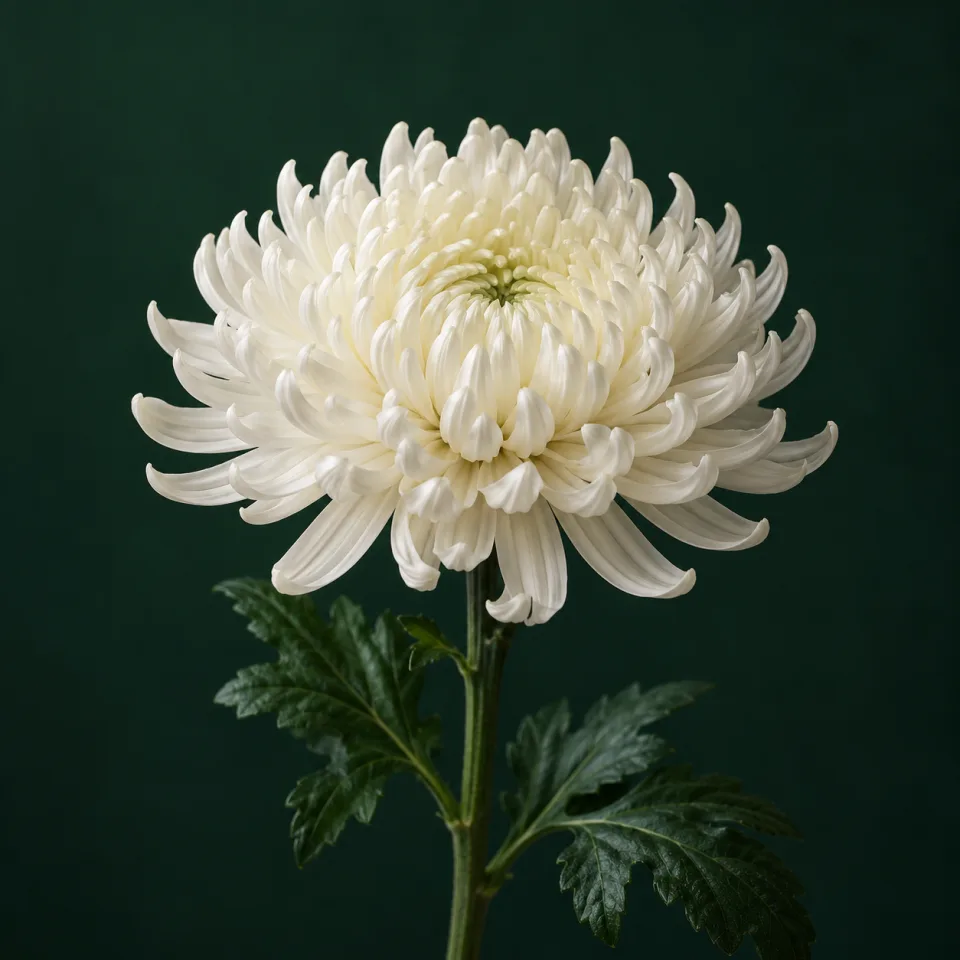
Cut chrysanthemums, the flower of these days
In Portuguese production markets, the Standard-type chrysanthemum, with one large bloom per stem, arrives in force in the weeks around Todos os Santos and its season ends in mid-November: the official agricultural market information service describes it as a very characteristic flower of the period. It is sold in bunches of five or ten stems. The spray type, with several small flowers per stem, is also bought for these days.
Before the holiday, demand also rises for carnations, both large-flowered and branched cravina, and for roses, gerberas and gladioli. For a grave vase, five Standard chrysanthemums are enough; if the opening is narrow or the space small, a few stems of spray or cravina fit better. The chrysanthemum or carnation guide compares the two flowers.
Getting them to the grave fresh
Buy on Friday 29 or Saturday 30. At home, cut a little off the base of each stem, strip the leaves from the part that will be submerged and stand them overnight in a bucket of water in the coolest corner. Measure the opening and depth of the grave vase beforehand, so you know how many stems will fit and how short to cut them.
Take scissors to adjust the stems there and a bottle of water in case the tap is far away or there is a queue. In Lisbon’s municipal cemeteries, from October to April entry is 9:00 to 17:00 and closing is announced half an hour earlier, after which no one is let in: if you go on Monday 1, do not leave it to the last minute.
Pão-por-Deus on the morning of the 1st
Pão-por-Deus is a custom of these days that has nothing to do with flowers. In many places in Estremadura it was the name for the alms asked from house to house; children went round with small bags and received bread, figs, walnuts or almonds. In Torres Vedras special broas with honey and aniseed were baked for 1 November, and elsewhere the request had other names, such as “Bolinhos, bolinhós” in Coimbra or the Dia dos Bolinhos in Cercal do Alentejo.
Today it is revived mainly at local events: in Tavira, for example, an association held a storytelling evening at the Igreja da Misericórdia on the night of 31 October 2024, followed by going door to door to ask for Pão-por-Deus. If you live in Portugal and children knock on your door that morning, a few walnuts, dried figs or a small cake are the traditional answer.
A sample order and a note
You could order it like this: “Five white Standard chrysanthemums and three stems of white cravina, no plastic wrapping, for a grave vase with an opening of about eight centimetres. I’ll collect them on Saturday 30 October in the afternoon.” If the vase is wide, a bunch of ten chrysanthemums fills it on its own.
If you are not going to Portugal this year and a relative is placing the flowers for you, a short note is enough: “I can’t make it for Todos os Santos this year. Please put these flowers on our grandparents’ grave from me, and thank you for doing it.” If you are travelling with them, the guide to transporting flowers explains how to protect them in the car.
Which flowers to choose
Compare flowers to choose the format, colours and care that suit the occasion.
Chrysanthemum
Main flower in our selectionIn Portuguese flower markets, the cut Standard chrysanthemum, with one large bloom per stem, is the characteristic flower of Todos os Santos. A bunch of five stems fills a grave vase; buy it the day before and leave it in water overnight.

Carnation
Carnations, large-flowered or branched (called cravina in Portugal), are another flower whose demand rises before Todos os Santos. They go with chrysanthemums in the same vase or work alone if the vase is narrow.
Guides to help with your decision
Which flowers to choose for All Saints’ Day
What flowers to bring for All Saints’ Day on 1 November. How it differs from All Souls’ Day on the 2nd and how to prepare and deliver a tribute.
Toussaint in France: a chrysanthemum pot or cut flowers
Flowers for a grave at Toussaint, on 1 November in France. Compare pots and arrangements, plan the transport and clarify the cemetery delivery.
Wszystkich Świętych in Poland: chrysanthemums, znicze and when to buy
All Saints’ Day is a public holiday in Poland and falls on a Monday in 2027, after a Sunday without trading. Potted chrysanthemums, znicze and when to buy.
All Saints’ Day in Belgium
Toussaint or Allerheiligen, 1 November, is a legal public holiday in Belgium and falls on a Monday in 2027. Chrysanthemums, cemetery visits and when to buy.
All Saints’ Day in Peru: flowers for the cemetery on 1 November
1 November is a national public holiday in Peru, and many families visit the cemetery. Which flowers to take, how to avoid standing water because of dengue and when to buy in 2027.
How to care for a bouquet when it arrives
Bouquet care on arrival: water, stem cutting, flower food and mixed flowers. What to check if it looks limp and how to keep the flowers still doing well.

How to transport a bouquet by car or plane
How to carry a bouquet, a potted plant or dried flowers without crushing them. Packing, water and checks for flights and bringing plants into your destination.
Chrysanthemums or carnations for All Saints’ Day
Chrysanthemums or carnations for All Saints’ Day in Spain: compare cut stems and potted plants by space, care and ordering arrangements.
All Saints and All Souls in Portugal: dates, place and flowers
Distinguish 1 and 2 November and plan flowers for a grave, an ashes space or an organised tribute.
Frequently asked questions
Is 2 November a public holiday in Portugal?
No. Fiéis Defuntos is a working day; the holiday is the 1st. In 2027 the 2nd is a Tuesday.
Why were there years without a holiday on 1 November?
Because four national holidays, Todos os Santos among them, were suspended in 2012. A 2016 law restored them and 1 November is back in the Código do Trabalho.
Chrysanthemums or carnations?
Standard chrysanthemums are the characteristic flower of these days; demand for carnations, large-flowered or cravina, also rises before the holiday. You can combine them in the same vase.
What is Pão-por-Deus?
An All Saints’ Day custom: children went from house to house with a little bag and received bread, nuts or small cakes. Today it is revived at local events and has no connection with flowers.
Sources and what they support
- Código do Trabalho · Artigo 234.º Feriados obrigatórios (PGDL)
Art. 234, as worded by Law 8/2016 (after Law 23/2012): mandatory public holidays are 1 January, Good Friday, Easter Sunday, 25 April, 1 May, Corpus Christi, 10 June, 15 August, 5 October, 1 November and 1, 8 and 25 December. 2 November is not listed. It does not regulate shop or cemetery hours.
- XXI Governo Constitucional · Reposição de feriados (28/03/2016)
Portuguese government note on the law restoring four national holidays suspended in 2012: two civil ones (5 October and 1 December) and two religious ones (Corpus Christi and Todos os Santos). It does not cover customs or opening hours.
- SIMA (GPP) · Newsletter Flores e Folhagens, semana 46 de 2025
Bulletin of the Agricultural Market Information System of the Ministry of Agriculture, reproduced on Agroportal: in Beira Litoral the season for the “Tipo Standard” chrysanthemum ended, “flor muito característica na época dos finados/dia de Todos os Santos”. 2025 production-market data; prices are not used.
- SIMA (GPP) · Newsletter Flores e Folhagens, semana 44 de 2025
With Todos os Santos, the “Tipo Standard” chrysanthemum came onto the Beira Litoral market in bunches of 10 and 5 stems, with demand rising, “normal para esta época do ano”; the “Spray” type (despedida) is also listed. Demand for flowers rose in Entre Douro e Minho. Prices not used.
- SIMA (GPP) · Newsletter Flores e Folhagens, semana 43 (21–27/10/2024)
As the “Dia de Todos os Santos” approached, demand kept rising in the Setúbal Peninsula and supply fell in Entre Douro e Minho; “Tipo Americano” and “Tipo Spray” carnations (cravina), gerbera, gladiolus, “Tipo Standard” chrysanthemum and roses rose. Only the demand trend is used, not the prices.
- Ernesto Veiga de Oliveira · «Manjares cerimoniais de todos os santos e fiéis defuntos», Festividades cíclicas em Portugal (Etnográfica Press, 1995)
Ethnographic study: the “Santos” and the “Fiéis” (1 and 2 November) form a single commemoration; in Estremadura the alms of these days is called “Pão por Deus” in many places; in Palmeia children go from house to house with small bags and receive bread, figs, walnuts and almonds; in Torres Vedras special broas of flour, sugar, honey and aniseed are baked for 1 November; “Bolinhos, bolinhós” in Coimbra and “Dia dos Bolinhos” in Santa Luzia (Cercal do Alentejo). Ethnographic present of a 1995 book; it does not describe current practice or cover flowers.
- Postal do Algarve · Tavira revive a tradição do «Pão por Deus» (30/10/2024)
In Tavira, the Associação Praça dos Livros Livres held a storytelling session at the Igreja da Misericórdia on 31 October 2024 at 21:00, followed by going door to door to ask for Pão por Deus, to keep the tradition alive among young people. One local event, one year.
- Câmara Municipal de Lisboa · Regulamento dos Cemitérios Municipais (Edital n.º 60/84)
Art. 5: Lisbon’s municipal cemeteries open every day 9:00–17:00 from 1 October to 30 April and 9:00–18:00 from 1 May to 30 September; closing is announced 30 minutes in advance and no one may enter after that. Art. 117 forbids picking flowers or damaging plants. A 1984 text hosted on a city council server; it may have later amendments and sets no special hours for Todos os Santos.
How we put these guides together
We review dates, care and recommendations to help you plan each gift.
Spotted something we should review? Contact Agenda Floral.