Occasions
Santa Llúcia in Barcelona: moss, greenery and plants for the nativity scene
Barcelona · Local
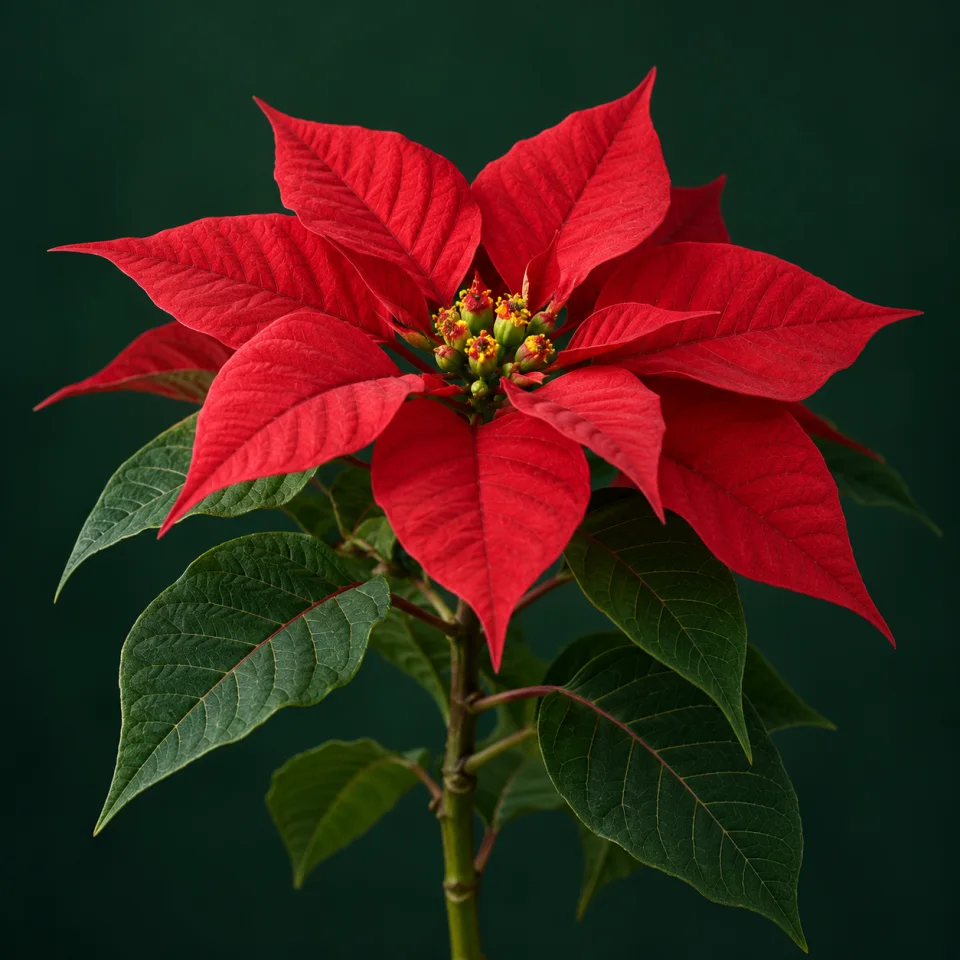
Santa Llúcia is on 13 December: in 2026 it falls on a Sunday and in 2027 on a Monday. In Barcelona it gives its name to the Fira de Santa Llúcia, which has set up in front of the Cathedral before that date since 1786. In 2026 it runs from Friday 27 November to Wednesday 23 December, 10 am to 9 pm. It is a fair for nativity scenes and Christmas greenery, not bouquets: you buy moss, cork and trees of commercial origin there. Holly (grèvol) is protected in Catalonia and may not be collected in the woods. If you want to give a flowering plant, choose a well-wrapped poinsettia or, if there are small children or pets at home, a holiday cactus.
Upcoming calendar dates
Barcelona
Agenda Floral, with you
Add it to your calendar
Subscribe to receive our updates, or download the .ics file to import a copy. The copy will not receive later changes.
Use in Google Calendar or another calendar
Open Google Calendar on a computer. Beside “Other calendars”, click “+” and choose “From URL”. Paste the address below to add the subscription. You can then view that calendar on devices using your account.
Guide to adding Agenda Floral to Apple and Google Calendar
Your calendar app decides when to refresh a subscription. Importing the file again may duplicate events. Agenda Floral adds no alarms; you can check alerts in your calendar settings.
13 December, the saint and her fair
Santa Llúcia is celebrated on 13 December and has her own chapel in Barcelona Cathedral. The oldest account of the fair, from 1786, already describes the feast inside the Cathedral and, outside, a street full of nativity stalls and clay figures. Llúcia was patron of dressmakers, tailors and the blind, which is why she was called “l’advocada de la vista”, the advocate of sight.
The fair always opens before the 13th and carries on through the holidays. In 2026 it marks 240 years since that first documented date and is open from 27 November to 23 December on Avinguda de la Catedral, 10 am to 9 pm, holidays included. On Saturday 12 December it hosts the 33rd Diada de les Tradicions i Costums Nadalencs a Catalunya.
Moss and cork for the nativity scene: buy them, don’t pull them up
In the greenery sector you will find natural or artificial trees, molsa (moss), tiós of every size, cork (suro pelegrí), ramets de la sort and eucalyptus branches. Cork, moss and myrtle used to be sold at a separate fair on the Cathedral steps, and families told the figure fair apart from the one for “l’herbei”, the greenery.
Buying moss from a stall or a shop is the right way to get it. In Catalonia collecting it is heavily restricted: only a very small amount, and always for personal use. No plant at all may be collected in protected natural areas.
If you would rather do without it, bark, cardboard, sawdust, sand, stones or artificial grass all work for the landscape and keep from one year to the next.
Holly, butcher’s broom and mistletoe: where the limits are
Holly (boix grèvol, Ilex aquifolium) is a protected species in Catalonia: collecting, cutting or uprooting it is strictly forbidden. In December the Agents Rurals, Catalonia’s environmental rangers, inspect shops, markets and fairs and confiscate greenery of illegal origin: buy it from a stall or a shop and leave the countryside as it is.
Butcher’s broom (galzeran, Ruscus aculeatus) has no specific regulation, but like holly it shelters many animals, and in winter its red berries feed woodland birds. Those berries are toxic to people. Leave it where it grows.
Mistletoe (vesc, Viscum album) is listed with moss and holly among the protected plants that Catalonia advises against using as decoration. If you want a sprig, check at the stall that it is of commercial origin and hang it high, by the entrance. Mistletoe, holly, myrtle and amaryllis are toxic if eaten, and holly berries are especially so for children. The guide to flowers and pets helps you check the rest of the decorations.
A plant to give: poinsettia, holiday cactus or Christmas rose
The fair is outdoors and December is cold. That matters if you want a poinsettia: it needs at least 13–16°C, and the cold of a pavement or a draught makes it drop leaves and bracts, sometimes days later. Choose a plant with no fallen leaves and ask for it to be wrapped over the top too. Another option is to stroll round the fair without it and buy it from a florist near home.
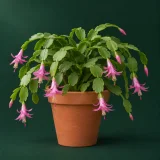
Its milky sap irritates skin and eyes, so place it away from little hands. If there are children or pets at home, a holiday cactus (Schlumbergera) in bloom is an alternative listed as non-toxic, and it flowers from December to February.
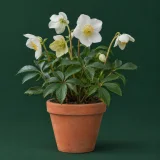
For a balcony or a cool entrance, a Christmas rose (Helleborus niger) in a small pot copes with cold better than a houseplant. It is harmful if eaten, so keep it out of the nativity scene. For a living tree or branches, see the guide to Christmas in Spain.
Sunday 13 December 2026: shops and opening hours
In 2026 Santa Llúcia falls on a Sunday, one of the days with authorised shop opening in Catalonia, Barcelona included, like 6, 8, 20 and 27 December. Shops that mainly sell flowers and plants are also exempt from general opening hours, although each one decides whether to open.
If the gift is for a Llúcia you are seeing on Sunday, you can buy the plant that same morning. To leave it at her workplace, Monday 14 is a working day. In 2027, 13 December falls on a Monday; the fair’s dates for that year have not been published yet.
A sample purchase and a card
At the florist you can say: “I’d like a small poinsettia with no fallen leaves, fully wrapped because I’m walking. It’s a gift for Sunday the 13th.” At the greenery stall: “I need moss for a base of about 40 by 30 centimetres. Is it cultivated or collected with authorisation?”
For the card, in Catalan: “Per molts anys, Llúcia! Que no et falti vista per trobar el caganer al pessebre” (Happy name day, Llúcia! May your eyesight never fail you when hunting for the caganer in the nativity scene). The card messages guide has more ideas.
Which flowers to choose
Compare flowers to choose the format, colours and care that suit the occasion.
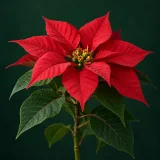
Poinsettia
Main flower in our selectionOur suggestion for giving a flowering plant in December, not a Santa Llúcia custom. Ask for it to be fully wrapped: cold outdoors makes it drop leaves and bracts.
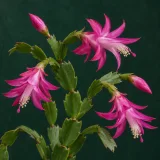
Holiday cactus · Schlumbergera
Our alternative for homes with small children or pets: it flowers in midwinter and is listed as non-toxic.
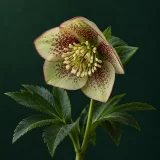
Hellebore
For a balcony or a cool entrance, a Christmas rose in a small pot. It is harmful if eaten: keep it away from the nativity scene and out of children’s reach.
Guides to help with your decision
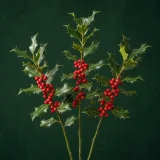
Holly: choosing berried sprigs, buying it cultivated and keeping it away from children and pets
What Ilex aquifolium is, why only some sprigs have berries, where wild holly is protected, how long it lasts indoors and why its red berries are toxic.
Which flowers to give at Christmas in Spain
Choose Christmas flowers in Spain. A bouquet for the home or a table arrangement, Christmas Eve delivery and the difference between cut flowers and a plant.
Flowers for La Mercè in Barcelona: tradition and gifts
Flowers for La Mercè in Barcelona on 24 September. Gift ideas and the context of the trabucaires’ flower offering.
Immaculate Conception in Spain: flowers for 8 December and the 2026 long weekend
8 December 2026 falls on a Tuesday and is a holiday throughout Spain; in ten territories Monday 7 is too. Flowers for a name day, a visit or the church.
How to transport a bouquet by car or plane
How to carry a bouquet, a potted plant or dried flowers without crushing them. Packing, water and checks for flights and bringing plants into your destination.
What to write in a card with flowers
Ideas for writing a flower card in your own words. Examples for birthdays, thanks, anniversaries and sensitive moments.
Which flowers to give to someone with cats or dogs
Flowers for a home with cats or dogs: options to consider, checking the whole bouquet and precautions with lilies, holly and mistletoe at Christmas.
How to care for a Christmas cactus in a pot
Light, watering, buds and cuttings for Schlumbergera × buckleyi. Care for this forest cactus without treating it like a desert plant.
How to care for Christmas rose in a pot
Cool shade, water and drainage for Helleborus niger. Keep healthy leaves and protect the rootball without moving it beside a heater.
Frequently asked questions
When is the Fira de Santa Llúcia open in 2026?
From Friday 27 November to Wednesday 23 December 2026, 10 am to 9 pm, including holidays and their eves. It is on Avinguda de la Catedral in Barcelona and entry is free.
Can I take moss or holly from the woods for the nativity scene?
Not holly: it is a protected species in Catalonia and collecting, cutting or uprooting it is forbidden. Moss is heavily restricted, a very small amount for personal use only, and nothing may be collected in protected natural areas. The simplest option is to buy it.
Are flowers given for Santa Llúcia?
It is not a custom of the day. Barcelona’s tradition is to visit the fair to buy what you need for the nativity scene. If a Llúcia celebrates her name day, a poinsettia or a holiday cactus makes a good gift.
Sources and what they support
- Associació Fira de Santa Llúcia · Calendari 2026
Calendar for the 2026 edition: first fair day on 27 November and last on 23 December; weekdays and holidays/eves from 10:00 to 21:00. It does not set 2027 dates.
- Associació Fira de Santa Llúcia · Benvinguts (2026)
2026 edition on Avinguda de la Catedral: 240 years since the first documented date, 1786; 211 stalls, 181 of them for Christmas products such as nativity scenes, figures, moss and trees. On Saturday 12 December, the 33rd Diada de les Tradicions i Costums Nadalencs a Catalunya. It does not list species or each stall’s stock.
- Associació Fira de Santa Llúcia · Parades i sectors
Four sectors. Greenery and vegetation: natural or artificial trees, moss, tiós, cork (suro pelegrí), ramets de la sort and eucalyptus branches. Nativity scenes and figures, crafts, and zambombas. It does not mention holly, mistletoe or poinsettias.
- Associació Fira de Santa Llúcia · Història de la Fira
The oldest known date is 1786: the Baró de Maldà describes the 13 December feast at the Cathedral’s chapel of Santa Llúcia and the nativity-scene fair in front. According to Joan Amades she was patron of dressmakers, tailors and the blind, “l’advocada de la vista”; cork, moss and myrtle were once sold at a separate fair on the Cathedral steps. It describes no custom of giving flowers.
- Ajuntament de Barcelona · Cultura Popular · Fira de Santa Llúcia
The fair has been held in front of the Cathedral since 1786, around Santa Llúcia on 13 December: it sets up in late November or early December, always before the 13th, and stays through the Christmas days. More than two hundred stalls in four sectors. It gives no 2026 dates.
- Agenda Cultural · Generalitat de Catalunya · Fira de Santa Llúcia 2026
Starts on 27/11/2026 and ends on 23/12/2026 on Avinguda de la Catedral in Barcelona, free activity. It matches the organiser’s calendar.
- Agents Rurals · Generalitat de Catalunya · Per un Nadal respectant el medi natural
In Catalonia it is forbidden to collect holly (Ilex aquifolium), a protected species, or to cut or uproot trees from the wild for Christmas; trees on sale come from cultivation and are labelled with their origin. Moss collection is heavily restricted: a very small amount for personal use. Butcher’s broom has no specific regulation and its berries are toxic to people. No plant may be collected in protected natural areas. The Agents Rurals inspect shops, markets and fairs and confiscate illegal material. Page updated on 02/12/2022; it does not cite the specific regulation.
- Departament d’Educació · Generalitat de Catalunya · Temps de Nadal
Advice for families: use recyclable or nursery-grown firs and avoid decorating with protected plants, giving moss, mistletoe (vesc) and holly as examples. General advice, not a legal text on mistletoe.
- DOGC · Ordre EMT/77/2025, calendario de apertura comercial en domingos y festivos de 2026
The eight Sundays and holidays with authorised shop opening in Catalonia in 2026 include 6, 13, 20 and 27 December; councils add two and may replace up to two. It does not oblige any shop to open.
- DOGC · Resolució EMT/4342/2025, fechas añadidas o sustituidas por municipio en 2026
For Barcelona, holidays with authorised shop opening in 2026: 4 and 11 January, 15 August, 12 October, 29 November and 6, 8, 13, 20 and 27 December. It does not cover each shop’s hours.
- Ajuntament de Barcelona · Horaris comercials 2026 (resumen de la Llei 18/2017)
Exempt from general shop hours are, among others, businesses that mainly sell flowers and plants, and authorised street trading and market fairs. Municipal summary, not the consolidated text of the law.
- RHS · Poinsettias: growing guide
Poinsettias need a minimum of 13–16°C; displayed in cold, draughty spots or on pavements they drop leaves and bracts. Wrapping over the top protects them on the way home. The milky sap can irritate skin and eyes. British guidance.
- Hospital Sant Joan de Déu · KidsHealth · Peligros durante las fiestas
Plants such as mistletoe, holly, myrtle and amaryllis are toxic if eaten; it advises hanging decorations out of children’s reach. It does not cover pets or doses.
- NC State Extension · Ilex aquifolium
Low toxicity: leaves and berries cause vomiting or diarrhoea only in large doses, and the berries are particularly poisonous to children; it is also listed as a problem for dogs and cats. North Carolina factsheet.
- NC State Extension · Schlumbergera × buckleyi
Flowers from December to February; listed as non-toxic and safe for homes with pets or children. North Carolina factsheet.
- RHS · Helleborus niger
Harmful if eaten and a skin irritant; partial shade and moist, well-drained soil. It gives no flowering dates for Spain.
How we put these guides together
We review dates, care and recommendations to help you plan each gift.
Spotted something we should review? Contact Agenda Floral.