Flowers
When to give a poinsettia
A poinsettia is known as nochebuena in Mexico. It can be a Christmas gift for a bright spot at home. Choose its size with the space for the plant and decorative pot in mind. If you want flowers for a vase, choose a bouquet.
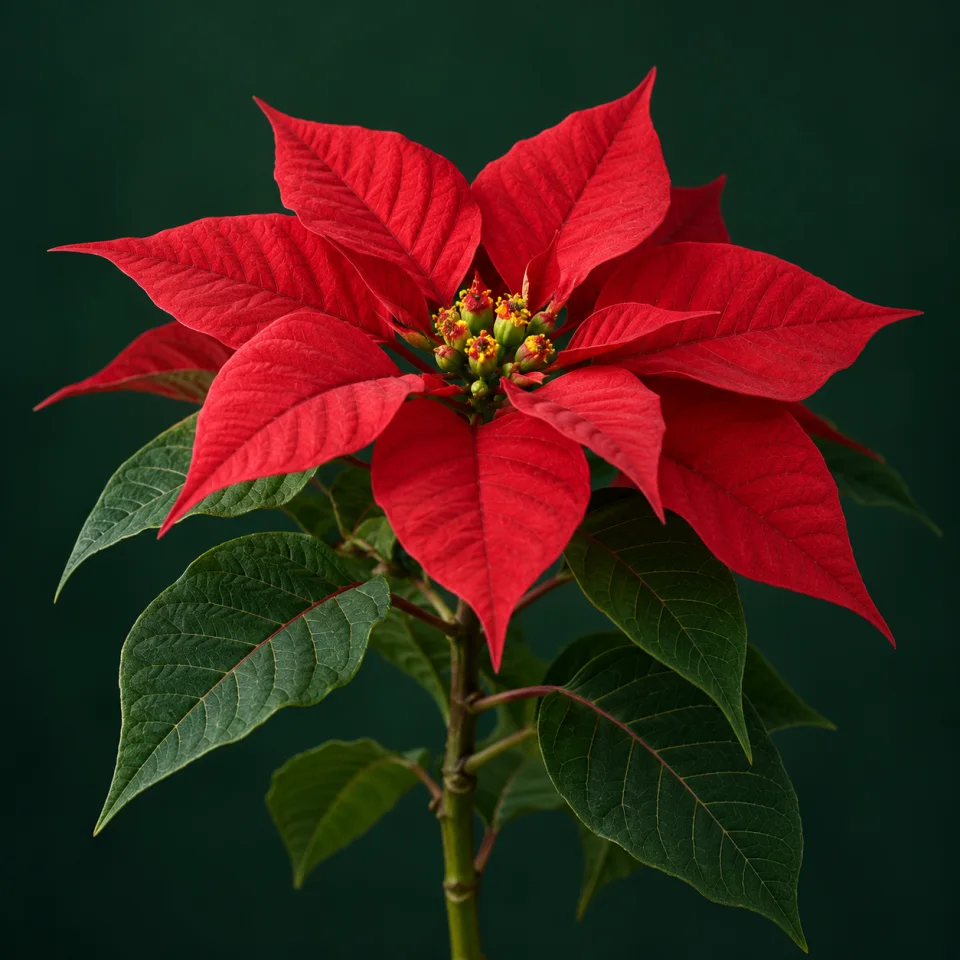
Botanical reference: Euphorbia pulcherrima
The colour comes from bracts
The most visible red parts of Euphorbia pulcherrima are bracts. These modified leaves surround the small flowers. Other shades are available even though we show a red form here. Choose the colour around the recipient’s taste and ask how large the whole plant is. Pot size alone does not tell you how much room the canopy needs.
Plan the delivery and its place at home
Avoid cold draughts and heat sources. Find another position if the gift would wait beside a door or radiator. Ask the nursery for watering instructions and protection for the journey. A decorative cover can complete the gift if the growing pot remains easy to remove and its drainage can be checked.
What to check before buying
Choose a plant that is not wilting or dropping leaves or bracts. Look at the plant you will take rather than just its presentation colour. If parts look damaged ask about another one. Do not choose a damaged plant on the assumption that watering will revive it.
Explain where it will wait before the gift and how long the journey takes. You could ask “I want a poinsettia for a small table. I will give it this afternoon and part of the journey is on foot. How can you protect it and which instructions should I include?” Confirm the size with its wrapping and container.
From wrapping to the first watering
Cover the top during transport to protect it from cold. Plan a direct journey and delivery when someone can receive it. A protective bag does not make the plant frost hardy or allow it to wait outdoors.
If you have more shopping to do, collect the poinsettia last. Do not use a parked, unheated car as a waiting place in cold weather. If you cannot take it straight to a suitable indoor space, arrange collection closer to your visit or choose another delivery date. Protective wrapping helps during transport but does not replace a warm place.
Once indoors, remove the sleeve covering the leaves and bracts. Put the plant in a bright spot without touching cold glass or receiving direct radiator heat. Distinguish that transport sleeve from the decorative outer pot, which must be removable for watering. Before watering simply because it has arrived, touch the compost surface; if it is still moist, do not water it again.
On arrival check that water can drain from the growing pot. Water when the compost surface feels dry and avoid overwatering. For watering, remove the growing pot from its cover, let it drain and empty excess water from the cover or saucer. Follow the plant’s instructions instead of setting a daily watering routine based on the time of year.
Keep it green or try to bring back the colour
You can keep caring for a poinsettia after Christmas even when its coloured bracts fall. Keep it in a bright position protected from cold, check the potting mix surface before watering and let excess water drain away. A plant with green leaves can still have a place in your home.
Keeping it alive and getting its colour back are different goals. Flowering and bract colour respond to short days and long nights. Artificial light in a room used at night can interrupt that process. Fertiliser does not replace the period of darkness.
One home routine to try with a healthy plant is 16 consecutive hours of complete darkness and 8 hours of bright light each day for several weeks. For example, darkness from 18:00 to 10:00 and light from 10:00 to 18:00. Do not leave it shut away in darkness all day. Choose a place where you can keep that schedule without exposing it to cold.
If that routine does not fit your home, you can enjoy it as a green plant. Over time, it may also grow taller than when you bought it. For a gift with coloured bracts on a particular date, choose a plant already looking that way close to delivery, rather than relying on your own being ready.
If there are cats, dogs or small children at home
Poinsettias have a milky sap that is irritating. According to the ASPCA, it can irritate the mouth and stomach of dogs and cats and sometimes cause vomiting, although its toxicity is generally over-rated. Poison Control, the US poison information service, explains that it is not fatal for children either: biting it can cause mouth irritation and stomach upset, and the sap can cause a skin rash.
You don’t need to give it up, but place it out of their reach, for example on a high piece of furniture or in a room they don’t go into. If you trim a broken stem, wear gloves and keep the sap away from your eyes; NC State Extension warns that it can affect people with a latex allergy.
If you’re giving it to a home with a cat, a dog or a crawling baby, mention it first: the person can then choose where to put it or ask you for another plant. If an animal or a child has bitten it and you’re worried, call their vet or your local poison information service.
When we suggest this flower
Compare flowers to choose the format, colours and care that suit the occasion.
Christmas
Spain · Nationwide
An idea for someone who wants a Christmas plant. Check where it will go and how it will get home. Red is a colour choice, and care instructions should come with it.
Immaculate Conception
Spain · Nationwide
If you are visiting over the long weekend and the household likes plants, a poinsettia suits December. Protect it from the cold on the way and pass on its care instructions.
Christmas Eve · Heiligabend
Germany · Nationwide
Main flower in our selectionA suggestion for someone who wants and can care for a houseplant. Check the size and protect it from cold during the journey.
First Sunday of Advent
Germany · Nationwide
Main flower in our selectionFor an Advent visit we suggest a potted poinsettia. Protect it from the cold on the way home and remove its transport wrapping on arrival.
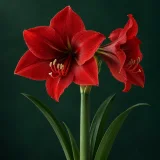
St Nicholas Day · Nikolaustag
Germany · Nationwide
A potted poinsettia is another home gift idea where there is a bright spot away from direct heat. Wrap the plant against cold for the journey and remove the protection on arrival.
Christmas Day
Mexico · Nationwide
Main flower in our selectionThe poinsettia, known as nochebuena, is part of Christmas decoration in Mexico. We suggest a potted plant for a spot at home with bright indirect light and room for its care.
National Poinsettia Day
Mexico · Nationwide
Main flower in our selectionA potted poinsettia to celebrate the plant on 8 December. If you would like one grown in Mexico, ask about its provenance when choosing it.
Christmas Day
United Kingdom · Nationwide
Main flower in our selectionA plant for the home if you prefer to leave the dining table free. Consider its indoor position and protect it from cold during transport.
Christmas Day
United States · Nationwide
Main flower in our selectionA poinsettia can be a gift for the home that leaves the dining table clear. Choose its size for the space where it will stand.
National Poinsettia Day
United States · Nationwide
Main flower in our selectionChoose a potted poinsettia in a colour and size that suit their home. Add a decorative pot that lets you remove the plant to water it and empty any excess water.
Christmas · Natal
Portugal · Nationwide
Main flower in our selectionNatal is celebrated in Portugal on 25 December; Consoada brings the family together for dinner on the 24th. We suggest a potted poinsettia as a gift for the home. For flowers on the table, choose a low arrangement with a container and plan delivery for the actual lunch or dinner.
Christmas in Italy
Italy · Nationwide
Main flower in our selectionFor Natale in Italy, we suggest a poinsettia with an outer pot for a bright corner indoors. Protect it from cold on the journey and arrange delivery for the visit on the 24th or 25th.
Christmas in the Netherlands
Netherlands · Nationwide
Main flower in our selectionIn the Netherlands, Eerste and Tweede Kerstdag, 25 and 26 December, are public holidays and shops close unless the municipality grants an exemption. We suggest a kerstster, the poinsettia, for a bright corner of your host’s home. Buy it by the 24th at the latest, well wrapped against the cold, and unwrap it when you arrive.
Christmas Eve in Poland
Poland · Nationwide
Main flower in our selectionWigilia, Polish Christmas Eve, is on 24 December and has been a public holiday in Poland since 2025. For the home that welcomes you we suggest a poinsettia, one of the most popular Christmas decorations in the country. Ask for it to be well wrapped: it is damaged below 15 °C.
Christmas in Belgium
Belgium · Nationwide
If you would rather give a plant, a poinsettia suits a bright indoor spot away from radiators and cold windows. Ask for it to be wrapped for the journey, as December cold damages it, and unwrap it on arrival.
First Sunday of Advent
Austria · Nationwide
Main flower in our selectionFor an Advent visit we suggest a potted poinsettia. Buy it on Saturday, because almost all shops close on Sunday, and carry it wrapped and away from draughts.
Poinsettia Day · Tag des Weihnachtssterns
Austria · Nationwide
Main flower in our selectionIt is the day devoted to this plant. Choose one with dense foliage and yellow-green central flowers that has not stood by a cold door, and carry it wrapped to a bright spot without draughts.
Christmas Eve · Heiliger Abend
Austria · Nationwide
If the plant will stay indoors, we suggest a poinsettia. Buy it before shops close on the 24th and carry it wrapped, without waiting in the cold.
Which flowers to give in autumn and winter
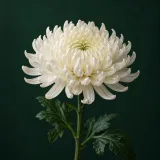
For autumn or winter flowers I would first ask whether the recipient prefers a bouquet or a plant. You could ask about chrysanthemums or carnations for a bouquet. Poinsettias, cyclamen or primulas are potted options if a suitable place is available. Check stock and each plant’s needs because they do not all tolerate the same cold. For an Advent visit in Germany, choose a bouquet in a vase if the table is already decorated, a low centrepiece for a planned space on it, or a wreath with four candles to mark the Sundays of Advent.
Guides to help with your decision

Which flowers to give for Three Kings’ Day in Spain
6 January 2027 is a Wednesday and a public holiday across Spain. Which flowers to give for Three Kings’ Day, when to buy them around the 5 January parade and plants that last.
Kūčios in Lithuania: the date and what to bring if invited
Kūčios is celebrated on 24 December in Lithuania. Lisianthus or gerberas with a vase as a gift, with ideas for arranging collection and the journey.
Christmas in France: cut amaryllis, a table arrangement or a bulb
For Noël, compare cut amaryllis, a low arrangement and a potted bulb. Choose the stage of the flowers and prepare a gift that suits the table or the home.
Epiphany in Italy: the Befana and a plant for after the holidays
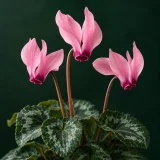
6 January 2027 falls on a Wednesday and is a public holiday in Italy. The Befana fills stockings on the night of the 5th; if you want to add flowers, choose a plant that carries on once the festive season is over.
Should you give a bouquet or a potted plant?
Choose between a bouquet and a plant according to space and care. Compare houseplants with a rose bush for Sainte-Catherine in France on 25 November.
How to transport a bouquet by car or plane
How to carry a bouquet, a potted plant or dried flowers without crushing them. Packing, water and checks for flights and bringing plants into your destination.
Which flowers to give to someone with cats or dogs
Flowers for a home with cats or dogs: options to consider, checking the whole bouquet and precautions with lilies, holly and mistletoe at Christmas.
Frequently asked questions
Should a poinsettia be thrown away after Christmas?
No. You can keep it as a green plant with light and watering guided by the potting mix. Bringing back coloured bracts requires a period of short days and long nights uninterrupted by light. You do not have to attempt that process to keep enjoying the plant, and colour for next Christmas is not guaranteed.
Can it wait in the entrance hall until the recipient arrives?
Do not assume an entrance hall is suitable. It may be cold or draughty. Agree on a handover or a protected location that meets the plant’s needs.
Does a poinsettia need watering every day?
Do not use a fixed schedule. Check the compost and follow the plant’s instructions. Water when the surface feels dry without leaving it waterlogged.
Are poinsettias dangerous for cats and dogs?
Their sap irritates the mouth and stomach and sometimes causes vomiting, but the ASPCA says their toxicity is generally over-rated. Keep the plant out of reach and, if you’re worried about a bite, check with the vet.
Sources and what they support
- NC State Extension · Euphorbia pulcherrima
Describes coloured bracts, sensitivity to cold draughts and heat sources and watering when the compost surface is dry without overwatering. Advice for this species. Its milky sap can also cause contact dermatitis and reactions in people with latex allergies; advises gloves and keeping sap out of the eyes.
- RHS · Poinsettia: entrega y conservación
Selection and transport; also keeping a green plant, taller growth and bract response to short days without artificial light at night. Its British 8–10 week routine with less than 12 hours of light is not a worldwide calendar or colour guarantee.
- Ciencia UNAM · Nochebuenas: las hojas navideñas
Identifies Euphorbia pulcherrima as nochebuena and describes its bracts. Used for name and identity, without commercial figures or medicinal uses.
- UMN Extension · Conservar y volver a colorear la poinsettia
Distinguishes growing a green plant from restoring colour; proposes 16 uninterrupted hours of darkness and 8 hours of light each day. Minnesota holidays/seasons do not set dates in other countries, universal duration or success. General harmlessness wording does not support ingestion. Also: remove the outer pot, drain and avoid standing water.
- Iowa State University Extension · Poinsettia care
Recommends wrapping for transport, unwrapping on arrival, avoiding contact with cold window panes and checking the compost before watering, with the pot covering removed. Does not guarantee recovery from cold damage.
- ASPCA · Poinsettia
Euphorbia pulcherrima, toxic to dogs, cats and horses through its irritant sap: irritates the mouth and stomach and sometimes causes vomiting, but is generally over-rated in toxicity. Not a substitute for a vet’s advice.
- Poison Control · Are poinsettias poisonous?
US poison control service: not fatal if eaten; in children and pets it can cause mouth irritation and stomach upset, and the sap a skin rash; advises placing it out of their reach. Not a substitute for medical advice.
How we put these guides together
We review dates, care and recommendations to help you plan each gift.
Spotted something we should review? Contact Agenda Floral.