Guides
How to care for a marguerite daisy in a pot
Care difficulty5 out of 10
Pay attention to watering and growing conditions.
Editorial guide, with suitable light and climate. 0: very easy; 10: very delicate. More stars mean more care.
A marguerite daisy needs a sunny position, free-draining mix and water before its rootball dries right out. Remove spent flowers and check moisture, especially in wind. Where frost occurs, plan a cool, bright shelter. Being listed as an outdoor plant does not mean it can spend every winter outside.
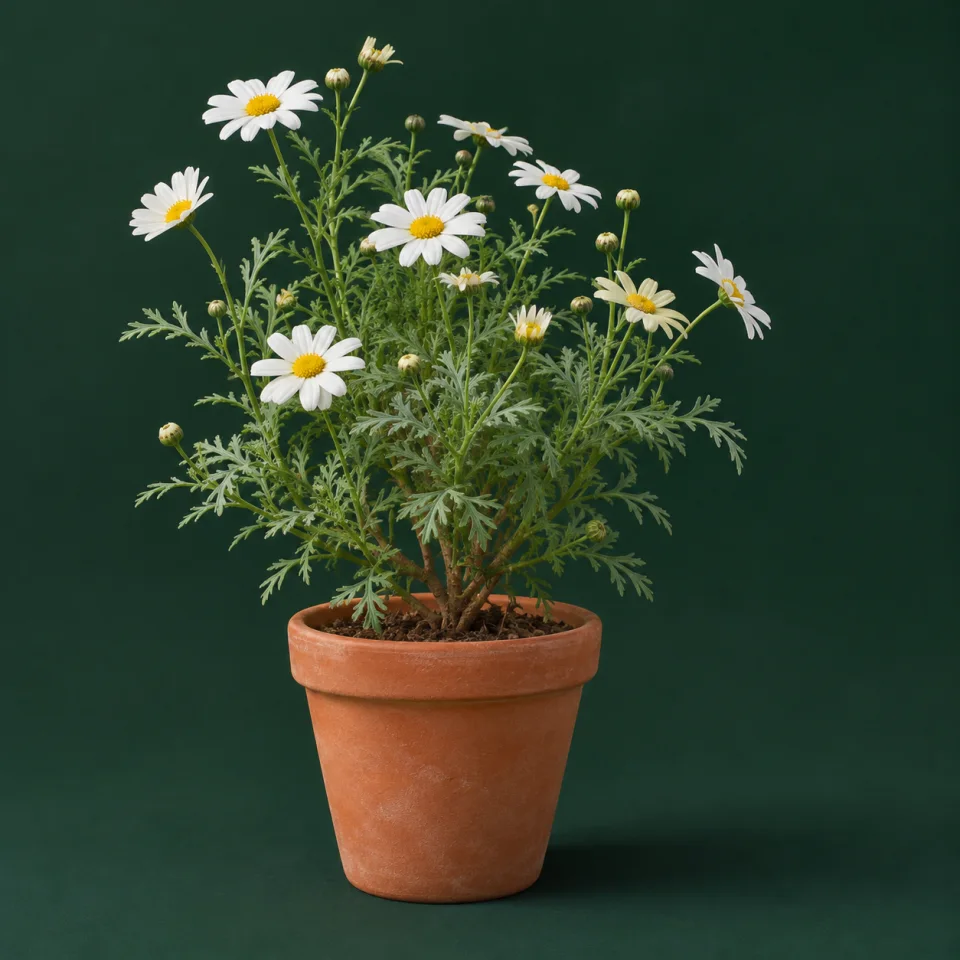
Botanical reference: Argyranthemum frutescens
This daisy has a specific identity
Look for Argyranthemum frutescens on the label: it forms a branching shrub with a woody base and deeply divided leaves. This is not advice for every daisy, such as Leucanthemum or Osteospermum. Varieties differ in size and colour. Choose one whose mature size fits the terrace and whose container you can move under shelter if your climate requires it.
Give it sun and time to adjust
Choose a sunny, airy position without squeezing it between other pots. If it came from sheltered conditions, increase exposure gradually rather than suddenly scorching its leaves. On a very hot terrace, check the container’s heat and the plant’s condition towards evening too. Reviewing its position and water makes more sense than trying to fix everything with fertiliser.
Water the rootball, not just the surface
Feel the mix below the top layer and assess the weight. As it starts losing moisture, water slowly to wet the rootball and allow drainage below, then empty the saucer. Do not wait for the whole plant to collapse or add water while the mix is still wet. Wind, size and exposure change frequency. If it wilts in moist soil, check heat and roots before watering again.
A draining pot with room for roots
Use free-draining outdoor container mix and a stable pot with clear drainage holes. Avoid packing it among plants already filling the same container. When roots fill the pot and maintaining manageable moisture becomes difficult, move it into a slightly larger one during active growth. Keep the same planting depth, without burying the woody base or routinely stripping healthy roots.
Modest feeding and removing finished flowers
During growth and flowering, use flowering-plant fertiliser according to the label, allowing for nutrients already in the mix. Do not double up products or increase doses because flowers pause. Remove faded heads with their short flower stalks, sparing nearby shoots. A loose shape is not a reason for blind drastic pruning: keep healthy green parts and check advice for the variety before cutting old wood.
Prepare for winter before the first frost
In frosty areas, find a bright, ventilated, cool shelter around 10 °C; check overnight lows there too. A dark shed or warm living room does not provide those conditions. Water less there according to the mix, avoiding a cold saturated rootball. In a mild frost-free climate it may remain outside in a suitable spot. When safe weather returns, acclimatise it gradually; do not copy a month from another hemisphere.
Few flowers, marks or wilting
For poor flowering, review sun, spent flowers, moisture and general health before adding products. Yellowing and wilting in wet mix call for checking drainage and roots. Leaf tunnels or visible insects need identification, not preventative treatment for everything. Remove unhealthy debris, leave room for air and seek help if damage spreads. A single photograph cannot establish the cause with certainty.
Time away, children and pets
Before leaving, ask someone to check the mix and empty the saucer; a windy terrace can dry a pot sooner than a sheltered one. Permanent water underneath is not a solution. This guide covers an ornamental plant, not flowers to eat. The name daisy is insufficient for assessing pet safety: keep the label and ask about the exact species. For chewing or symptoms, contact your vet; keep fertiliser and trimmings out of reach.
Which flowers to choose
Compare flowers to choose the format, colours and care that suit the occasion.
Guides to help with your decision

Which flowers to give to someone with cats or dogs
Flowers for a home with cats or dogs: options to consider, checking the whole bouquet and precautions with lilies, holly and mistletoe at Christmas.
How to care for petunias in pots and window boxes
Sun, watering, feeding and spent flowers for garden petunias, with variety differences and end-of-season care.
How to care for pot marigold through its growing season
Sun, moderate water, spent flowers, seeds and heat: Calendula officinalis care in containers, distinct from Tagetes marigolds.
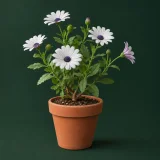
How to care for an African daisy in a pot
Sun, watering, flowering pauses and cold: practical care for an African daisy or osteospermum in a patio container.
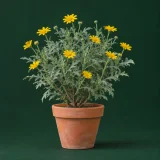
How to care for grey-leaved euryops in a pot
Sun, watering, drainage, pruning and winter care for Euryops pectinatus. Keep the shrub manageable and distinguish it from other yellow daisies.
Frequently asked questions
Is it annual or can it last several years?
It is a frost-sensitive perennial subshrub, also grown as a seasonal plant in colder climates. Suitable shelter lets you try to keep it, without a guarantee. Before buying a large replacement, check whether you really have the light, cool conditions and space for winter.
Can it be a houseplant all year?
We recommend it for sunny outdoor use. A cool, bright winter shelter serves a different purpose and does not make a dark living room suitable year-round. If you only have indoor space, start with that guide category and assess your actual daylight.
Sources and what they support
- RHS · Argyranthemum frutescens
Identity, sun, well-drained moderately fertile soil, deadheading and frost sensitivity. Outdoor does not mean frost hardy.
- Kwantlen Polytechnic University · Argyranthemum frutescens cvs.
Container cultivars and deeply divided leaves. Its flowering months and hardiness zone are not a promise for every patio.
- Pflanzenschutzamt Berlin · Kübelpflanzen: Überwinterung
January 2025 guidance: light and around 10 °C for overwintering Argyranthemum frutescens, condition-led watering and risk from cold soaked rootballs. No Berlin calendar copied.
How we put these guides together
We review dates, care and recommendations to help you plan each gift.
Spotted something we should review? Contact Agenda Floral.