Guides
How to care for an African daisy in a pot
Care difficulty4 out of 10
Pay attention to watering and growing conditions.
Editorial guide, with suitable light and climate. 0: very easy; 10: very delicate. More stars mean more care.
An African daisy suits a sunny terrace with a pot that lets water escape. Check the rootball before watering, remove spent flowers and avoid increasing fertiliser to fix a heat-related pause. To keep it for another year, check the variety and arrange protection where winters bring frost.
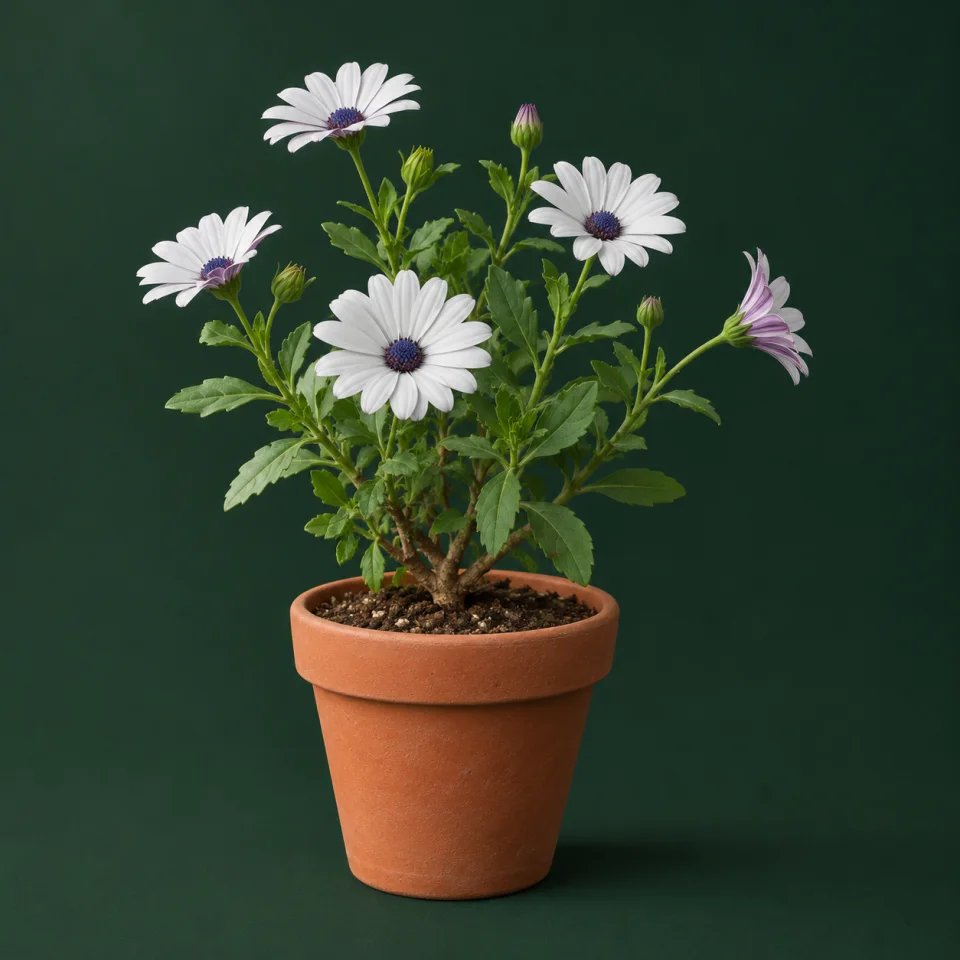
Botanical reference: Dimorphotheca ecklonis (sin. Osteospermum ecklonis)
Which African daisy this guide covers
This guide starts with Osteospermum ecklonis, accepted botanically as Dimorphotheca ecklonis, and offers guidance for related commercial forms. Many varieties are hybrids: keep the label to check size and hardiness. Its leaves are simple, unlike the deeply divided leaves of a marguerite daisy. A shared common name does not give different flowers the same winter or watering needs.
Sun, space and a gradual arrival
Choose a sunny position with space around it and shelter from cold winds. A plant raised under cover needs gradual adjustment to terrace exposure. Where a wall or paving heats the pot intensely, check its condition towards evening and soften the harshest exposure. Permanent shade to avoid all heat may also reduce flowers.
When and how to water
Feel below the surface and check whether the container is lighter. When the upper mix starts losing moisture, water slowly to wet the rootball and allow drainage. Remove saucer water; keeping some moisture does not mean submerged roots. Do not wait for complete drying or water already-wet mix by a timetable. If it wilts in moist mix, review heat and drainage before watering again.
Free-draining mix and a suitable pot
Use outdoor container mix that does not compact, with clear drainage holes. Avoid squeezing it among plants already filling the container. If roots fill the pot and water becomes difficult to manage, repot during growth into a slightly larger one. Keep planting depth without burying stem bases or tearing healthy roots. An enormous container will not fix mix that stays saturated.
Modest feeding and removing finished flowers
While growing and flowering, use flowering-plant fertiliser according to the label and existing nutrients. More product does not mean more flowers. Remove finished heads with their stalks, sparing nearby shoots; do not cut a flower simply because it appears folded once. Use clean tools for dry or damaged stems. Routine drastic pruning is unnecessary, and cutting old wood does not guarantee new growth.
A pause in heat is not always failure
Many varieties flower less during intense heat; others tolerate it better. If foliage stays healthy, review sun, moisture and spent flowers before adding fertiliser or treatments. Flowering may resume in milder conditions, without a guaranteed date. If the plant also declines, mix stays wet or roots are damaged, investigate that problem rather than attributing everything to summer.
Plan winter around your actual container
It is perennial, but is also grown seasonally where keeping it proves difficult. Do not assume every variety will tolerate frost on your terrace. To try keeping it, arrange a bright frost-free space before cold weather and check actual minimum temperatures there. Water less as growth slows without keeping a cold rootball saturated. When returning it outside, acclimatise and follow local weather rather than a universal month.
Pests, time away and animals
Check shoots and leaf undersides for aphids or other changes. Separate a confirmed infestation; marks or wilting also require checking water and roots before choosing treatment. When away, ask someone to check moisture and empty the saucer, without a permanent reserve beneath. It is ornamental, not food for people or pets. Prevent rabbits and rodents from chewing it because it can be harmful; ask about exact identity for other pets. For suspected ingestion, contact your vet and keep the label.
Guides to help with your decision

Which flowers to give to someone with cats or dogs
Flowers for a home with cats or dogs: options to consider, checking the whole bouquet and precautions with lilies, holly and mistletoe at Christmas.
How to care for pot marigold through its growing season
Sun, moderate water, spent flowers, seeds and heat: Calendula officinalis care in containers, distinct from Tagetes marigolds.
How to care for a marguerite daisy in a pot
Sun, watering, spent flowers and frost protection: practical Argyranthemum frutescens care for a patio or terrace.
How to care for a gazania in a pot
Sun, drying between waterings, closed flowers and cold: practical Gazania rigens care for a free-draining terrace pot.
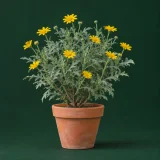
How to care for grey-leaved euryops in a pot
Sun, watering, drainage, pruning and winter care for Euryops pectinatus. Keep the shrub manageable and distinguish it from other yellow daisies.
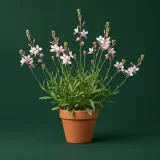
How to care for gaura in a pot
Sun, roots, watering, pruning and winter rain for Oenothera lindheimeri. Maintain its flower stems without confusing drought tolerance with freedom from care.
Frequently asked questions
Are all African daisies equally hardy?
No. Similar names cover different species and varieties. Performance in open ground in a mild climate does not guarantee results in an exposed pot. Check the label, local winter and realistic protection options before leaving it outside.
Why are the leaves healthy but flowers scarce?
Check for intense heat, insufficient light or many finished flowers. If roots and foliage are healthy, observe before trying to force flowers with extra fertiliser. Variety and conditions matter; a pause neither guarantees nor rules out another flush.
Sources and what they support
- Kew · Dimorphotheca ecklonis
Accepted name Dimorphotheca ecklonis and synonym Osteospermum ecklonis; perennial subshrub. A photograph does not establish a hybrid’s identity.
- RHS · Osteospermum ecklonis
Sun, drainage, spent flowers, winter protection and a specific warning for rabbits/rodents. H3 is not a frost-survival guarantee for any pot.
- Royal Botanic Gardens Victoria · Osteospermum ecklonis
Simple entire or toothed leaves, blue disc and often-hybrid garden varieties. No Australian flowering calendar or cultivar assignment to the image.
- Illinois Extension · Osteospermum
Container hybrids, sun and moisture with drainage; many varieties flower less in heat. Responses vary and local months are not copied.
How we put these guides together
We review dates, care and recommendations to help you plan each gift.
Spotted something we should review? Contact Agenda Floral.