Guides
How to care for gaura in a pot
Care difficulty4 out of 10
Pay attention to watering and growing conditions.
Editorial guide, with suitable light and climate. 0: very easy; 10: very delicate. More stars mean more care.
Gaura does best outdoors in sunshine with compost that lets water drain away. Although an established plant in the ground can withstand dry spells, a pot needs its rootball checked. Allow depth for roots and avoid keeping the crown wet through winter. Flowers open gradually along light stems; they do not all need to be open for the plant to be healthy. Before buying, check the selection’s size against the space available.
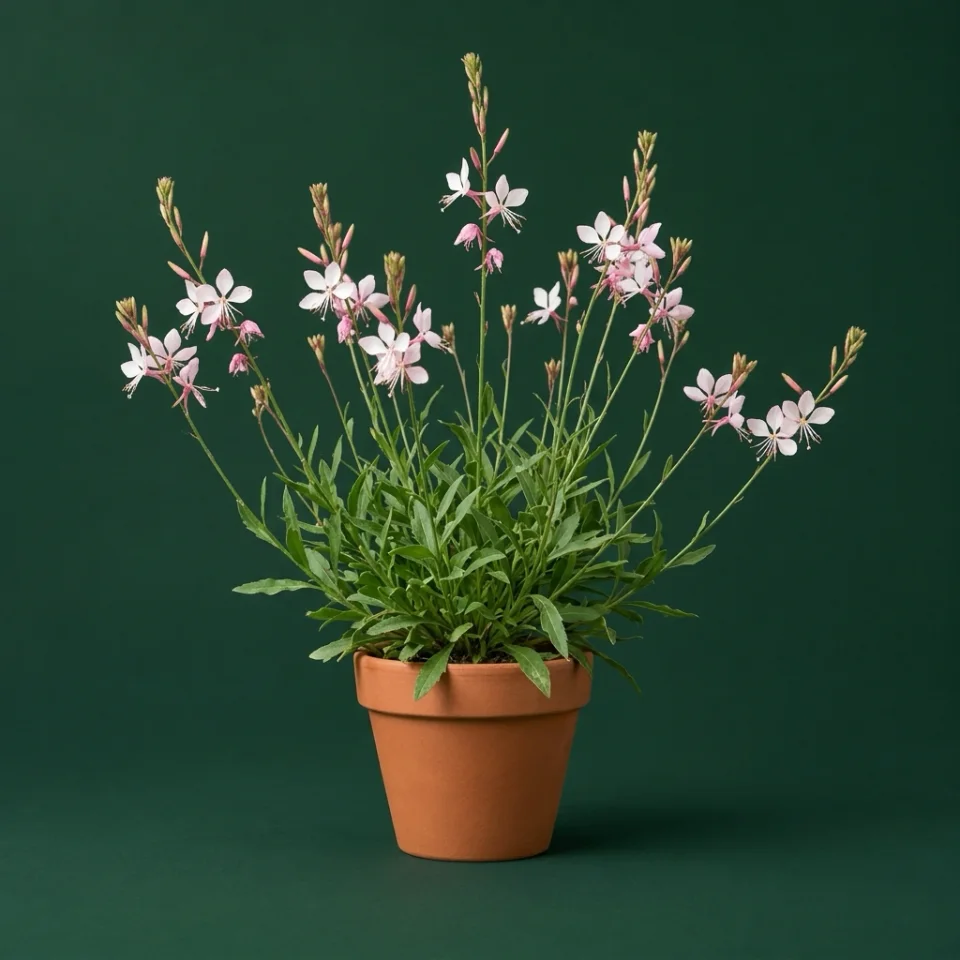
Botanical reference: Oenothera lindheimeri (Gaura lindheimeri)
A leafy clump with flowers on long stems
It is sold as Gaura lindheimeri or Oenothera lindheimeri. It has a basal clump of narrow leaves and a thick main root. Slender upright or arching flower stems rise above it, potentially taking up much more room than the pot. Flowers have four petals and long stamens; pink buds can open white before taking on pink tones. There are compact, tall and differently coloured selections. Keep the label: a photograph cannot certify a cultivar or its winter hardiness.
Choose sunshine with room for the stems
Choose a sunny terrace or garden position with space around it. Shade and excess nutrients can produce longer stems that flop. Constant wind also makes a tall plant in a lightweight container harder to manage. Use a stable base and some shelter without squeezing it between a hot wall and other pots. Increase exposure gradually if it comes from a covered nursery. Gaura is not a plant to keep in the living room all year.
A deep pot with clear drainage holes
Its main root benefits from downward space. Choose a container deep enough for the rootball and stable enough for the size stated on the label. Do not move a small specimen straight into a huge tub that can retain too much moisture. Keep the crown, where shoots emerge, at its previous level and leave watering space below the rim. Check holes and empty the outer pot. In mixed plantings, leave room to remove plants without tearing their neighbours’ roots.
An airy mix rather than very rich soil
A structured container mix with ingredients that support aeration and drainage is easier to manage than compacted garden soil. There is no need to turn the pot into pure sand or load it with manure and fertiliser. An excessively rich medium can worsen gaura’s shape. If water stays on the surface or the bottom remains saturated, inspect the container and mix. A moist, aerated rootball is different from submerged roots.
Water according to the rootball’s interior
Check moisture below the surface and the pot’s weight. When the upper layer has dried and below is no longer wet, water slowly to moisten the rootball, then let it drain. Heat and wind shorten the time between checks. Do not wait until the entire clump collapses or add a daily splash that wets only the top. A deep root helps with drought in the ground, but reserves and access to water are much more limited in a pot.
Moderate feeding and careful repotting
During growth, first account for nutrients already in the compost. If feeding is needed, use a fertiliser for flowering container plants according to its label, without raising the dose to chase flowers. Very soft growth may call for less feed rather than more. Repot in mild weather when roots or deteriorating mix justify it. Handle the rootball intact instead of routinely splitting the main root. Dividing an adult clump is not the simplest way to renew it.
Flowers and pruning with room for a pause
Flowers appear successively during the favourable season, which varies with climate. Some fall off naturally, so daily removal of every flower is unnecessary. Shortening finished stems can tidy the plant and reduce seed production. If all are cut together, allow for a pause until new flowering stems develop. Tall selections may benefit from trimming during growth to contain their shape. Do not replace this management with hard pruning just before cold weather.
Keep the crown clear and control winter moisture
It is a perennial, but selections do not all overwinter equally and individual plants do not necessarily live for many years. In cold climates the top growth may disappear and return later. Water demand falls then; stopped growth is not a reason to add water. Protect the container from severe freezing and prevent rain from keeping it saturated. Do not bury the crown beneath damp mulch. Remove dead or broken material and finish clearing the clump when new growth begins.
Flopping stems, spots and drooping leaves
If stems fall over, review light, wind, cultivar vigour and excess feed before adding stakes. Drooping leaves call for checking whether roots are dry or wet. A soft wet base may indicate deterioration from poor drainage. Inspect shoots and leaf undersides for aphids or whitefly; orange spots or a white powdery coating need identification. Do not spray preventively. Remove affected debris, improve spacing and ventilation, then choose treatment only once the cause is recognised.
Prepare for a few days away
Observe how this pot dries before an absence. Its carer should feel the mix instead of following an instruction to add a glass every morning. Test any drip system beforehand and confirm that water reaches the centre without saturating the bottom. A position sheltered from wind may temporarily reduce demand. Do not shut it in a dark room or submerge the container to make it last. Surviving a dry afternoon is not the same as managing a whole holiday unattended.
Handling an ornamental plant
This guide concerns an ornamental, not a vegetable or a flower for decorating food. Do not infer edibility from belonging to the same genus or family as a plant used for food. Prevent children and animals from chewing leaves or pruning debris, and wash hands after working. Following ingestion, keep the label for advice from a medical or veterinary professional. This guide provides neither safe doses nor a declaration that the plant is harmless to pets.
Guides to help with your decision
How to care for lavender in an outdoor pot
Sun, drainage, watering and pruning for potted Lavandula angustifolia, including winter care and warning signs.
How to care for garden verbena in a pot
Sun, water, feeding, spent flowers and white powder on leaves: care for compact or trailing garden verbena through heat and cold.
How to care for an African daisy in a pot
Sun, watering, flowering pauses and cold: practical care for an African daisy or osteospermum in a patio container.
Frequently asked questions
Has it died if stems disappear in winter?
Not necessarily. Cold can dry the top growth and new shoots may emerge late. Check the crown without digging up the root, and avoid keeping it soaked while waiting. A soft or rotten crown does need attention.
Why does it make many leaves but few flowers?
Review light and the amount of fertiliser added. Shade and excessively rich soil encourage untidy growth. Correct those conditions before adding nutrients or repeatedly cutting every stem.
Must every faded flower be removed?
No. Flowers drop and others open along the stem. Cutting some finished stems can tidy the plant and reduce seeds; cutting all at once temporarily interrupts flowering.
Will seeds give the same colour as the parent?
That is not guaranteed. The species and some selections can set seed, while fertility differs in others. Seedlings do not always retain a particular cultivar’s colour or shape.
Must I divide it whenever it fills the pot?
No. The main root can make dividing an adult clump difficult. Consider a slightly larger container and refreshed compost without breaking up the rootball. Do not cut the root to copy another perennial’s routine.
Is a bright window a suitable permanent home?
It is not a good choice for normal cultivation. Gaura needs sun and outdoor conditions. If winter requires container protection, arrange bright shelter suited to dormancy without treating it as a living-room plant.
Sources and what they support
- NC State Extension · Oenothera lindheimeri
Opened species profile uses Oenothera lindheimeri and explains the former Gaura lindheimeri. It describes the taproot, lance-shaped leaves, four petals and eight stamens, sun, drainage and reduced flowering in overly rich soil. It lists root rot, rust, powdery mildew and possible aphids or whitefly. Cultivars differ in height, colour and hardiness; its US season is not a universal monthly calendar. It provides no clinical safety classification for people or pets.
- University of Wisconsin–Madison Extension · Gaura
Opened page covers the move from Gaura to Oenothera, growth habit and compact selections for containers. It explains established drought tolerance, restrained feeding, natural flower shedding and a pause after cutting all stems. Large roots complicate division; cultivar fertility differs, with dormancy and unreliable overwintering in cold climates. Regional dates and zones do not guarantee survival in every country’s pots. Rootball checks and absence planning are editorial adaptations, not an independence trial.
How we put these guides together
We review dates, care and recommendations to help you plan each gift.
Spotted something we should review? Contact Agenda Floral.