Guides
How to care for a Boston fern in a pot
Care difficulty7 out of 10
Pay attention to watering and growing conditions.
Editorial guide, with suitable light and climate. 0: very easy; 10: very delicate. More stars mean more care.
Boston fern needs plenty of indirect light, a slightly moist root ball and air that is not very dry. Check the surface before watering instead of waiting for all the mix to dry. Let water drain and empty surplus. Dry tips also call for checking heat, humidity and feed: extra water cannot solve every cause.
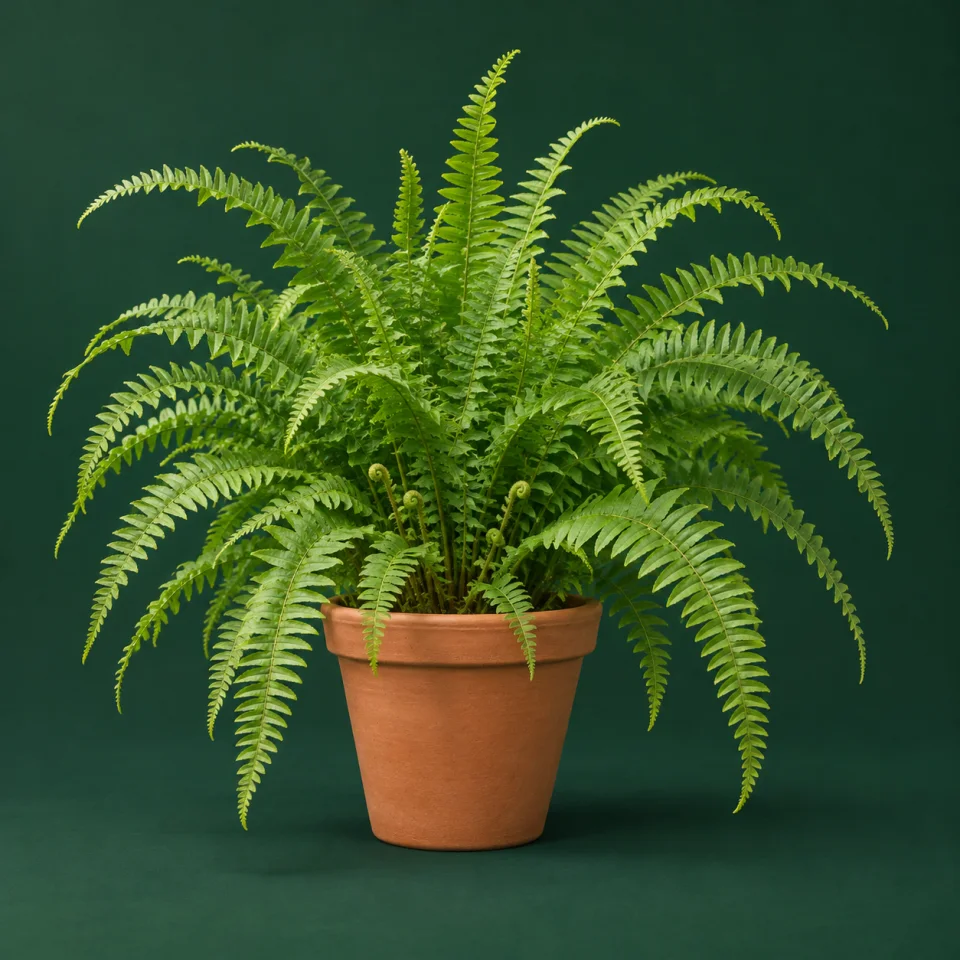
Botanical reference: Nephrolepis exaltata
Recognise fronds and runners
This guide covers Boston-type Nephrolepis exaltata, associated with Bostoniensis and related forms. Long arching leaves, called fronds, carry many small leaflets. It is not an asparagus fern, and ferns do not all need identical care. Long threads from the base can be runners producing new plants, rather than necessarily dead leaves. Keep the label to identify your form.
Brightness without strong sun or nearby heating
Place near a window with filtered light and room for arching fronds. Very dark rooms can cause shedding; harsh sun can bleach or scorch them. Avoid radiators, direct air conditioning and drying draughts. Choose a temperate, frost-free environment. If moving outside in mild weather, acclimatise to bright shade and bring back before cold.
Do not dry the entire root ball
Feel the surface and judge the weight. As it starts losing moisture while still a little damp, slowly water the root ball and let it drain. Empty saucers or cover pots. If still very wet and heavy, wait and check drainage. Slower growth needs less water, without a dry rest. Hanging baskets or warm rooms can dry faster: check the plant rather than a fixed day.
Air humidity matters too
Choose stable humidity with enough light; a windowed bathroom can work if it provides both. Misting changes the air briefly and does not replace watering. Constantly wet fronds or an unventilated enclosure are unhelpful too. In very dry air, moving away from heat and grouping plants with space for circulation may help. Do not compensate for dry air by filling the saucer.
Airy mix and gentle feeding
Use clear holes and houseplant mix that retains moisture without compacting. Repot when roots fill the container during growth, only one modest size up and at the same base level. A huge pot or annual repotting is unnecessary. During growth feed moderately according to the label and existing nutrients. Excess can brown tips; reduce or pause as growth slows and do not feed damaged roots back to health.
If you want to use a decorative container without holes, keep the fern in a draining inner pot that you can lift out. For example, water that pot outside the cover pot, let it drain and put it back once it stops dripping. Check afterwards that no water remains underneath. A layer of stones at the bottom does not replace drainage holes: water can remain in the potting mix just above it. Choose a combination that lets you lift out the pot without pulling on the fronds.
Prune and propagate without dismantling the clump
Cut dead fronds near the base with a clean tool, without pulling new curled growth. Cutting all healthy foliage is unnecessary. To propagate, divide a large clump retaining roots and fronds on each part, or separate a runner plantlet once independently rooted. Give a small pot, moderate moisture and indirect light. Division is optional and every piece is not guaranteed to thrive.
Underside dots, dry tips and pests
Ordered brown dots underneath can be sori, where spores form; do not automatically treat them as insects. Check the pattern and look for scale, mites, webs or honeydew too. Dry tips may accompany dry air, insufficient water or excess feed. Collapsing fronds in wet mix call for root and drainage checks. Separate an affected plant and identify the cause before applying products.
Absences and pets
Someone should check the root ball during an absence, especially in heat; standing water for days is not a substitute. Boston fern is listed as non-toxic to dogs and cats, but that does not cover every plant sold as a fern. It is not food, and feed or treatments have their own precautions. Prevent chewing and seek veterinary advice for illness after ingestion with plant and product names.
Guides to help with your decision
Which flowers to give to someone with cats or dogs
Flowers for a home with cats or dogs: options to consider, checking the whole bouquet and precautions with lilies, holly and mistletoe at Christmas.
How to care for a spider plant and understand brown tips
Light, watering, roots, plantlets and dry leaf tips: what to check when caring for a spider plant at home without overdoing water or feed.
How to care for a cast-iron plant in a pot
Aspidistra elatior light, watering, repotting and division. Care for its leaves without confusing resilience with darkness or constantly wet mix.
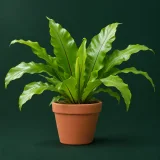
How to care for a bird’s nest fern in a pot
Asplenium nidus light and edge watering. Protect the rosette centre and distinguish sori, damaged fronds and root problems.
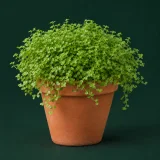
How to care for baby’s tears indoors
Moisture, light and roots for Soleirolia soleirolii: keep its green cushion hydrated without waterlogging, trim it and divide an established clump.
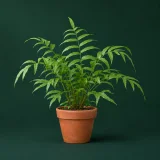
How to care for Pteris cretica indoors
Gentle light, humidity and watering for potted Pteris cretica. Prevent a dry root ball, renew fronds and tell spores apart from problems.
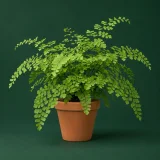
How to care for Adiantum raddianum indoors
Care for Adiantum raddianum: moist mix without standing water, gentle light, the surrounding air and what to do about dry fronds or black stems.
Frequently asked questions
Does misting replace watering the pot?
No. Roots need moisture in the root ball; misting affects the air only briefly. Feel the mix and water according to its condition, letting surplus drain. If moist mix accompanies dry tips, check air, heat, light and feed before adding more water.
Must I remove long threads from the base?
Not necessarily. They can be runners making plantlets rather than a disease sign. Keep them if space allows. Wait for a plantlet to develop its own roots before separating, and do not pull runners to lift the clump out of its pot.
Sources and what they support
- NC State Extension · Nephrolepis exaltata
Identity, cultivars, indirect light, moisture and underside sori. No guaranteed air purification, growth or freedom from pests.
- NYBG · Boston fern care
Bostoniensis guidance: light, moist root ball, roots and runners. No copied aesthetic cutting of healthy fronds, peat recipes or fixed feeding.
- Wisconsin Extension · Boston fern
Arching fronds, sori, moisture, excess feed, pests and division. Occasional drought tolerance is not dry cultivation or universal hardiness.
- RHS · Nephrolepis exaltata
Species, draining mix, filtered light, ventilation, humidity, dead fronds and rooted runners. No compulsory peat, universal months or constantly wet foliage.
- NC State Extension · Containers: humidity and air circulation
General container-growing principles: misting raises humidity briefly; a gravel layer does not improve drainage and water can remain in the mix above it. A pot with holes can be taken out of a decorative container for watering and draining. Not species-specific instructions for every fern or a potting-mix or household-humidity recipe.
- ASPCA · Boston fern
Boston fern is listed as non-toxic to dogs/cats, under spelling exalta bostoniensis. Not all ferns, edibility or safe applied products.
How we put these guides together
We review dates, care and recommendations to help you plan each gift.
Spotted something we should review? Contact Agenda Floral.