Guides
How to care for a bird’s nest fern in a pot
Care difficulty6 out of 10
Pay attention to watering and changes and signs of stress.
Editorial guide, with suitable light and climate. 0: very easy; 10: very delicate. More stars mean more care.
Bird’s nest fern needs indirect brightness and some moisture in the mix without standing water. Water the mix around the edge as the upper layer starts drying, rather than filling the rosette centre. Do not dry the entire root ball or pull new leaves. Protecting its growing centre matters more than pruning for neatness.
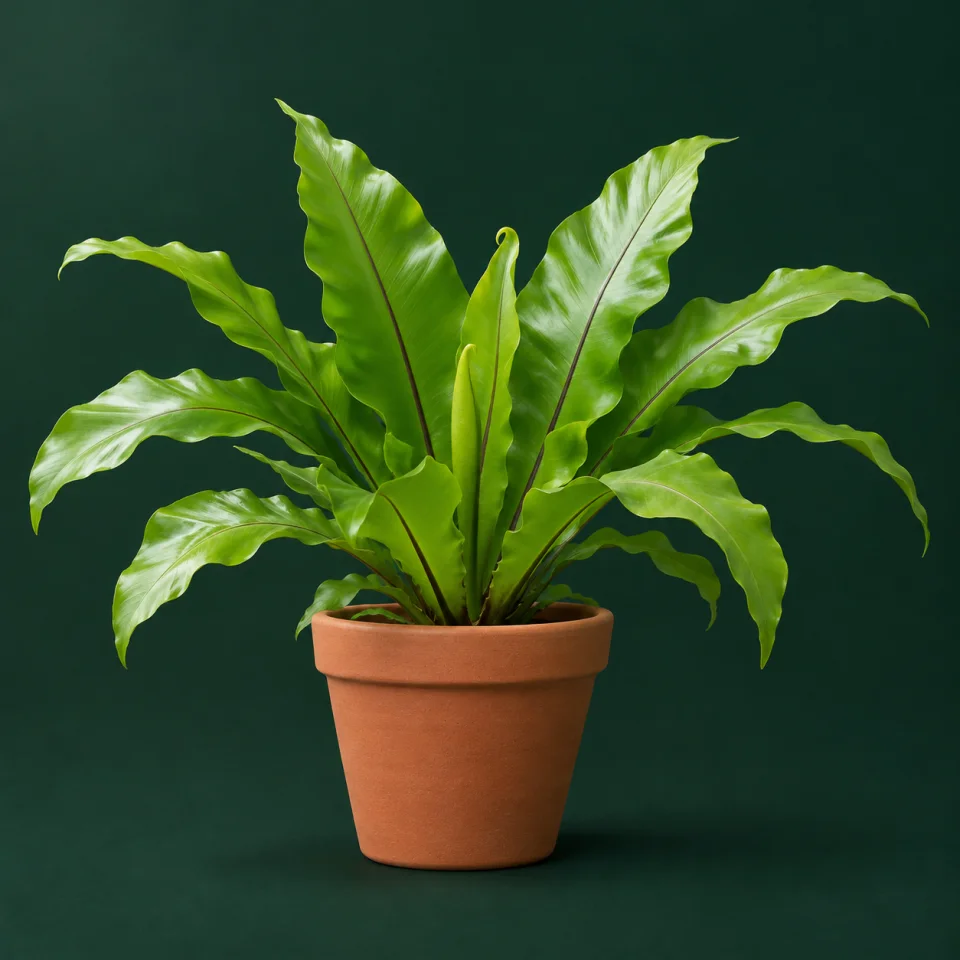
Botanical reference: Asplenium nidus
Recognise a rosette of undivided fronds
This guide covers Asplenium nidus, with broad undivided fronds, dark midribs and gently wavy edges. It lacks Boston fern’s feathery foliage. Other Asplenium species are sold as bird’s nest ferns too: keep the label rather than identifying a cultivar from curliness alone. Naturally it may grow on trees; at home it needs airy mix, rather than no medium or mist alone.
Filtered light and stable temperatures
Choose brightness near a window protected from strong sun, away from radiators and cold draughts. Do not hide it in a room with insufficient light. Temperate conditions with some humidity help the fronds; avoid very dry air and enclosed constantly wet corners alike. Outside in mild weather, acclimatise to bright shade and shelter again before cold. It cannot tolerate frost.
Aim water at the mix
Feel the upper layer and lift the pot to judge weight. As that layer starts drying, slowly water around the edge to moisten the root ball, then drain. Empty saucers or cover pots. Do not fill the centre as though it were a bromeliad reservoir. If still wet, wait; if everything dries, the wait was too long. Adjust water and checks during slow growth without a fixed day.
Pot and roots without burying the centre
Use clear holes and houseplant or fern mix retaining moisture without compacting. Growth is slow, so inspect roots before routine repotting. If they fill the container or mix deteriorates, repot during growth only slightly larger, keeping depth and leaving the crown uncovered. Support the root ball instead of lifting by the fronds.
Gentle cleaning and modest feed
Fronds damage when bent or rubbed forcefully. Remove dust carefully while supporting each frond and leave tender central growth alone. Constantly wet leaves are unnecessary. During active growth use a gentle fern-appropriate houseplant feed according to label and existing nutrients. Reduce or pause as growth slows. Extra feed cannot repair a damaged crown or roots lacking air.
Do not cut a single crown to propagate
Trim a dead or badly damaged frond near its base with a clean tool without injuring the centre. Do not halve a rosette with one growing point like a Boston fern clump. Spore propagation is an option requiring patience, not obligatory maintenance. If a pot contains separate centres, establish the plant and roots involved before attempting separation. Keeping it whole is equally valid.
Brown lines and loss of firmness
Ordered underside lines can be sori producing spores, rather than pests to scrape away. Check for scale, mites, honeydew and irregular damage too. Dry edges can accompany dry air, insufficient water or damaged roots. A soft base, bad smell or collapse in wet mix needs moisture and drainage checks. Separate an affected plant and identify the cause before products; ferns can be sensitive to treatments.
Absences and sharing a home
Leave instructions for checking mix, watering at the edge and emptying surplus. Arrange help during a hot absence rather than filling the centre or saucer. Do not use ornamental leaves as food or infer safety from every plant called fern. Prevent chewing and access to feed or treatments. For illness after an animal eats part, seek veterinary advice with the exact name and products used.
Guides to help with your decision
Which flowers to give to someone with cats or dogs
Flowers for a home with cats or dogs: options to consider, checking the whole bouquet and precautions with lilies, holly and mistletoe at Christmas.
How to care for a cast-iron plant in a pot
Aspidistra elatior light, watering, repotting and division. Care for its leaves without confusing resilience with darkness or constantly wet mix.
How to care for a Boston fern in a pot
Boston fern light, watering and humidity. Check dry tips, sori and roots without soaking the plant or drying its root ball completely.
How to care for a Christmas cactus in a pot
Light, watering, buds and cuttings for Schlumbergera × buckleyi. Care for this forest cactus without treating it like a desert plant.
How to care for an Aechmea fasciata indoors
Light, central-cup water and root care for the silver vase plant, plus what to do with fading pink bracts and the pups that follow.
How to care for baby’s tears indoors
Moisture, light and roots for Soleirolia soleirolii: keep its green cushion hydrated without waterlogging, trim it and divide an established clump.
How to care for Pteris cretica indoors
Gentle light, humidity and watering for potted Pteris cretica. Prevent a dry root ball, renew fronds and tell spores apart from problems.
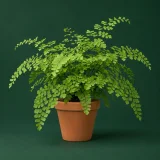
How to care for Adiantum raddianum indoors
Care for Adiantum raddianum: moist mix without standing water, gentle light, the surrounding air and what to do about dry fronds or black stems.
Frequently asked questions
Can I pour water into the central nest?
In a pot, watering the mix at the edge and avoiding accumulated water in the centre is preferable. New fronds arise there. Naturally catching rain and debris does not make the rosette a household reservoir to fill.
Why not divide it like Boston fern?
An Asplenium nidus rosette may have just one growing point. Cutting it can injure it without producing two viable plants. Multiple leaves are not multiple crowns. Study spores or establish genuinely separate centres before propagating; a healthy plant need not be divided.
Sources and what they support
- NC State Extension · Asplenium nidus
Identity, undivided fronds, dark midrib, light, moisture and fragile foliage. Not every commercial cultivar identified; no fixed size, hardiness or pest-free promise.
- Clemson Extension · Bird’s nest fern
Edge watering, upper-layer drying without drying all, drainage, mix and slow growth. No months, standing-water humidity or safety claim for every fern.
- RHS · Asplenium nidus
Indirect light, moist unsaturated mix, modest feed and damaged leaves. Lists division and spores, not permission to cut blindly through a single crown.
- Australian Tropical Herbarium · Asplenium nidus
Unbranched rhizome with one growing point, rosette and elongated sori. Supports protecting a single centre, not species/cultivar certification from our image.
- NParks · Asplenium nidus var. nidus
Corroborates rosette, narrow sori and spore propagation. Tropical icons are not domestic sun instructions; traditional uses are not food or medical advice.
How we put these guides together
We review dates, care and recommendations to help you plan each gift.
Spotted something we should review? Contact Agenda Floral.