Guides
How to care for Pteris cretica indoors
Care difficulty6 out of 10
Pay attention to watering and growing conditions.
Editorial guide, with suitable light and climate. 0: very easy; 10: very delicate. More stars mean more care.
Pteris cretica needs light without strong sun, humid air and a potting mix that holds moisture while letting excess water drain. Check the mix before watering and do not wait for the root ball to dry out completely. Keep it away from direct heating and choose a proportionate pot with drainage holes. Maintaining that balance helps more than misting fronds while the roots remain dry.
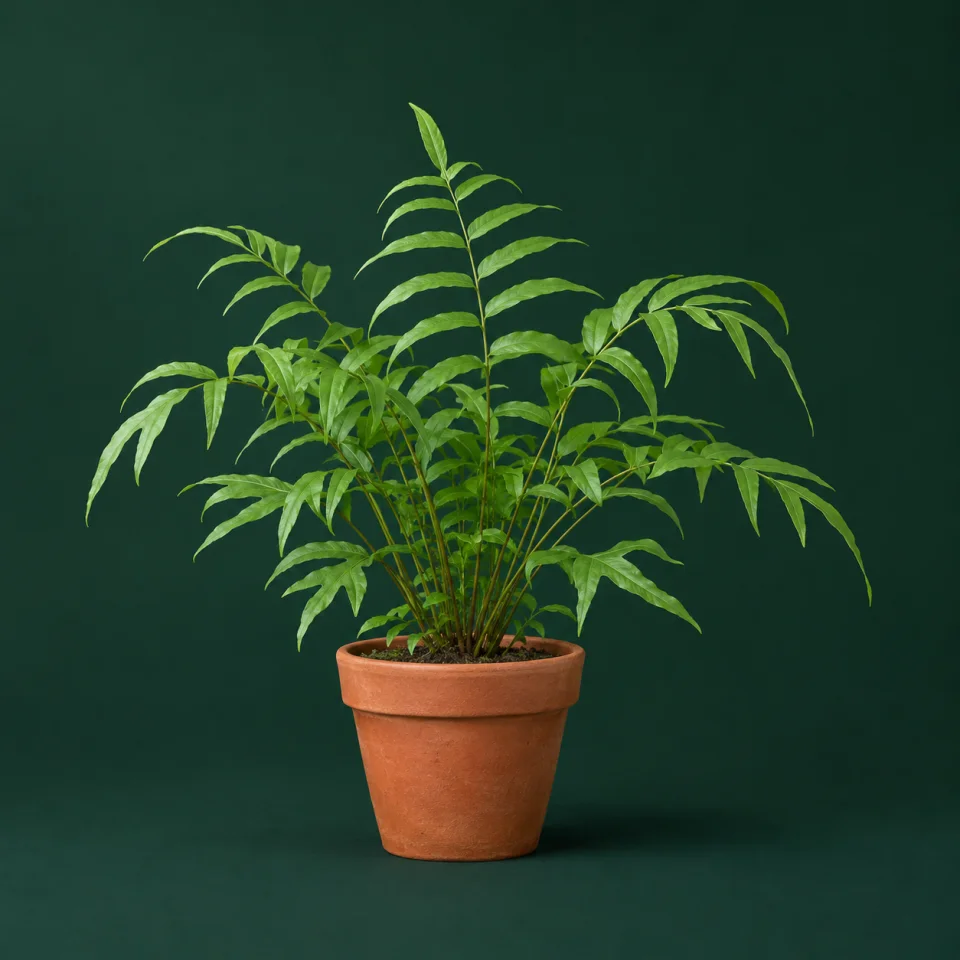
Botanical reference: Pteris cretica
Know which fern you are bringing home
Pteris cretica forms a clump of fronds, the fern’s leaves, divided into long green segments on fine stalks. It does not produce flowers. Keep its botanical label and any additional name when you buy it. White-striped plants sold as “Albolineata” have botanical and trade names that can vary; colour alone does not identify a species or variety. This guide focuses on green Pteris cretica. During its first days, watch how the potting mix dries before changing the container or adding fertiliser.
Choose light without overheating the fronds
Find indirect or filtered light near a window, with room for the fronds to spread without rubbing against the glass. A sheer curtain can help if strong sunshine reaches it. Bright shade does not mean a dark shelf at the back of a room. A well-lit side table, for example, may suit it better than a hot windowsill. If you move it, watch the new fronds and how the mix dries before moving it again.
Water as moisture fades, without waiting for drought
Feel the potting mix and check the pot’s weight. If it is still moist, do not add water out of habit. As it starts to lose moisture, water slowly to wet the root ball and let the excess drain through the holes. Empty the saucer or outer pot. Do not aim to dry all the mix as you would for a succulent, or leave roots submerged. Check sooner in heat or active growth; a cool setting or slower growth can mean a longer wait before water is needed.
Separate humid air from moisture at the roots
Dry air from a radiator or a hot draught can spoil fronds even when the potting mix is moist. A bathroom with a window and gentle ventilation may work if it provides enough light. If using a humidifier, keep it clean and avoid constantly wetting the leaves or floor. Misting does not replace watering or solve a very dry room on its own. Keep moderate indoor temperatures and protect the plant from frost, very cold glass and direct air-conditioning blasts.
Drainage holes and a mix that stays airy
Choose a container proportionate to the root ball, with unobstructed drainage holes. A fern or houseplant mix that retains moisture without compacting is more useful than heavy soil that stays muddy. Do not add stones at the bottom to compensate for a pot without an outlet. An outer pot can be decorative, provided you can lift out the inner pot and empty excess water. Terracotta may dry more quickly than other materials; check it in your home rather than copying another pot’s watering routine.
Feed lightly while it is growing
If it is producing fronds and the mix needs nutrients, use a houseplant fertiliser at the rate specified for ferns on its label. If none is given, ask for advice on that product instead of guessing a stronger dose. Fresh potting mix may contain fertiliser and need no immediate extra feed. Reduce or pause feeding when growth slows. Dry tips are not a signal to add fertiliser: check water, the surrounding air and roots first.
Repot or divide without pulling on the fronds
Change containers when roots genuinely fill the available space, rather than on a fixed date. Choose the next size up and maintain the previous planting depth without burying the point where fronds emerge. A healthy, crowded clump can be divided during active growth. Ease out the root ball and separate portions that retain roots and shoots, using a clean tool if needed. Plant them in proportionate containers with moistened mix. Dividing a dehydrated plant or one with damaged roots adds another strain; address its condition first.
Remove dry fronds and recognise spores
Cut dead or badly damaged fronds close to their base with clean scissors, without pulling them out or damaging new growth. Dry fronds do not turn green again, but that is no reason to cut back the entire clump. Fertile fronds can develop lines of spore-producing structures near the edges of their undersides. This regular pattern is part of the fern, not a flower or a pest to scrape away. Compare its distribution with any damaged areas before intervening.
Read changes before trying to fix them
Brown tips, shedding segments or a dull-looking clump can accompany different problems. Check whether the root ball is dry, moist or sodden and whether its exposure has changed. If dry, moisten it carefully and allow it to drain; do not compensate for missed watering by leaving it in water for days. With wet mix and dark or soft roots, check drainage and root condition before watering again. An isolated old frond can be removed; a rapid change throughout the plant calls for a broader check.
Look for pests before choosing a treatment
Check undersides and the junctions of frond stalks if you notice cottony deposits, attached bumps or fine webbing. Scale insects, mealybugs and mites can affect indoor ferns. Separate a plant with suspicious signs and identify the cause before choosing a treatment. Fronds are delicate: do not scrub the segments or experiment with mixtures of alcohol, oils or homemade preparations. If a product is needed, check that its label permits that use and follow its instructions for the plant and setting.
Plan time away and a safe position
For a long absence, ask someone to check the mix rather than water on a fixed day. Before leaving, water only if necessary and let it drain. Maintain good light without strong sun or direct heating. Flooding the outer pot does not provide a suitable reservoir for this container. Place it securely out of reach of chewing or pulling. Do not use it as food or assume the safety of another “fern” applies. If a pet eats it, keep the label and seek veterinary advice, especially if it shows discomfort.
Guides to help with your decision
How to care for a Boston fern in a pot
Boston fern light, watering and humidity. Check dry tips, sori and roots without soaking the plant or drying its root ball completely.
How to care for a bird’s nest fern in a pot
Asplenium nidus light and edge watering. Protect the rosette centre and distinguish sori, damaged fronds and root problems.
How to care for baby’s tears indoors
Moisture, light and roots for Soleirolia soleirolii: keep its green cushion hydrated without waterlogging, trim it and divide an established clump.
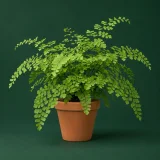
How to care for Adiantum raddianum indoors
Care for Adiantum raddianum: moist mix without standing water, gentle light, the surrounding air and what to do about dry fronds or black stems.
Frequently asked questions
Can I put it in a closed terrarium?
Humidity may help, but a closed container does not guarantee drainage, airflow or space. It needs room to spread its fronds and for you to check its roots. Before enclosing it, consider its mature size and how you will manage excess water. A separate pot makes these changes easier to correct.
Do narrower fronds mean it is unwell?
Not necessarily. Fertile fronds can have narrower segments than others. Check their firmness, the pattern of the change and any spore structures underneath before treating it as a problem.
Can I propagate it with a leaf in water?
A cut frond is not the same as a portion containing roots and shoots. Dividing a healthy clump is a more manageable starting point. Propagation from spores is possible but needs different conditions and patience. Do not expect a loose segment to make a plant like a pothos cutting.
Does it need a bigger pot to stop it drying?
Only if its roots need more space. A large pot with unrooted areas may remain too wet. If the current one dries quickly, first check heat, pot material and the root ball’s condition before increasing the size.
Can it go on a balcony?
Only if you can offer bright shade, suitable humidity and temperatures, and protection from cold and strong sun. Acclimatise it gradually and watch how the mix dries. Hardiness in the ground in a mild climate does not guarantee the same for an exposed pot.
Will it recover if all the fronds have dried?
Check for healthy shoots and roots before giving up or cutting everything off. Adjust watering and position carefully. New fronds depend on the plant’s remaining condition; a completely dried-out clump cannot be promised to regrow.
Sources and what they support
- Kew · Pteris cretica L.
Pteris cretica is an accepted Pteridaceae species. Recorded distribution and uses do not certify a commercial specimen, pot hardiness or food and pet safety.
- RHS · Pteris cretica
Green species, narrower fertile fronds, moist draining conditions and humid air; division or spores and removal of damaged fronds. UK hardiness categories are not guaranteed temperature limits for a household pot.
- RHS · Best bathroom plants
Distinguishes green Pteris cretica from white-striped Pteris nipponica, often sold under P. cretica var. albolineata. Indirect light and moisture; a bathroom needs natural light and its humidity depends on use. No cultivar certification from a photograph.
- UConn · Ferns: Indoor Growing
General indoor fern guide including Pteris cretica: diffused light, airy mix, proportionate draining pot, modest feeding, division and pest checks. Recipes, months, treatments and temperatures are not copied as universal species rules.
- Kansas State Extension · Table Fern, Pteris species
Pteris spp. profile, not an exclusive P. cretica assessment: indirect light, partial drying without a fully dry root ball, lower humidity demands than other ferns, roots sensitive to concentrated feed, division and pests. Its intervals and rates are not a universal schedule.
- Flora of New Zealand · Pteris cretica
Describes long segments and continuous sori along their margins. The flora notes uncertainty in the identity of New Zealand material in the aggregate; used to explain spore structures, not certify a commercial plant or transfer climate and distribution.
- ASPCA · Silver Table Fern, Pteris sp.
The profile classifies Silver Table Fern, scientific name Pteris sp., as non-toxic to dogs, cats and horses. It does not explicitly identify Pteris cretica or certify all species, cultivars, applied products or food use; not presented as a specific assessment of this plant.
How we put these guides together
We review dates, care and recommendations to help you plan each gift.
Spotted something we should review? Contact Agenda Floral.