Guides
How to care for an Aechmea fasciata indoors
Care difficulty5 out of 10
Pay attention to watering and growing conditions.
Editorial guide, with suitable light and climate. 0: very easy; 10: very delicate. More stars mean more care.
Aechmea fasciata needs filtered light, steady warmth and two separate checks: the water in its central cup and moisture around its roots. In a warm, bright position it can hold a little clean water between the leaves, but that supply needs refreshing; the potting mix should not stay soggy. After flowering, the parent rosette ages and pups can carry the plant on.
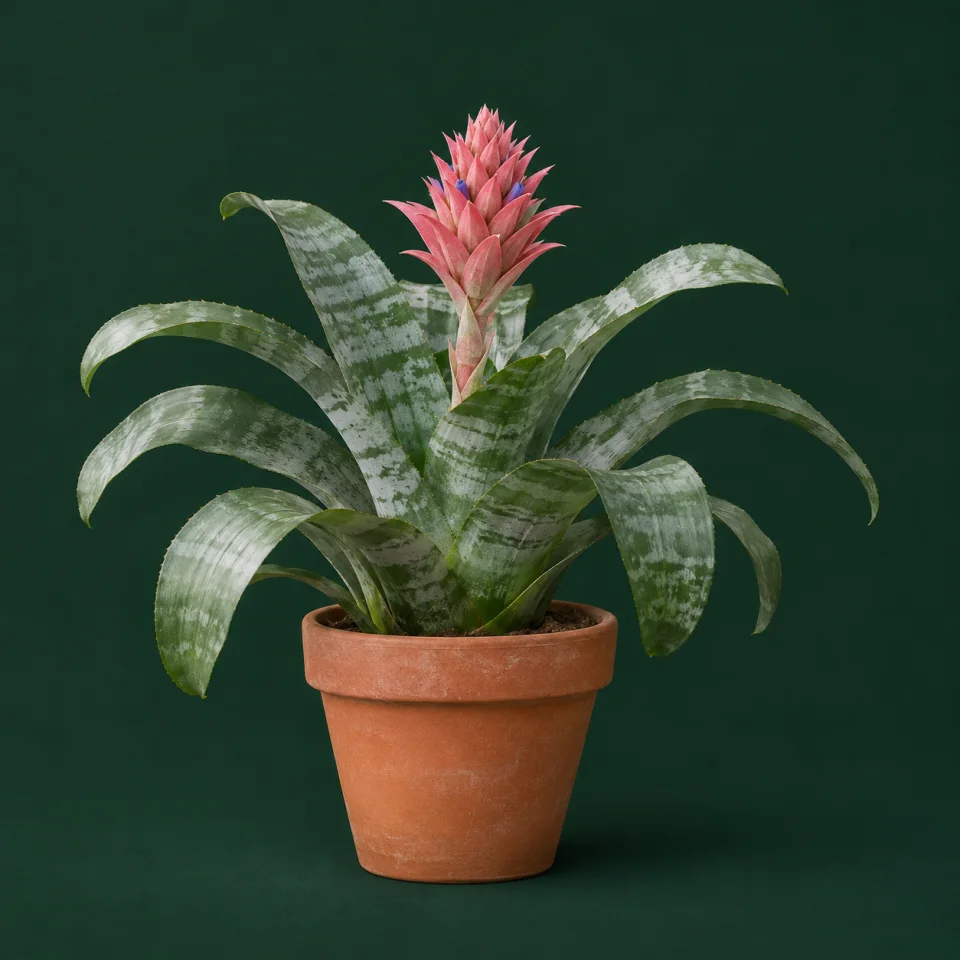
Botanical reference: Aechmea fasciata
Recognise the rosette and choose its place
Broad, firm, arching leaves form a cup, with silver bands and small teeth along their edges. The pink centre is mainly colourful bracts surrounding small blue or violet flowers. This is Aechmea fasciata, not any plant sold simply as a bromeliad: other species have different needs. Choose a bright window with strong sun filtered out. A well-lit bathroom may suit it; a dark one does not become suitable just because it is humid. Leave space so that people do not brush against the toothed margins.
Refresh the cup water gently
With suitable warmth and light, keep a small amount of clean water in the cup and check for debris or an unpleasant smell. Do not endlessly top up old water. Refresh it regularly, every few weeks as a guide and sooner if debris collects, without waiting for a bad smell. Remove it with a clean pipette or needle-free syringe, add fresh water and repeat gently to rinse, without overturning a heavy pot or flooding the mix. If the position becomes cool or dim, a permanent reservoir is not compulsory: empty it and restore suitable conditions before refilling. Check the roots as well; having a cup does not make them irrelevant.
Water the roots while keeping the mix airy
Feel the upper potting mix. When it has lost moisture, water moderately and let the excess leave through the holes. Keep some moisture during active growth without turning the pot into mud. With slower growth or cooler conditions, allow more drying and longer gaps. An epiphytic-bromeliad or orchid mix that holds a little moisture while draining freely is better than dense soil. It needs no enormous container: choose one that is proportionate and stable, keep leaf bases above the mix and leave no water in the outer pot.
Warmth, water quality and light feeding
Choose a comfortably warm, stable setting away from cold draughts, heaters and direct air-conditioning. Some humidity with gentle air movement helps; a closed, constantly wet corner does not. For the cup, use clean rainwater or distilled water suitable for plants at room temperature to reduce mineral deposits. Do not add vinegar or other homemade adjustments. If it is growing and you choose to feed, use a bromeliad-suitable product at a gentle label-approved strength, applied to the mix rather than the cup. Little growth means little need for extra nutrients.
Understand the flowers and the parent’s decline
The pink bracts can remain attractive after the small true flowers finish. Extra fertiliser will not make that same rosette flower again: it flowers once and then gradually loses vigour. Keep caring for it while leaves remain healthy and look for pups around the base. Remove the flower head when dry with a clean tool, without injuring the centre. Gradual ageing after flowering differs from a base that suddenly rots. The latter calls for checking water and plant condition rather than accepting it as the normal flowering cycle.
Let pups develop before separating them
Do not pull off a tiny shoot as soon as it appears. Wait for a well-developed rosette of its own, roughly one-third to half the parent’s size; this is a guide, not a measurement that guarantees readiness. You can leave it attached and remove the old parent when it dries. To separate a pup, use a clean tool, retain any roots it has and pot it in a small container of airy mix. Support it without burying the rosette, with warmth and gentle light as roots establish. Flowering has no fixed deadline.
Look closely before treating a problem
Dry tips call for checking the cup, mix, cold exposure and mineral deposits before adding water. Soft tissue, a bad smell or a rapidly deteriorating centre suggests rot: remove stagnant water and inspect the base. Do not confuse this with the slow decline of a parent that has flowered. Check leaf axils and undersides for cottony mealybugs or attached scale insects. Separate an affected plant and identify the problem before treatment. The silvery coating belongs to the leaf; do not scrub it off or use leaf-shine products to clean it.
Going away and handling spiny leaves
Before leaving, refresh cup water if appropriate and check the mix. Flooding both places will not safely extend the interval. Keep filtered light and a stable temperature. For a longer trip, ask someone to check cup and roots rather than follow a fixed watering day. Wear gloves to handle the rosette and keep it away from children’s or animals’ faces, as the leaf teeth can scratch. It is neither food nor a pet toy. If an animal eats it and shows discomfort, contact a vet with the plant’s name.
Guides to help with your decision

How to care for a Phalaenopsis orchid indoors
Light, watering and roots: care for a Phalaenopsis pot, spot problems and keep the plant after flowering.
How to care for a potted anthurium and keep roots healthy
Light, watering, airy mix, spathes and brown leaves: practical flowering anthurium care with clear reasons and pet precautions.
How to care for a bird’s nest fern in a pot
Asplenium nidus light and edge watering. Protect the rosette centre and distinguish sori, damaged fronds and root problems.
Frequently asked questions
Should I throw it away when the pink colour fades?
Not if healthy leaves remain or pups are forming. Colour may fade as flowering ends and the parent rosette will gradually age. Keep caring for the group; once developed, the new shoots allow it to continue as another rosette.
Can I water it only through the central cup?
In a pot, the mix and roots need checking too. A full cup does not fix completely dry potting mix, while topping up without checking can soak it. Adjust both water supplies to light, warmth and growth, refreshing the central water.
Sources and what they support
- Kew · Aechmea fasciata (Lindl.) Baker
Accepted species, a Brazilian epiphyte. Specific identity; silver bands do not certify a cultivar or justify borrowing other bromeliads’ care.
- RHS · Urn plant, Aechmea fasciata
Specific section: indirect light, refreshed central water, root watering after upper-layer drying, warmth/humidity, light feed to mix and infrequent repotting. Bracts/flowering followed by decline and pups. No UK months, lethal temperatures or global schedules.
- NC State Extension · Aechmea fasciata
Silver rosette, central cup, pink bracts and small violet flowers; one flowering per rosette, pups and rot/scale risks. Constant mix moisture, fixed pup height and flowering age are not universalised; no safety inferred from a missing warning.
- RHS · How to grow bromeliads
Family guide: refreshed low-mineral water, airy mix, light feeding, ageing rosette and developed pups for division. Its temperatures, months and cup feeding are not imposed: specific fasciata/UF advice to feed the mix takes priority.
- UF/IFAS Extension · Bromeliads at a Glance
General guide distinguishing indoors/outdoors: refresh/drain cups, drainage, avoid retained water in cold, light feed to the mix rather than tank. Not a fasciata-specific trial; Florida thresholds and drought tolerance are not transferred to every home.
- Universität Zürich · Aechmea fasciata, CliniTox
Exact profile considers it presumably non-poisonous because published evidence of toxicity was not found; not fodder, with armed margins. Not a pet-safety trial or exact ASPCA profile; no absolute safety label.
How we put these guides together
We review dates, care and recommendations to help you plan each gift.
Spotted something we should review? Contact Agenda Floral.