Guides
How to care for a potted anthurium and keep roots healthy
Care difficulty6 out of 10
Pay attention to watering and growing conditions.
Editorial guide, with suitable light and climate. 0: very easy; 10: very delicate. More stars mean more care.
A flowering anthurium needs bright indirect light, steady warmth and roots with both moisture and air. Let the upper mix dry before watering and empty retained water. Attractive spathes do not depend on keeping the pot constantly wet or adding unlimited fertiliser.
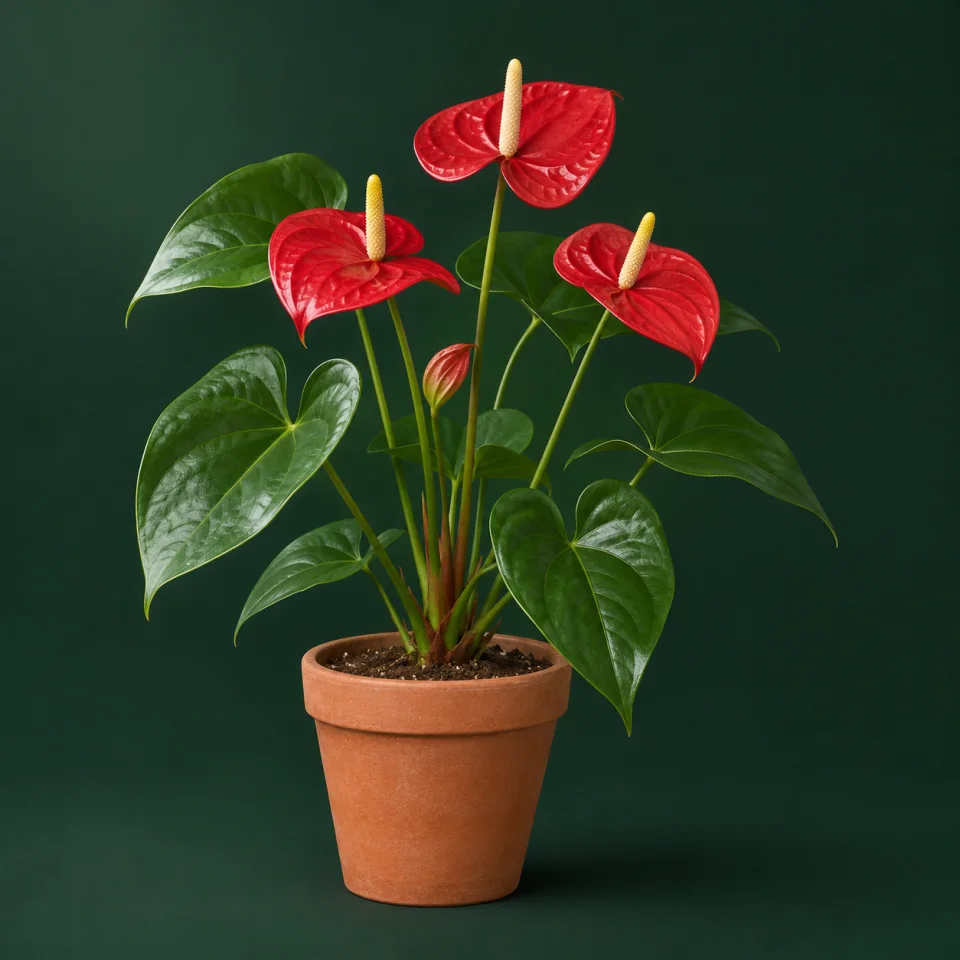
Botanical reference: Anthurium andraeanum
Check which anthurium you have
This guide focuses on Anthurium andraeanum and flowering hybrids, with heart-shaped leaves and colourful spathes around a straight spadix. Foliage anthuriums may need different conditions. Keep the label. Choose a bright indoor position you can check; if children or pets chew plants, choose something else rather than relying on a high shelf.
Filtered light and a steady temperature
Place it near a window without strong sun on the leaves. A sheer curtain can soften intense exposure. Avoid cold draughts, direct heaters and abrupt changes when bringing it home. If new spathes stop appearing, review light and growth first; sudden strong sun or extra fertiliser cannot replace suitable conditions.
Water as the mix starts drying
Feel several centimetres below the surface and check the pot’s weight. Allow the upper layer to lose moisture before watering slowly; moisten the rootball, let it drain and empty the saucer or outer pot. Do not let everything become dust-dry, but do not water simply because a week has passed. If it droops in wet compost, check drainage and roots first.
An airy mix and only a modestly larger pot
Use an airy aroid mix retaining some moisture while draining well, with bark and porous components; a slightly acidic medium suits it. Avoid heavy garden soil. Once roots fill the container, move one modest size up with clear drainage holes and the base at its existing depth. Healthy roots need not be pulled apart routinely.
Humid air without submerged roots
Keep it away from very dry, hot air. Grouping with plants while leaving space between leaves and wiping dust with a soft damp cloth can help its care. A water tray must never submerge the pot’s base. If hard water seems involved in persistent problems, try clean room-temperature rainwater; do not improvise vinegar or acid mixtures.
A measured approach to feeding and cutting
During growth, use a feed labelled for anthuriums or orchids, following its instructions and accounting for nutrients in the mix. Do not increase doses to force flowers or feed waterlogged roots. Spathes are modified leaves; the spadix carries tiny flowers. Remove faded flower stalks or leaves at the base with clean tools and gloves. Healthy parts need no shaping.
Brown edges, yellowing or insects
Dry edges may involve dry air, sun, watering or salts: assess the whole plant first. Several yellow leaves in wet mix call for checking excess water and roots. Inspect undersides and leaf joints for possible mealybugs or other insects, isolating confirmed problems. One mark is no reason to spray or combine several treatments.
Holidays and pets
Lower light or slower growth usually reduces water use: check before keeping the same routine. When away, ask someone to assess moisture rather than leaving water in the saucer. Ingestion is harmful and sap can irritate; anthurium can cause pets pain in the mouth and throat. Keep trimmings out of reach, wear gloves and contact a medical professional or vet for suspected ingestion, without home remedies.
Which flowers to choose
Compare flowers to choose the format, colours and care that suit the occasion.
Guides to help with your decision
Which flowers to give to someone with cats or dogs
Flowers for a home with cats or dogs: options to consider, checking the whole bouquet and precautions with lilies, holly and mistletoe at Christmas.
How to care for a Phalaenopsis orchid indoors
Light, watering and roots: care for a Phalaenopsis pot, spot problems and keep the plant after flowering.
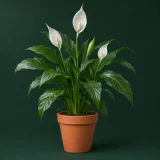
How to care for a peace lily without waterlogging its pot
Light, drooping leaves, watering, green spathes and repotting: practical peace lily care with precautions for children and pets.
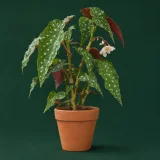
How to care for a polka dot begonia in a pot
Filtered light, moist roots without waterlogging and moving air for Begonia maculata. Supports, trimming and signs to check before reaching for water.
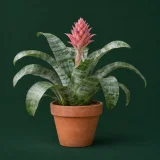
How to care for an Aechmea fasciata indoors
Light, central-cup water and root care for the silver vase plant, plus what to do with fading pink bracts and the pups that follow.
Frequently asked questions
Why is it not making new spathes?
Check bright indirect light, healthy roots and active growth. Variety, maturity and surroundings matter; there is no guaranteed date. A flowerless period does not necessarily mean it needs more water or feed.
Can I keep it in a bathroom?
It may suit a bathroom with enough natural light, stable warmth and space. Humidity does not compensate for darkness or require wet roots. Assess the window and whether you can easily check the pot.
Sources and what they support
- RHS · Anthuriums
Indirect light, steady warmth, humid air, an airy slightly acidic bark-containing mix, modest pot-size increase, drying before watering and pruning faded parts only. No universal months or frequency.
- NC State Extension · Anthurium andraeanum
Identity, heart-shaped leaves, spathe and straight spadix, indirect light, watering after surface drying, cold sensitivity and ingestion risk. Species scope; other anthuriums and cultivars may differ.
- Pet Poison Helpline · Anthurium
Anthurium oxalate crystals can irritate pets’ mouths and throats when chewed. Prevent ingestion and seek veterinary advice, without a safe dose or home treatment.
How we put these guides together
We review dates, care and recommendations to help you plan each gift.
Spotted something we should review? Contact Agenda Floral.