Guides
How to care for an arrowhead plant in a pot
Care difficulty4 out of 10
Pay attention to watering and growing conditions.
Editorial guide, with suitable light and climate. 0: very easy; 10: very delicate. More stars mean more care.
Give an arrowhead plant indirect light, warmth and water when the surface of its potting mix starts to dry. Wet the root ball, let it drain and empty the outer pot, without waiting for the whole mix to dry out. It can trail or climb with support. Leaves and sap can irritate; keep them away from children and pets that might chew them.
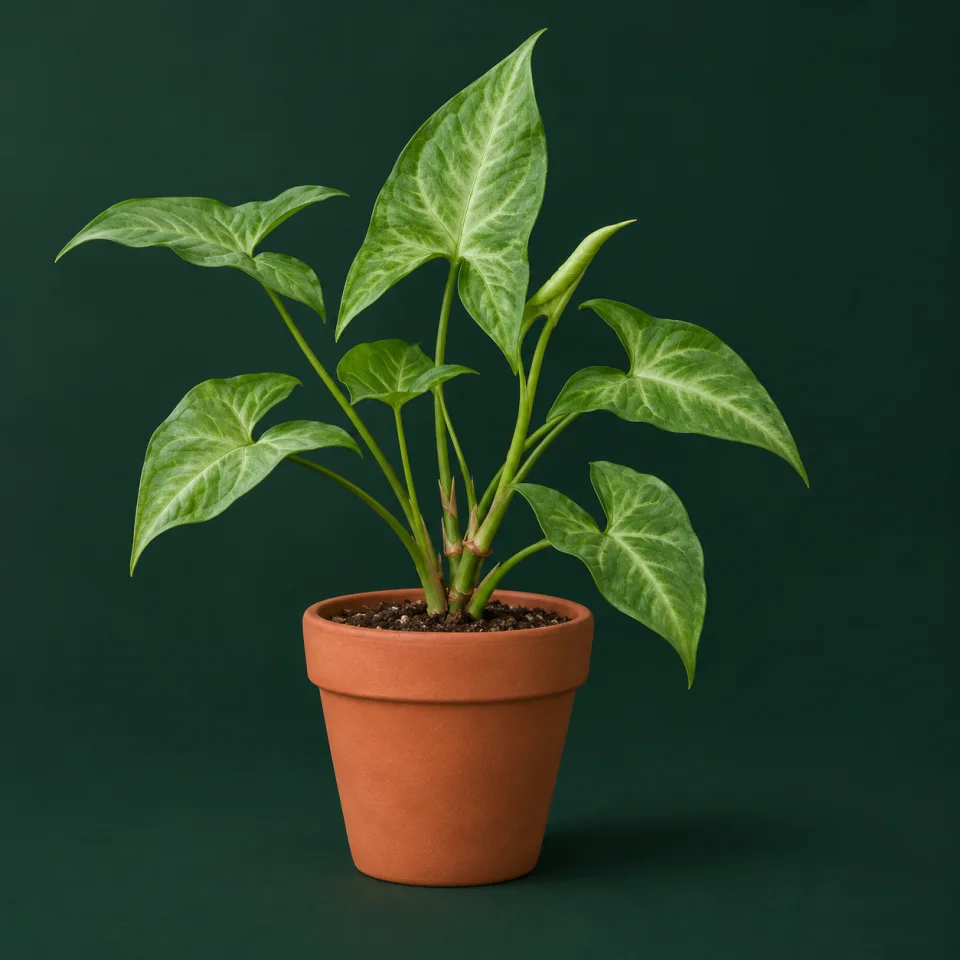
Botanical reference: Syngonium podophyllum
Start with its arrow-shaped leaves
Look for Syngonium podophyllum on the label. Young plants often look like compact clumps with arrow-shaped leaves; older stems lengthen and mature leaves can become divided. That change does not prove disease. Green, pale and pink forms exist, but a picture alone cannot name a cultivar. This guide covers the usual species without promising identical colour or size in every home.
A bright position with steady warmth
Place it near a window with indirect light, away from strong sun falling on the leaves. Pale forms appreciate good filtered light; a dark corner will not help them. For indoor winter care, aim to stay above 15 °C and avoid cold glass, draughts and heaters. Introduce a different position gradually rather than moving straight from shade into sun.
Let touch and weight guide watering
Feel the surface and notice whether the pot is lighter. Once the top starts drying, water slowly through the root ball until excess runs out below. Let it drain before replacing the outer pot. Neither dry the entire mix nor keep it soggy. Lower light or slower growth usually means less water; check the mix rather than counting days.
Give roots air and an escape for water
Choose an airy houseplant mix that holds some moisture while draining. The pot needs clear drainage holes; stones at the bottom cannot replace them. When roots fill the container or the mix loses its structure, repot one modest size up during active growth. Keep the previous planting depth and handle roots gently, rather than trimming them routinely to make them fit.
Choose trailing stems or a support
Let stems trail from a stable shelf, or guide them up a support with soft, loose ties. Do not tighten ties around stems or pull aerial roots into position. To reduce its spread, cut a stem just above a node using clean scissors and gloves. Pruning can manage its shape but cannot make every cultivar remain small indefinitely.
Gentle feeding and dust-free leaves
While new leaves are growing, consider a foliage-plant fertiliser according to its label and the nutrients already in the mix. Do not stack products to speed things up. Reduce or pause feeding when growth slows. Wipe dust away with a soft damp cloth, without leaf shine. Move it away from very dry air instead of using extra root watering as an attempt to increase room humidity.
Check before watering a drooping leaf
Dryness can cause limp leaves, but damaged roots in wet mix can do so too. Check moisture, drainage and temperature before adding more water. A brown tip or a single yellow leaf does not identify a cause by itself. Inspect leaf undersides, joints and stems for mealybugs, mites or aphids. Separate an affected plant and identify the problem before treating it.
When you are away, and when you prune
Leave instructions for checking the mix and emptying the saucer during absences. A container full of water is not a safe root reservoir. Keep plants and trimmings away from children and pets: insoluble oxalates make it toxic to dogs and cats. Wear gloves for cutting, keep sap away from eyes and mouth, and wash your hands. Contact a vet after suspected pet ingestion, without home remedies.
Guides to help with your decision

Which flowers to give to someone with cats or dogs
Flowers for a home with cats or dogs: options to consider, checking the whole bouquet and precautions with lilies, holly and mistletoe at Christmas.
How to care for a pothos without overwatering it
Light, watering, pots, pruning and repotting for golden pothos, with practical problem checks and pet precautions.
How to care for a heartleaf philodendron in a pot
Light, water, support, pruning and roots of Philodendron hederaceum: care for trailing stems without confusing it with pothos.
How to care for an aglaonema in a pot
Indirect light, watering, cold and yellow leaves in Aglaonema commutatum. Keep its roots healthy without leaving the mix constantly wet.
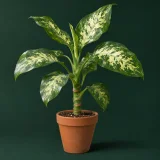
How to care for a dieffenbachia in a pot
Light, watering, bare stems, repotting and pruning for Dieffenbachia seguine. Clear care for its large leaves and irritating sap.
Frequently asked questions
Why is my plant losing its compact shape?
Syngonium is a climber. Stems can lengthen and leaves change as it matures; also check the light if gaps between leaves become long and weak. Prune or provide support to suit the space, without treating every sign of growth as a problem.
Can I grow another plant from a single leaf?
A stem cutting needs a node, the part where a leaf and roots emerge. A leaf with its stalk is not the same as that section of stem. Use gloves and a draining container; a node makes propagation possible, but does not guarantee rooting.
Sources and what they support
- NC State Extension · Syngonium podophyllum
Identity, climbing habit and change from juvenile to mature leaves. Colour alone does not identify a cultivar.
- RHS · Syngonium podophyllum
Indirect or filtered light, a 15 °C winter minimum guideline, stem pruning and irritating sap. No universal feeding calendar.
- UF/IFAS · Interior care of Syngonium
Slight surface drying without drying the root ball, supported or trailing growth and node cuttings. Commercial production recipes are not transferred to home care.
- ASPCA · Nephthytis (Syngonium podophyllum)
Toxic to dogs and cats through insoluble calcium oxalates. No safe dose is inferred and no home remedies are proposed.
How we put these guides together
We review dates, care and recommendations to help you plan each gift.
Spotted something we should review? Contact Agenda Floral.