Guides
How to care for a dieffenbachia in a pot
Care difficulty4 out of 10
Pay attention to watering and growing conditions.
Editorial guide, with suitable light and climate. 0: very easy; 10: very delicate. More stars mean more care.
Dieffenbachia needs indirect light, steady warmth and watering when the upper few centimetres of mix are dry. Wet the root ball and let it drain without standing water in the saucer. Avoid a lightless corner or cold draught. Its sap irritates and the plant is toxic if eaten: choose a position children and pets cannot reach.
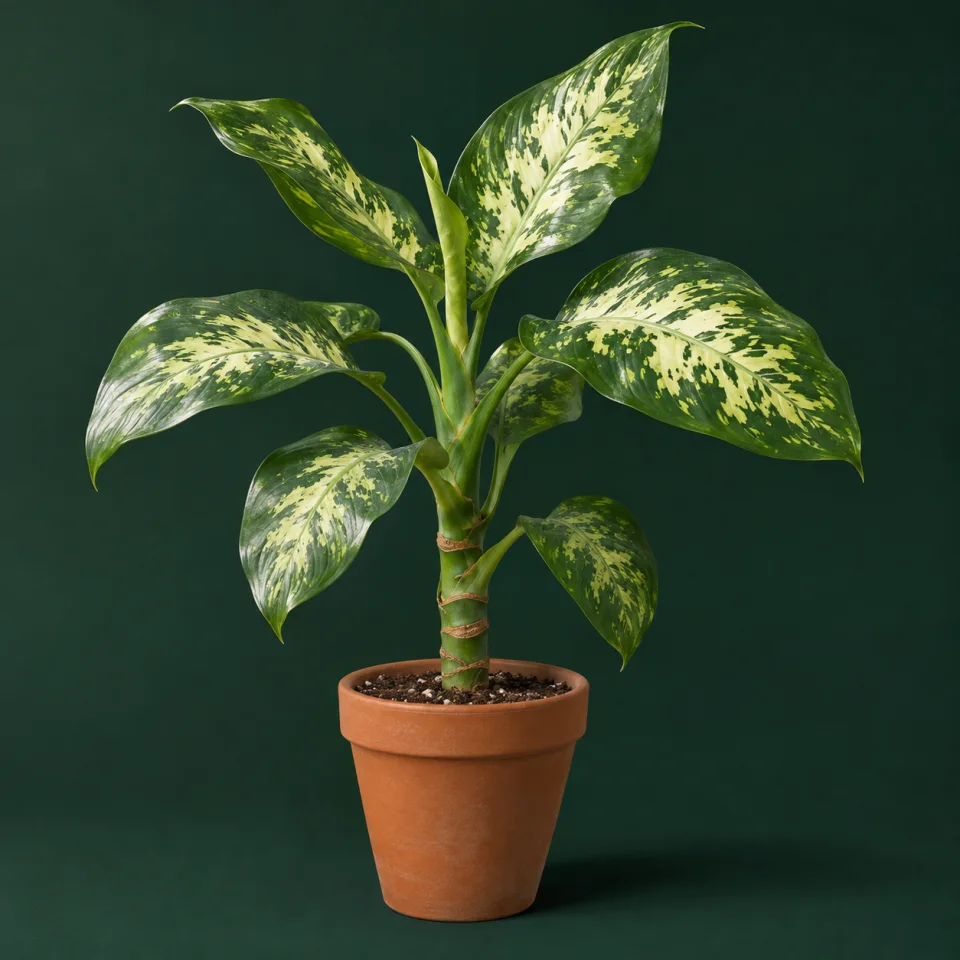
Botanical reference: Dieffenbachia seguine
Identify it and allow space
Look for Dieffenbachia seguine; older labels may say maculata, amoena or picta. Large leaves grow from a fleshy cane that develops scars as old leaves fall. Patterns vary between cultivars, so a picture alone cannot name one. Give it a stable base and room for the foliage where passing people will not brush against or snap leaf stalks.
A bright window without scorching sun
Place it near filtered window light, away from strong sun on the leaves. Faint light from the far end of a room can lead to weaker growth and a longer stem. Keep warmth stable, away from cold glass, draughts and heaters. Introduce brighter positions gradually. It may need to move closer to light in winter, while staying clear of cold panes. As a lower guideline, aim to keep it above about 15 °C without abrupt changes.
Check the top and water through
Feel the upper few centimetres of mix and check the pot’s weight. Once that layer is dry, water slowly through the root ball and let excess escape through the holes. Empty the saucer or outer pot after draining. Neither wait for the entire mix to become hard and parched nor water again because the surface looks pale. Lower light and slower growth often reduce water use.
Drainage and repotting when needed
Choose an airy houseplant mix that holds some moisture without compacting. A stable container with holes matters more than an enormous one. If roots fill the space or the mix loses structure, repot a modest size up during growth. Keep the previous depth and handle gently. Do not bury extra cane to hide a bare stem or routinely cut healthy roots.
Moderate feeding and clean leaves
While leaves grow, use foliage-plant fertiliser if needed, following its label and accounting for nutrients in the mix. Extra feed cannot replace light and is unsuitable as a response to damaged roots. Reduce or pause when growth slows. Wipe dust with a soft damp cloth, supporting the leaf without bending it. Avoid very dry air; daily misting cannot replace a suitable position or fix a waterlogged root ball.
Do not cut tall stems without a plan
Heavy annual pruning is unnecessary. Remove dry leaves with clean tools and gloves, keeping hands away from eyes and mouth. If a healthy cane is too tall, locate nodes and buds before planning a cut. Cuttings need stem material with a growth bud; a detached leaf is not another complete plant. Collect trimmings and clean tools. Not every cut cane is guaranteed to reshoot.
Yellow leaves, soft stems and damage
An old lower leaf can yellow as it is replaced. Sudden widespread loss or a soft cane needs moisture, drainage and recent cold checks before more water or feed. Dry edges, patches and drooping leaves have several possible causes. Inspect undersides and new shoots for pests. Separate a plant with spreading marks and seek identification; one symptom cannot distinguish pests, root damage and environmental change.
Absences and accidental exposure
Ask anyone helping to feel the mix and empty excess water. Do not submerge the pot for days away. Keep the plant, trimmings and sap beyond children and animals that might chew them. Wear gloves around cut parts and wash your hands. Seek local medical or poison-service advice after ingestion or eye exposure; breathing difficulty needs urgent help. Contact a vet promptly if a pet chews it, without waiting for symptoms or using home remedies.
Guides to help with your decision

Which flowers to give to someone with cats or dogs
Flowers for a home with cats or dogs: options to consider, checking the whole bouquet and precautions with lilies, holly and mistletoe at Christmas.
How to care for an arrowhead plant in a pot
Light, watering, potting mix and pruning for Syngonium podophyllum, with help choosing between trailing stems and a climbing support.
How to care for an aglaonema in a pot
Indirect light, watering, cold and yellow leaves in Aglaonema commutatum. Keep its roots healthy without leaving the mix constantly wet.
Frequently asked questions
Is a bare lower cane normal?
It can be part of growth and gradual loss of old lower leaves when the rest remains firm. A bare cane does not mean it should be planted deeper. Rapid loss, soft tissue or damaged new leaves need checks of roots, light and temperature before being called normal.
Why are new leaves smaller?
Check available light, roots, water and recent growth before changing feed. Size also varies with cultivar and stage. Do not move straight into harsh sun or add fertiliser without checking the basics.
Sources and what they support
- NC State Extension · Dieffenbachia seguine
Identity, former amoena/maculata/picta names, indirect light, top drying and cold protection. A dark-corner phrase is not advice to live without light.
- RHS · Dieffenbachia seguine
Filtered light, draining mix, no compulsory pruning, stem cuttings with a bud and irritating sap. No daily misting, universal feeding interval or guaranteed regrowth.
- ASPCA · Dieffenbachia
Toxic to dogs/cats; insoluble calcium oxalates, irritation and swallowing difficulty. Veterinary advice after suspected exposure, without safe-dose claims or home remedies.
- MedlinePlus · Dieffenbachia poisoning
Human contact/ingestion hazard and advice to seek medical help. US phone numbers, first-aid recipes and prognosis are not transferred to all countries.
How we put these guides together
We review dates, care and recommendations to help you plan each gift.
Spotted something we should review? Contact Agenda Floral.